
Kick a Lucky Block Admin Abuse (September 2026) Next Event Time & Boosts
Missing an Admin Abuse in Kick a Lucky Block means waiting a whole week to farm OG and Celestial brainrots…

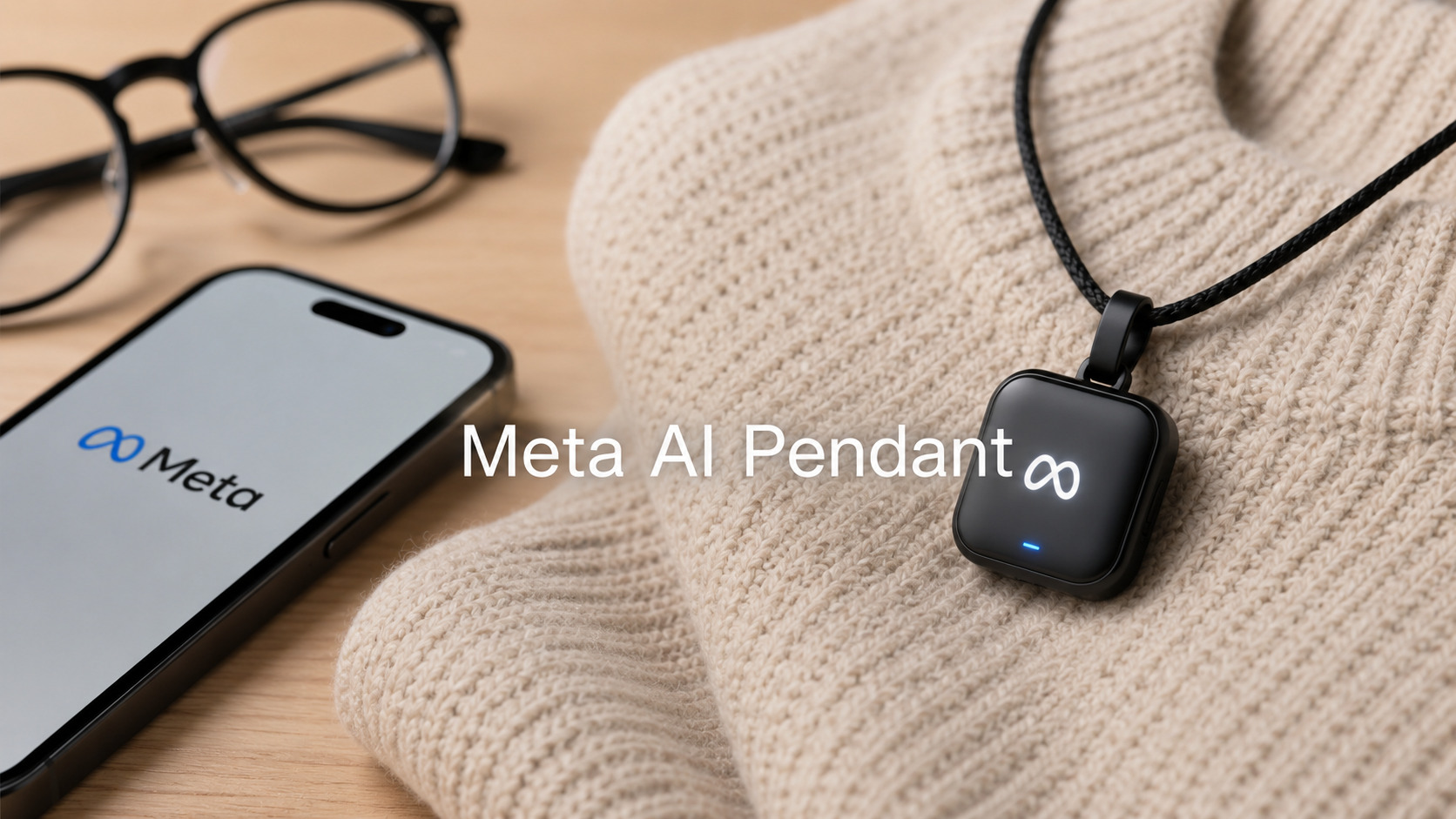
Meta is building an AI-powered pendant, and a leaked internal memo has just revealed far more than anyone expected. From a spring 2027 internal testing target to an enterprise subscription service called “Wearables for Work,” Meta’s AI pendant is the centrepiece of a sweeping new hardware strategy.
This article breaks down everything confirmed so far: what the device does, where the technology comes from, who it competes with, and why privacy watchdogs are already sounding the alarm.
Key Takeaways
- Meta’s AI pendant is in development, with internal dogfooding (testing) planned for spring 2027, per a leaked memo from VP of Wearables Alex Himel.
- The device builds on Meta’s late-2025 acquisition of Limitless, a startup that made a clip-on pendant for recording and transcribing conversations.
- The pendant is one of three pillars in Meta’s new hardware strategy — alongside expanded smart glasses and the enterprise “Wearables for Work” offering.
- Meta is targeting 10 million wearable device sales in H2 2026 and 6.8 million monthly active wearable users by year-end.
- Privacy concerns are significant: the always-on recording concept has already drawn scrutiny from regulators and civil liberties groups.
Meta’s AI pendant is a wearable device designed to be worn around the neck or clipped to clothing. While full technical specs have not been published, the internal memo — authored by Meta VP of Wearables Alex Himel and obtained by The Information — confirms the device will likely include a camera and function as a continuous, voice-based AI assistant.
The core idea is ambient AI: instead of pulling out a phone to interact with an assistant, the pendant stays with you throughout the day, capturing context and making AI accessible at all times.
The devices in Meta’s expanded wearable lineup will run on Meta’s latest AI model, Muse Spark, and an as-yet-unreleased AI agent called Hatch.
Meta’s pendant isn’t being built from scratch. At the end of 2025, Meta acquired Limitless (formerly Rewind AI), an AI wearables startup backed by Sam Altman and Andreessen Horowitz, which had raised over $33 million before the deal.
Limitless had already shipped a pendant product: a clip-on microphone that recorded everything a user said or heard, then used AI to generate transcripts, meeting summaries, and a searchable daily log of conversations. When Meta completed the acquisition, it stated the deal would “accelerate our work to build AI-enabled wearables.”
Limitless CEO Dan Siroker said at the time that Meta’s vision for “personal superintelligence” through wearables aligned with what Limitless was building. After the acquisition, Limitless stopped selling devices to new customers but continued supporting existing users.
The Himel memo lays out three interconnected bets for Meta’s wearable future:
| Pillar | What It Is | Timeline |
|---|---|---|
| AI Pendant | Wearable ambient AI device, voice + possibly camera | Internal testing spring 2027 |
| Expanded Smart Glasses | “Supersensing” models + new eyewear brands | H2 2026 new releases |
| Wearables for Work | Enterprise subscription for business users | Rollout TBD |
The pendant is the most headline-grabbing product. It’s designed for continuous wear and aims to give users a persistent AI companion that understands the context of their day — who they’ve spoken to, what was discussed, what tasks are pending.
Beyond the pendant, Meta is expanding its glasses lineup with so-called “supersensing” models. These keep cameras and sensors active for extended periods, allowing Meta AI to track events throughout the day — reminding you of forgotten items, flagging ingredients you need, or surfacing notes from earlier conversations.
So far, Meta’s glasses have been limited to Ray-Ban Meta and Oakley Meta through a partnership with EssilorLuxottica. The new roadmap adds more brands and frame styles to reach broader audiences and improve profit margins. EssilorLuxottica reported that more than 7 million Meta-powered smart glasses were sold in 2025, and daily use of AI-powered glasses has tripled year-over-year, according to Mark Zuckerberg.
The enterprise play is arguably the most commercially significant detail. A dedicated business subscription would position Meta’s wearables as productivity tools rather than consumer novelties — adding features like meeting transcription, ambient note-taking, CRM integration, and hands-free access to workplace software.
The concept mirrors Microsoft’s Copilot subscription model, but delivered through hardware. Meta is also building a developer platform where third parties can publish apps for its wearable devices, giving the ecosystem a path to grow beyond first-party use cases.
Reality Labs, Meta’s hardware division, recorded a loss of $4.03 billion in Q1 2026 on revenue of just $402 million. The AI hardware push is explicitly framed in the memo as a way to reverse those losses while increasing adoption of Meta’s AI models and services.
To that end, Meta has also launched a two-tier AI subscription this week — Meta One Plus ($7.99/month) and Meta One Premium ($19.99/month) — available through Facebook, Instagram, WhatsApp, and soon on smart glasses. The strategy: sell hardware at scale, then monetise through recurring software subscriptions.
Himel’s targets are ambitious:
Always-on recording is the feature that makes AI pendants powerful — and the feature that worries privacy advocates most.
Devices that continuously record conversations capture not just the wearer’s voice, but everyone nearby, without their knowledge or consent. Meta’s camera-equipped smart glasses have already drawn lawsuits over how they handle captured footage, and an AI pendant makes these questions harder, not easier.
Specific concerns include:
Organisations including the ACLU have previously urged Meta to drop facial recognition features from its glasses, and the pendant concept is expected to attract similar pressure.
Meta is not alone in betting big on AI hardware. The competitive landscape is moving fast:
| Company | Product / Move | Status |
|---|---|---|
| OpenAI | Acquired io Products (co-founded by Jony Ive) for $6.5B; developing AI device family | In development |
| Smart glasses partnership with Samsung and Qualcomm | Announced for fall 2026 | |
| Amazon | Acquired AI wearable startup Bee | Completed 2026 |
| Humane | AI Pin launched 2024; assets acquired by HP for $116M | Effectively dead |
| Friend | AI pendant by Harvard dropout Avi Schiffmann; listens continuously | In development |
The lesson from Humane’s AI Pin — launched to brutal reviews and gone within a year — is clear: the technology must be genuinely useful, not just novel. Meta’s advantage is scale: 7 million glasses already in circulation, a massive installed user base, and infrastructure to push AI model updates to every device over time.
The memo, written by Alex Himel, Meta’s VP of Wearables, was reviewed by The Information. Key details:
Meta declined to comment publicly on the memo when approached by multiple outlets.
Meta’s AI pendant is a wearable device worn around the neck or clipped to clothing that provides continuous, ambient AI assistance throughout the day. It records audio, generates transcripts and summaries, and lets users interact with Meta AI by voice. It builds on technology developed by Limitless, a startup Meta acquired in late 2025.
No public release date has been announced. According to Meta’s internal memo, internal employee testing (dogfooding) is planned for spring 2027. A public release would likely follow testing by at least several months.
Limitless (formerly Rewind AI) was an AI wearables startup that built a clip-on pendant for recording and transcribing daily conversations. Backed by Sam Altman and Andreessen Horowitz, it raised over $33 million before Meta acquired it at the end of 2025. Meta said the deal would “accelerate our work to build AI-enabled wearables.”
Humane’s AI Pin was a standalone device that projected information onto the hand and could answer questions — but it received poor reviews for slow performance, limited battery life, and a high price tag. Meta’s pendant is expected to focus more narrowly on ambient audio capture and AI summarisation, leveraging Meta’s existing AI infrastructure. Humane’s assets were ultimately acquired by HP for $116 million.
It raises significant privacy questions. The device is designed to record conversations continuously, which means everyone in earshot — not just the wearer — has their voice captured. Meta already faces regulatory scrutiny in Europe over its existing camera glasses, and civil liberties groups are expected to challenge the pendant concept on similar grounds.
Wearables for Work is Meta’s planned enterprise subscription service for its AI wearable devices. It is designed to offer business-specific features — such as meeting transcription, ambient note-taking, and integration with workplace tools — targeting corporate customers rather than just consumers.
EssilorLuxottica reported that more than 7 million Meta-powered smart glasses were sold in 2025. Daily usage of AI-powered glasses has tripled year-over-year, according to Zuckerberg, who called it “one of the fastest-growing categories of consumer electronics ever.”
Meta’s AI pendant is more than a gadget. It’s the clearest signal yet that the company sees AI wearables not apps, not feeds- as the next major platform layer. With the Limitless acquisition laying the technical groundwork, an ambitious internal roadmap, and a $19.99/month subscription model ready to monetise it, Meta is making a serious play to own ambient AI in a way that no one else currently does.
The risks are real: privacy concerns aren’t going away, Reality Labs is still losing billions per quarter, and past AI wearables have failed to achieve mass adoption. But with 7 million smart glasses already in circulation and AI usage on those devices tripling year-over-year, Meta isn’t starting from zero.