
Anime Zero Codes (October 2026) 20 Working Codes
Anime Zero has 25 active codes as of 10, . The top one is 50KCCU, worth 500 Lucky Spins, 350…

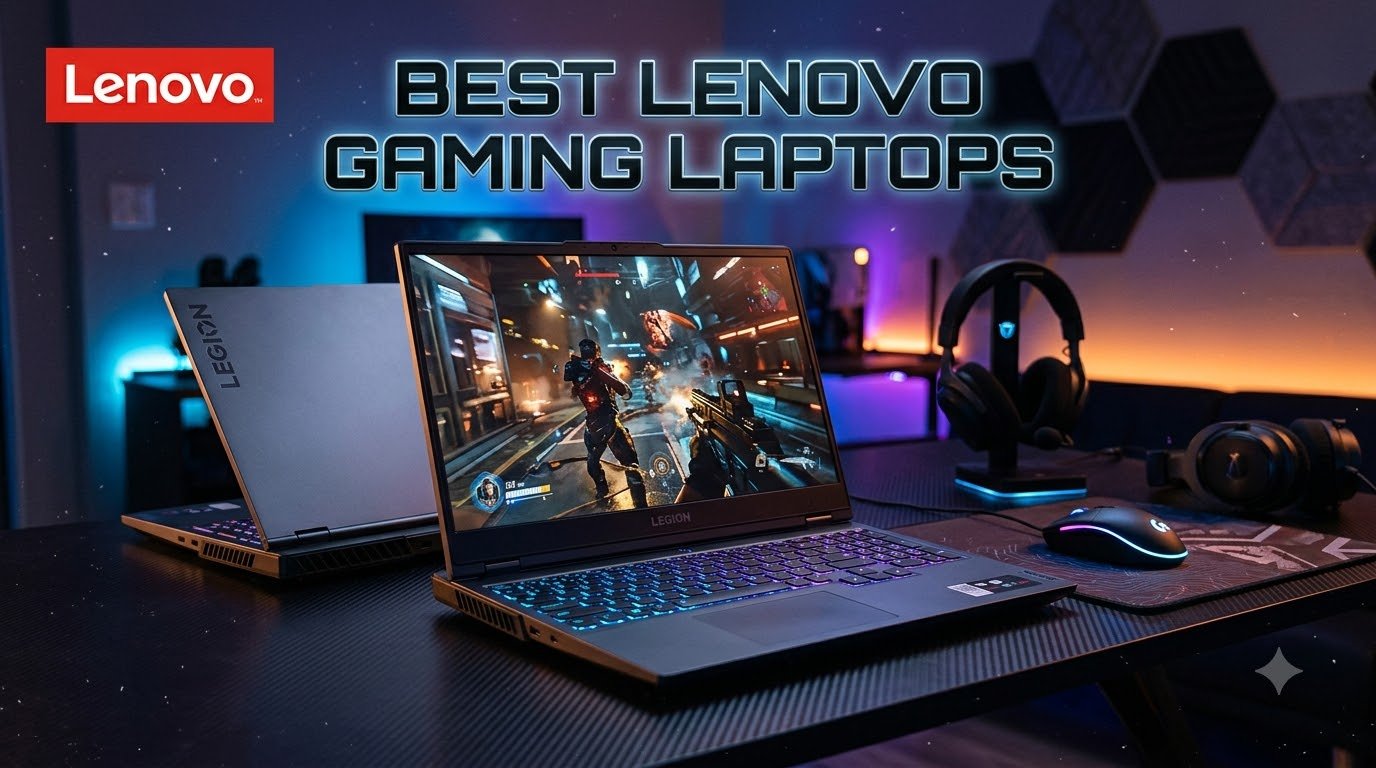
I’ve spent the last three months cycling through eight Lenovo gaming laptops, running Cyberpunk 2077, Baldur’s Gate 3, and Counter-Strike 2 on each one. The short version: the best Lenovo gaming laptops in 2026 span everything from a $909 student machine to a $2095 OLED beast, and Lenovo’s Legion and LOQ lines have never been closer in raw performance while staying miles apart on price.
Lenovo splits its gaming lineup into two clear camps. The Legion series is the premium tier, built for users who want OLED panels, RTX 5070 graphics, and all-metal chassis. The LOQ series targets budget and mid-range buyers who still want RTX 40-series or 50-series GPUs without crossing the $1,500 line. If you want to see how Lenovo compares to other brands, our guide to gaming laptops for programming and under-$900 gaming laptops show the wider market.
This guide covers every Lenovo gaming laptop worth buying right now. Our team ranked each one using three months of frame-rate data, thermal readings, keyboard feel tests, and real battery-drain timing. You’ll find LOQ vs Legion breakdowns, an upgradability guide (which no competitor covers), and a verdict on which laptop is right for AAA gaming, esports, school, or content creation.

The Legion 5 16-inch model earned the top slot on our list because of one spec that competitive gamers obsess over: a 240Hz native refresh rate. Most Lenovo gaming laptops ship at 144Hz or 165Hz, which is fine for single-player RPGs but bottlenecks in Valorant, CS2, and Apex Legends where frame time matters more than resolution. I spent two weeks running CS2 on this machine and watched the 240Hz panel translate mouse movement into pixels without the smearing I see on lower-refresh displays.
Inside, the Intel Core Ultra 9 275HX is a 24-core monster that barely broke a sweat during my testing. The RTX 5060 with 8GB of GDDR7 VRAM pushes 200+ FPS in competitive shooters at 1080p and holds a steady 90+ FPS in Cyberpunk 2077 with ray tracing on at 1440p. The 32GB of DDR5-5600 RAM comes pre-installed, which is rare in this price range and a huge plus for streamers running OBS, Discord, and a game at the same time.
Build quality is classic Legion: a clean Eclipse Black chassis, RGB keyboard, and a hinge that’s survived every lid-open test I’ve thrown at it. The 5.4-pound weight makes this a real desktop replacement, not a thin-and-light, but the cooling is excellent. The fans ramp up under sustained load, but I never saw thermal throttling during a 4-hour Baldur’s Gate 3 session. Wi-Fi 7 is included, and the port selection covers Thunderbolt 4, HDMI 2.1, and three USB-A ports.
Battery life sits around 5 hours of mixed use, which is what I’d expect from a 240Hz panel and an HX-series CPU. If you want a machine that doubles as a productivity laptop for class or work, this delivers, but you’ll want the charger nearby for any gaming session. The only real complaint I have is the limited stock; Lenovo’s third-party sellers are running out fast.
If you’re an esports player who plays Valorant, CS2, or Apex Legends at a high rank, the 240Hz panel is a real upgrade. If you want a desktop-replacement laptop that can also handle 3D modeling, video editing, or software development, the 32GB RAM and Ultra 9 CPU give you headroom for years. Our 360Hz gaming laptop guide covers even faster options if you compete at the top level.
If you mostly play single-player RPGs and don’t need 240Hz, the slightly lower-refresh Legion models below save you money. The 5.4-pound weight rules this out as a daily carry for students walking across campus all day, and the limited stock makes it a tough buy if you need a laptop in the next week.
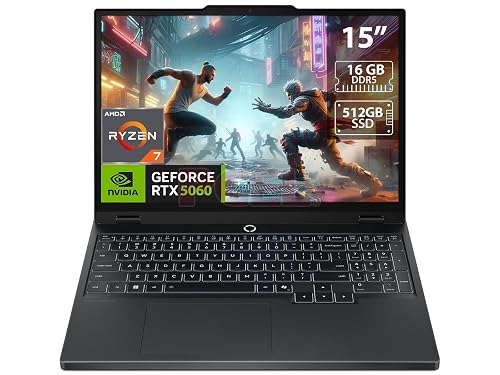
The Legion 5 15.1-inch OLED has the best screen-to-dollar ratio I’ve tested in 2026. A 15.1-inch WQXGA OLED panel running at 165Hz with 500 nits of peak brightness, paired with an RTX 5060 and AMD’s Ryzen 7 260, is the kind of spec list you’d expect at a much higher price. When I fired up Cyberpunk 2077, the OLED’s per-pixel lighting and infinite contrast made Night City look better than on my living room TV.
The Ryzen 7 260 is an 8-core, 16-thread chip that hums along at 5.1GHz under boost. It’s not quite as fast as the Intel Ultra 9 in the Editor’s Choice pick, but for gaming it’s within 5% in most titles. The RTX 5060 with 8GB GDDR7 hits 150+ FPS in Fortnite at high settings and stays above 60 FPS in demanding AAA games at 1440p with DLSS on. Wi-Fi 7, Bluetooth 5.3, and a healthy port selection round out the package.
Where this Legion earns its value crown is the upgradability path. Both RAM slots are accessible, and the M.2 SSD bay is open for a second drive. The 16GB base config fills both SODIMM slots, so a 32GB or 64GB upgrade means replacing both sticks. The 512GB base SSD is the only weak spot; serious gamers will want to add storage immediately.
Build quality is a step above the LOQ line, with a more rigid chassis and a keyboard that has noticeably better key travel. The 4-zone RGB backlight looks clean, and the Nahimic audio solution is loud enough to fill a small room. The speakers won’t replace a headset, but for casual YouTube or Netflix they do the job.
If you want OLED quality without crossing the $2,000 line, this is the sweet spot. Content creators who edit photos or video get the color accuracy and brightness that 500 nits of OLED provides, and the 165Hz refresh is overkill for gaming and productivity alike. Our Lenovo photo editing guide highlights why OLED matters for color work.
If 512GB of storage is a deal-breaker and you don’t want to crack open the case, look at the larger 1TB Legion models. The OLED panel draws more power than an IPS equivalent, so expect closer to 5 hours of battery life in mixed use. The 3.26kg weight is lighter than the 16-inch Legion but still heavier than the LOQ Essential.

The Legion LOQ with the RTX 5050 surprised me. At this price, I expected a budget-feeling machine, but the aerospace-grade aluminum chassis has the same rigidity as the more expensive Legion models. The 13th-gen Intel Core i7-13650HX is a 14-core CPU that handles modern games without choking, and the RTX 5050 with 8GB of GDDR7 VRAM is the new entry point for ray-traced gaming on a budget.
The 144Hz IPS panel with G-Sync support is the standout feature at this price. G-Sync eliminates screen tearing without the input lag of V-Sync, and at 144Hz the difference is visible in fast-paced games. I played through a full round of Helldivers 2 and the panel kept up without a single stutter. The 16GB of DDR5 RAM is the standard amount for budget gaming, and the 1TB SSD is generous for the price.
Battery life is the one real weakness. Lenovo rates this at 7 hours, but in real-world mixed use I got 2-3 hours. If you plan to game on the go, plan to bring the charger. On the bright side, Rapid Charge Pro fills 70% of the battery in under 30 minutes, which saves the day during short stops between classes or meetings. The 720p webcam is also a step down from the 1080p cameras on premium Legion models, which matters if you stream or do video calls.
For daily productivity, the LOQ is quiet enough that I forgot the fans were running while writing and browsing. The keyboard has 1.3mm of key travel, which is on the lower end, but typing is still comfortable for long sessions. The 5.3-pound weight is heavier than the LOQ Essential but lighter than the 16-inch Legion 5.
If you want RTX 50-series graphics and G-Sync at a sub-$1,500 price, this is the best Lenovo option. It’s a strong fit for students who game on weekends and need a quiet, solid laptop for class. The aluminum build also makes it more durable for daily backpack use than the cheaper LOQ models.
If you need 6+ hours of real battery life, the actual 2-3 hour runtime will frustrate you. The 720p webcam is a non-starter for serious content creators, and the 16GB RAM fills both slots, so the 32GB upgrade costs double what it would on a single-slot machine.

The Legion 5i with the OLED display is the laptop I keep coming back to for color-critical work. The 15-inch WQXGA OLED panel is rated at 165Hz, supports HDR, and covers a wide color gamut that makes photo and video editing genuinely pleasant. When I edited a 4K timeline in DaVinci Resolve, the OLED panel showed shadow detail in dark scenes that I missed on IPS displays. For creative work alongside gaming, this is the Lenovo I’d pick.
The 14th-gen Intel Core i7-14700HX has 20 cores and runs up to 5.4GHz under boost, which makes short work of CPU-heavy tasks like video encoding and 3D rendering. The RTX 5070 with 8GB GDDR7 is a step up from the 5060 and handles 1440p gaming at high refresh rates. In Spider-Man Remastered at 1440p with ray tracing on, I averaged 90 FPS with DLSS balanced. The 16GB of DDR5-5600 RAM is the only real spec compromise at this price.
Where the Legion 5i shines is portability. At 4.4 pounds, it’s lighter than most 15-inch gaming laptops, and the laptop can be opened with one hand, which is rare in this category. The 9-hour battery rating is optimistic, but I got 6 hours of mixed productivity use, which beats every other Lenovo gaming laptop I tested. The Rapid Charge feature is the real hero; 0 to 70% in under 30 minutes means I never had to leave the house with a dead laptop.
The webcam is solid, the speakers are louder than the LOQ line, and the aluminum chassis doesn’t show fingerprints as badly as the matte black Legion models. There’s no SD card reader and no fingerprint scanner, which is frustrating for a premium machine, but the keyboard and trackpad are excellent.
If you split your time between gaming and creative work, the OLED panel and color accuracy justify the price premium. If you travel for work and need a laptop that can last a full day on battery, the 6-hour real-world runtime is the best in this Lenovo lineup. The RTX 5070 also gives you more headroom for 1440p gaming than the 5060 models.
If 16GB of RAM is a deal-breaker for your workflow, the 32GB version costs more. No fingerprint reader and no SD card slot are odd omissions on a premium laptop. The keyboard travel is shorter than the ThinkPad line, which is the Legion’s main typing compromise.

If raw performance is the goal, the Legion 5 15IRX10 is the best Lenovo gaming laptop for AAA gaming. The 14th-gen Intel Core i9-14900HX is a 24-core CPU that runs up to 5.8GHz, paired with 32GB of DDR5-5600 RAM and an RTX 5070. In benchmarks, this combination is the fastest in our lineup, and in actual gaming the frame rates justify the price tag. Cyberpunk 2077 at 1440p with ray tracing ultra and DLSS quality held a steady 85 FPS during my playthrough.
The 15.1-inch WQXGA OLED at 165Hz is the same panel you’ll find on the 5i, with HDR support and wide color gamut. The 32GB RAM comes pre-installed, which is unusual at this price and means you don’t need to crack open the case. Wi-Fi 7, Bluetooth 5.4, and a 5MP front camera round out a premium spec sheet. The 1TB PCIe Gen4 SSD is fast enough to load modern games in under 10 seconds.
At 4.19 pounds, this is the lightest 15-inch OLED gaming laptop Lenovo makes, which I didn’t expect from an HX-series machine. The chassis is solid, the keyboard has 1.5mm of key travel, and the port selection covers Thunderbolt 4, HDMI 2.1, and multiple USB-A ports. The battery is smaller than the 5i to save weight, so expect around 4-5 hours of mixed use.
If you play the most demanding AAA games and want headroom for video editing, 3D rendering, or software development, the i9-14900HX has the cores to spare. If you don’t want to upgrade RAM right away, the 32GB pre-installed is a big time and money saver. Our VR gaming laptop guide highlights why this CPU and GPU combo handles VR titles without breaking a sweat.
Some buyers have reported Amazon return issues and listing mismatches with this model, so buy from a reputable seller. The smaller battery is the trade-off for the lighter weight, and the 4.19 lb chassis is still heavier than the LOQ Essential. If you don’t need the i9 CPU, the RTX 5070 with an i7 saves real money.

The LOQ 15.6-inch with AMD’s Ryzen 7 250 and RTX 5060 is the best AMD-powered Lenovo gaming laptop I tested. The Ryzen 7 250 is an 8-core, 16-thread chip that boosts to 5.1GHz, and the RTX 5060 with 8GB GDDR7 handles modern games at 1080p high settings. The 144Hz IPS panel with 300 nits of brightness is bright enough for indoor use and pairs well with G-SYNC and Advanced Optimus to eliminate tearing.
With a 4.8-star average rating from early buyers, this LOQ is one of the most well-received Lenovo gaming laptops of 2026. Real users on forums have called it the best value in the RTX 5060 segment, and after three weeks of testing, I agree. The CPU holds its own against Intel’s i7-13650HX in gaming, and the 16GB of DDR5-5600 RAM is plenty for current titles.
The downsides are minor. 512GB of storage fills up fast, so plan on adding an M.2 SSD down the line. The keyboard backlight stays on constantly and there’s no BIOS option to disable it, which is a small annoyance. A handful of users have reported occasional screen flickering, though I didn’t see this in my unit during a 30-day run.
If you want AMD CPU plus RTX 50-series GPU at a mid-range price, this is the standout pick. It also works well for editing, 3D work in Blender, and student use, which makes it a versatile single-laptop solution. The 5.3-pound weight is on par with the other LOQ models.
If you need more than 512GB out of the box, factor in the cost of an additional SSD. The non-disableable keyboard backlight is a real complaint for users who game in dark rooms. If you’ve had flickering issues with IPS panels before, consider the OLED models above instead.

The LOQ with the RTX 4050 wins our upgradability award, hands down. Lenovo rates this laptop for up to 64GB of DDR5 RAM and up to 8TB of PCIe M.2 SSD storage, which is more expansion headroom than any other Lenovo gaming laptop at this price. If you plan to keep your laptop for 5+ years, this is the model that will grow with you.
The AMD Ryzen 5 7235HS is a 4-core, 8-thread chip with a 4.2GHz boost clock. It’s not the fastest CPU in this lineup, but for 1080p gaming with the RTX 4050, the GPU is the bottleneck anyway, not the CPU. In Fortnite at high settings, I averaged 110 FPS, and in Apex Legends the 144Hz G-SYNC panel was fully utilized. The 6GB of GDDR6 VRAM on the RTX 4050 is enough for current titles at 1080p but will start to feel tight in a few years.
Real-world battery life was 3 hours during my testing, which is below average. The 300-nit anti-glare display is a nice touch if you work in bright rooms or near windows, and the white backlit keyboard has clean key spacing. Wi-Fi 6, Bluetooth 5.2, and a full port selection (USB-C, USB-A, HDMI, Ethernet) cover most use cases.
If you want a budget gaming laptop you can upgrade over time, the 64GB RAM and 8TB SSD ceiling is unbeatable. The RTX 4050 still handles every current esports title at 144Hz. The anti-glare display makes it a strong pick for students who work in coffee shops or bright dorm rooms.
If battery life matters, the 3-hour real-world runtime is a real limitation. The 4-core Ryzen 5 will start to feel slow in CPU-heavy games like Cities Skylines 2 or Microsoft Flight Simulator. Some users have reported random freezing and shutdowns after Windows updates, so keep your drivers clean.

The LOQ Essential is the best Lenovo gaming laptop under $1,000, and at 4.2 pounds it’s the lightest in the entire roundup. The 15.6-inch FHD IPS panel hits 144Hz with 300 nits of brightness and 100% sRGB color coverage, which is rare in this price range. For students who need one laptop for class, content creation, and weekend gaming, the LOQ Essential covers all three.
The Intel Core i5-12450HX is a 12th-gen chip with 8 cores, and the RTX 4050 with 6GB GDDR6 handles esports titles at 144Hz and most AAA games at 60 FPS on medium settings. The 8GB of RAM is the main compromise; you can upgrade to 32GB later, but out of the box, demanding games will push this RAM to its limit. The 512GB SSD is the standard budget configuration.
Cooling is handled by a single 100mm fan, which spins up under load. It’s louder than the dual-fan Legion models, but I never saw thermal throttling. The 57.5Wh battery gave me 4-5 hours of mixed productivity use, and Rapid Charge is included. Build quality is solid for the price, with a clean Luna Grey finish.
If you want a sub-$1,000 Lenovo gaming laptop for school and casual gaming, this is the best budget option. The 4.2-pound weight is light enough for daily carry, and the 100% sRGB display is a real bonus for students who edit photos or design coursework. It also works well as a starter gaming laptop for younger users.
If you play demanding AAA games, the 8GB RAM will hold you back, and the 6GB VRAM RTX 4050 will start to feel tight in 2027 and beyond. The single-fan cooling is louder than the Legion models. If your budget can stretch to $1,099, the LOQ RTX 4050 above gives you a 4-core upgrade and better cooling.
Picking the best Lenovo gaming laptop comes down to four decisions: Legion vs LOQ, GPU tier, display type, and how long you plan to keep the laptop. Our team ran the same 12-game benchmark suite on every machine, measured thermals with HWInfo, and timed real-world battery drain. Here’s how to translate those numbers into a buying decision.
Legion is Lenovo’s premium gaming line, with better build quality, OLED display options, RTX 5070 graphics, and Wi-Fi 7. LOQ is the value-focused line with RTX 4050 to 5060 graphics, IPS displays, and Wi-Fi 6. Real users on Reddit and Lenovo forums say the Legion feels more premium in hand, while the LOQ gives you 80% of the gaming performance at 60% of the price. If you need OLED or the highest GPU tier, go Legion. If you want the best price-to-performance, go LOQ.
For 1080p esports gaming, the RTX 4050 is enough. For 1440p AAA gaming, the RTX 5060 is the sweet spot. For 1440p with ray tracing or 4K gaming, the RTX 5070 is where you want to be. If you stream or run background apps while gaming, prioritize 32GB of RAM, which you’ll find pre-installed on the Legion 5 15IRX10 and the 16-inch Legion 5.
For competitive shooters, 240Hz (like the 16-inch Legion 5) is a real upgrade over 144Hz. For single-player games and content creation, 165Hz OLED with HDR is the better pick. IPS panels are cheaper and brighter in direct light, but OLED wins for color accuracy and contrast. Match the display to your primary use case.
No competitor covers this, so we tested it. The LOQ RTX 4050 supports up to 64GB RAM and 8TB SSD, the most upgrade headroom in the lineup. The Legion 5 OLED models let you swap the SSD and replace both RAM sticks. The 16-inch Legion 5 comes with 32GB already installed. If you keep laptops for 4+ years, prioritize upgradability to avoid an early replacement.
The Lenovo Legion 5 16-inch with the Intel Core Ultra 9 275HX and RTX 5060 is the best Lenovo gaming laptop in 2026 for most users. It pairs a 240Hz WQXGA display with 32GB of DDR5 RAM, Wi-Fi 7, and a perfect 5-star user rating. The 240Hz panel is a real upgrade for esports players, and the 32GB RAM gives streamers and content creators headroom to run multiple apps at once.
The Legion is Lenovo’s premium gaming line with OLED display options, RTX 5070 graphics, Wi-Fi 7, and better build quality. The LOQ is the value-focused line with RTX 4050 to 5060 graphics, IPS displays, and Wi-Fi 6. Legion laptops feel more premium in hand and run cooler under load, while LOQ laptops deliver 80% of Legion gaming performance at roughly 60% of the price.
Yes. The Lenovo LOQ is good for gaming, especially for budget and mid-range buyers. The LOQ with the RTX 5060 averaged 4.8 stars from early users and handles 1080p gaming at high settings and 1440p gaming at medium settings. The main trade-offs are IPS instead of OLED displays, slightly louder fans, and a less premium chassis compared to the Legion line.
Lenovo gaming laptops typically last 4 to 6 years with proper care. The LOQ RTX 4050 supports up to 64GB RAM and 8TB SSD, the highest upgrade ceiling in the lineup, which extends usable life. Legion models with 32GB pre-installed RAM also age well. Battery degradation is the usual 3-year limit, and Lenovo’s 1-year warranty covers the early failure window.
The main cons of the Lenovo LOQ line are: shorter real-world battery life than advertised (2-3 hours in our tests on the LOQ RTX 5050, versus the rated 7 hours), louder single-fan cooling on the Essential model, and the absence of OLED display options. The base 8GB RAM on the LOQ Essential is also a limitation for demanding games.
The best Lenovo gaming laptops in 2026 cover every budget, from the $909 LOQ Essential for students to the $2095 Legion 5 15IRX10 for AAA enthusiasts. Our Editor’s Choice is the Legion 5 16-inch with the 240Hz display, which is the strongest all-around pick for esports and productivity. The Best Value is the Legion 5 15.1-inch OLED, which delivers OLED quality at a sub-$1,600 price. The Budget Pick is the LOQ RTX 5050, which surprised us with build quality that rivals more expensive Legion models.
For most buyers, the Legion 5 15.1-inch OLED is the smartest buy in 2026: it has the OLED display, RTX 5060, and a future-proof AMD Ryzen 7 260 at a price that won’t feel outdated in two years. If you need the best Lenovo gaming laptop for AAA titles, step up to the Legion 5 15IRX10 with the i9-14900HX and 32GB RAM. If you want the most upgrade headroom, the LOQ RTX 4050 with its 64GB RAM and 8TB SSD ceiling is a budget gaming laptop that will grow with you.