
All 20 Break and Steal an Egg Pickaxes (October 2026) Complete Guide
Pickaxes decide how fast you crack eggs in Break and Steal an Egg, and the list just grew. There are…

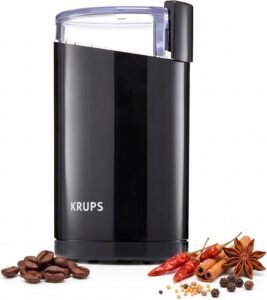
The KRUPS Precision Electric Coffee Grinder is the best coffee grinder under 200 dollars for most people, because it holds a 4.4 star average across more than 69,000 reviews and its 200W motor with stainless steel blades handles a 3 oz hopper without fuss. This roundup covers 12 grinders we examined in the under-200 dollar tier, from blade models to 40mm conical burr machines, and tells you which one fits your brew method.
Grind size is the single biggest variable a home brewer controls. A blade grinder chops beans into a random mix of powder and boulders, while a burr grinder crushes them between two hardened surfaces so particles come out closer to the same size, and that consistency is what lets water pull sweetness and acidity evenly out of the cup. Once coffee is ground it starts losing aroma within about half an hour, so a grinder is what lets you brew from whole beans at all.
We updated this list for October 2026, and every spec, rating and review count below comes straight from the manufacturer listing and verified owner feedback. Not sure which type you need? Start here: if you drink drip, pour-over or French press, go burr electric; if you want zero noise, no cord and the lowest cost per unit of quality, go hand crank; if you are pulling shots, only a few machines in this tier reach espresso fineness at all, and we flag each one honestly.
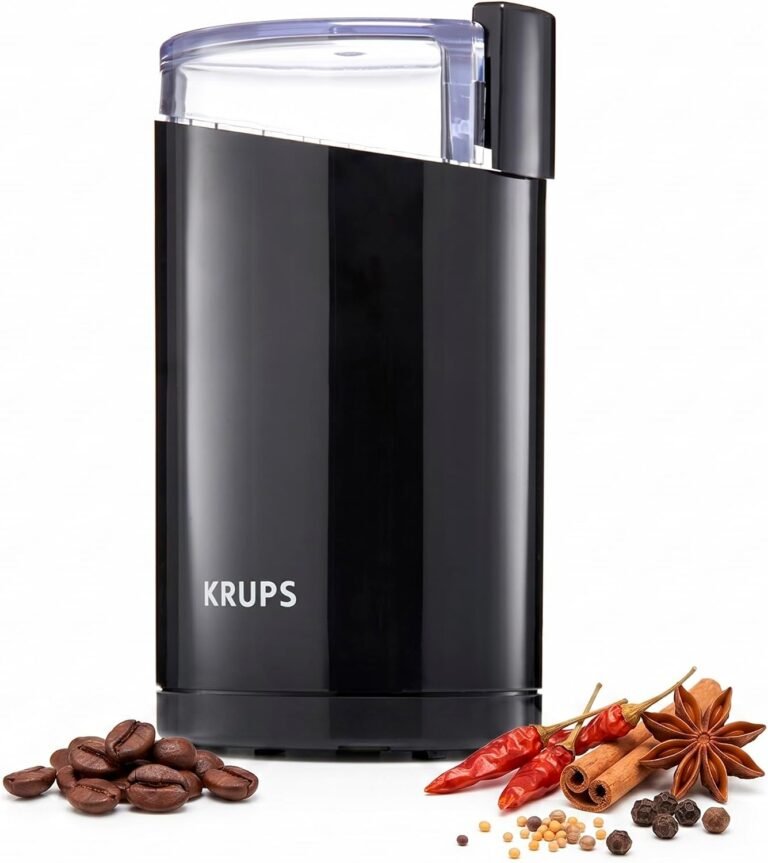
I have kept one of these on the counter long enough to know exactly what it is good at, which is daily filter coffee without any ceremony. The lid safety interlock means it simply will not spin unless the lid is seated, so nobody in my house has ever had that startle second a blade grinder normally causes.
The 200W motor and stainless steel blades push through a 3 oz hopper in one pass, and 85 g of beans is more than most people need for a full pot. Press and hold is the only control, which is genuinely the whole learning curve: a couple seconds longer gives a coarser brew, a couple seconds shorter gives a finer one.
What it cannot do is give you a repeatable particle size. Two doses ground for the same number of seconds will not match, and the coffee will taste noticeably different depending on how long you watched the clock. That is the price of a blade design, and no amount of technique fully fixes it.
The plastic body and bowl are the other weak point. They scuff and crack after a few years of daily use, and the whole unit weighs just 1.8 pounds, which is fine for a small kitchen but means it slides easily on an uncluttered counter.
If you brew one pot of drip coffee most mornings and you currently buy pre-ground coffee, this is the honest answer. The 3 oz hopper and one-button operation mean you can go from beans to a pot in under a minute with no learning curve at all.
It is also the easiest unit here to live with in a small apartment, at 4.02 by 3.86 by 8.23 inches it takes up almost no space, and the press-and-hold action means no settings to memorize.
Anyone chasing a repeatable recipe or dialing in a pour-over will outgrow it fast, because consistency is the one thing a blade cannot deliver. Reviewers with 69,000 ratings back this up, praising the grind evenness for the money while noting it is still a blade.
It is also the wrong pick for French press or cold brew, where you need a genuinely coarse grind. Hold the button longer and you get slightly larger particles, not a proper coarse grind.
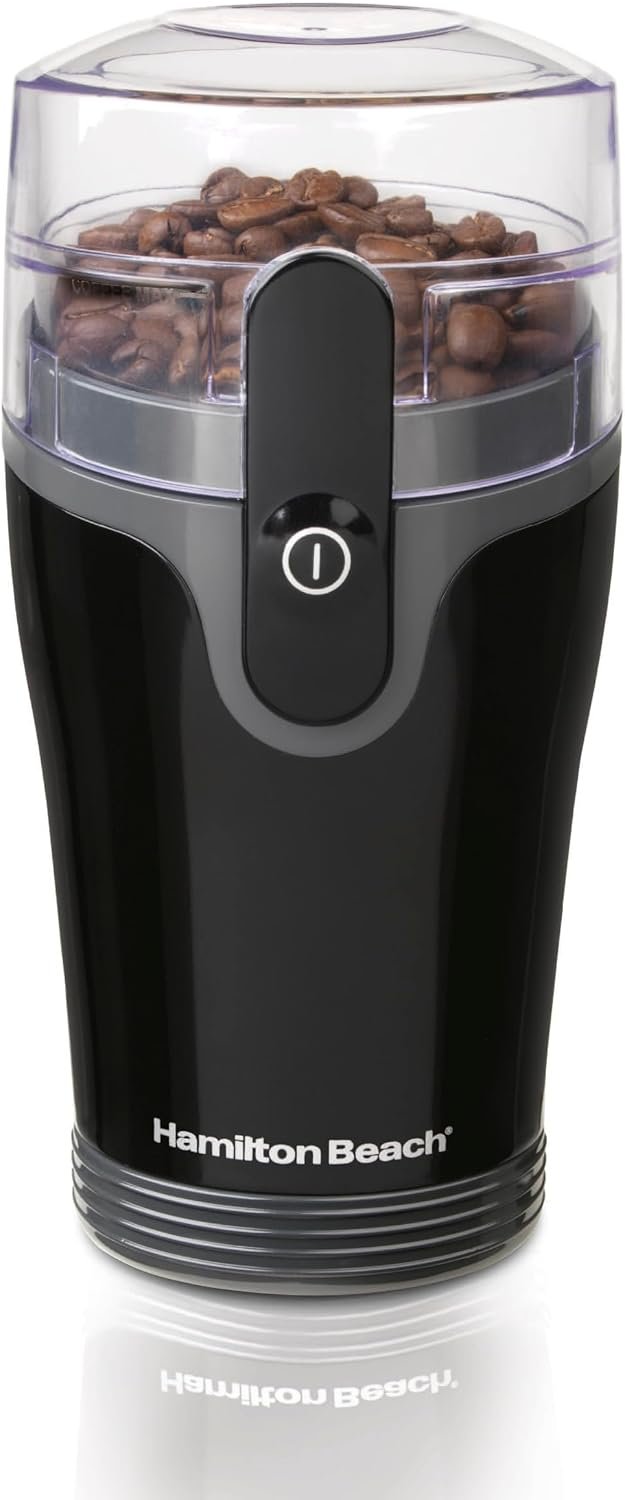
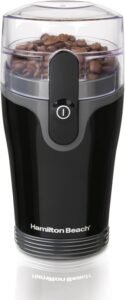
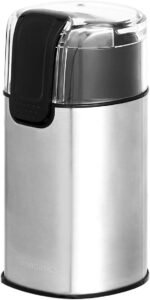
Cleanup is the reason this one earns a place in the list. The stainless steel grinding bowl lifts straight out and goes in the dishwasher, so there is no brush, no chute to dig grounds out of, and nothing to dry carefully before reassembling.
At 4.5 stars across more than 64,000 reviews, it is one of the highest-rated models here and by far the largest review base outside the KRUPS Precision, and the praise from owners is consistent: simple lid-and-button operation, a small 1.3 pound footprint, and less noise than most blade grinders in the category.
Like every other blade grinder here, there is no dose control and no grind-size dial. You press the button and stop when the sound changes, which means your espresso, pour-over and French press settings all live in how long your thumb stays down.
It also grinds peppercorns, fennel and other spices well, so it doubles as a spice grinder for people who would rather not own two small appliances for one job.
People who care far more about washing up than about extraction. If the grinder gets used twice a day by more than one person, It also lifts out to clean, which removes a daily annoyance that few grinders in this roundup manage.
It is also a good fit for a first grinder, a dorm room or a rental, because it is small, light and hard to break through normal use.
It cannot deliver a repeatable grind, and that rules out espresso and any brew method where particle size drives the recipe. Reviewers are candid about the inconsistency in their own ratings.
If you plan to grind a large batch, note the 4.5 ounce bowl is on the smaller side for a full household pot, and the plastic body will not survive a decade.
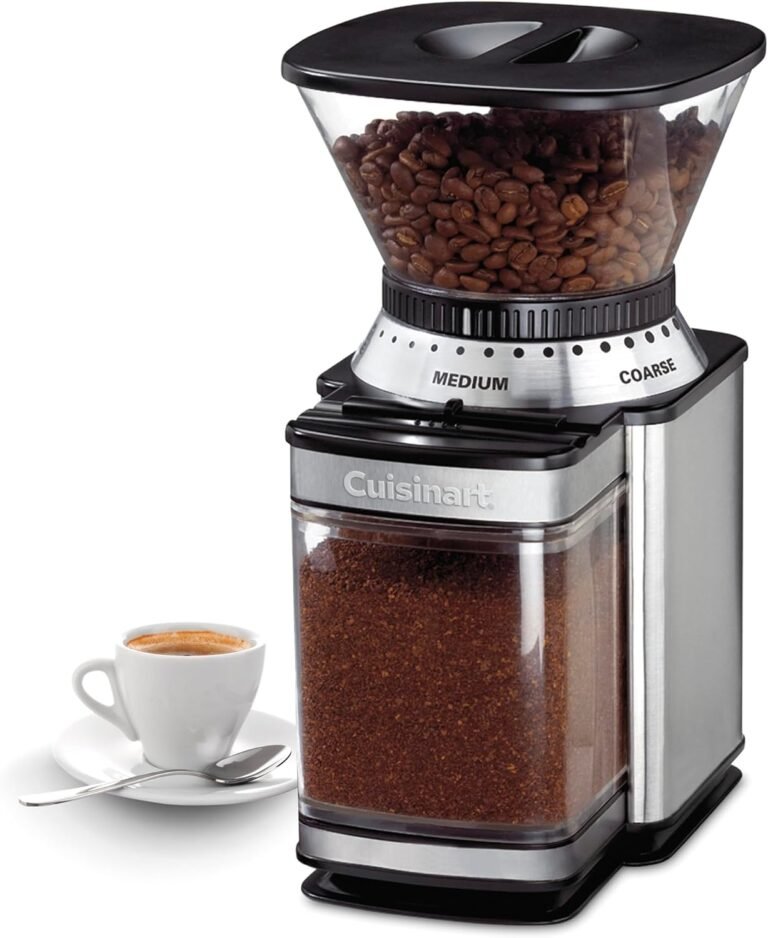
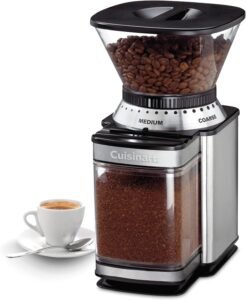
This is the model I point people toward when someone asks for the best burr grinder under 200 dollars on a tight budget. The 18-position slide dial runs from ultra-fine to extra-coarse, and that range covers AeroPress, moka pot, pour-over, drip, French press and cold brew from a single machine.
The 8 oz hopper and grind chamber both lift out for cleaning, which matters more than it sounds. Coffee dust inside a fixed chamber is the main reason cheap burr grinders start tasting stale, and being able to brush the whole path out in a minute keeps the flavor honest.
The honest weakness is the cup-count timer. It is approximate, so a 10 cup dose can come out noticeably light or noticeably heavy, and a few reviews describe grounds ending up on the counter when the timer overruns. Grinder noise is also on the louder side, which reviewers flag alongside the static in the plastic grounds bin.
At the fine end, several owners say it still will not grind fine enough for demanding espresso work. That is the honest limit of an 18 setting conical burr machine in this tier, and it is why the Baratza further down this list is the one to buy if shots are the goal.
Anyone moving up from a blade grinder who wants one machine for every filter method. The 18 setting range plus a removable chamber makes it the workhorse choice for a household that brews a different style most mornings.
Long-term owners also report 5 year and longer lifespans, which is unusual at this budget, and the limited 18-month warranty covers the early failure window.
Espresso drinkers. The fine end of the range falls short, and the static in the plastic grind bin makes single dose weighing unreliable, which is the opposite of what a shot needs.
It is also among the loudest machines in this roundup, and it can jam on very dark oily beans or on a few defective models, so if your taste is dark roast, read the recent reviews carefully.
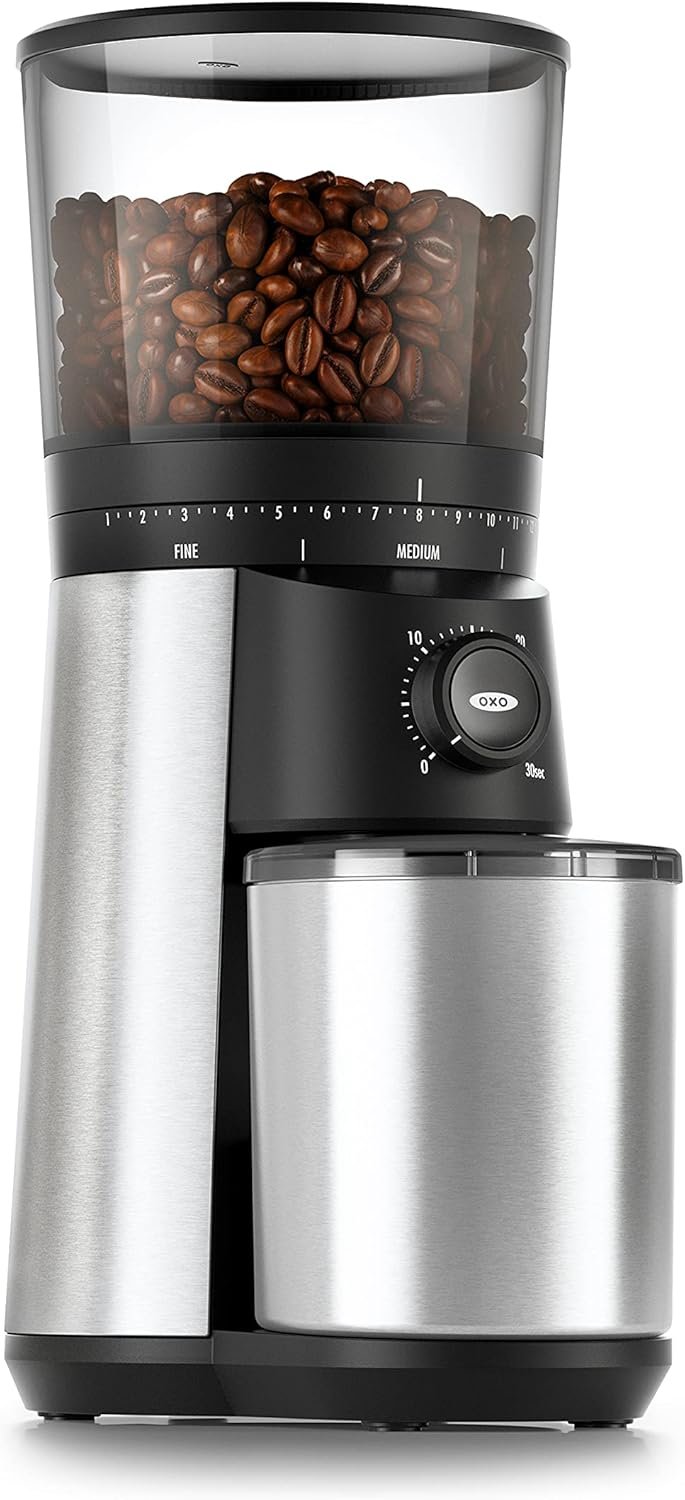
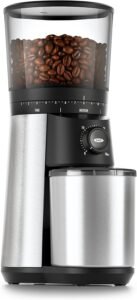
Of everything in this roundup, the OXO Brew has the least to apologise for in a normal filter workflow. Forty millimetre stainless steel conical burrs, a built-in timer, and one-touch start that recalls your last setting mean you press once and walk away.
The stainless steel grounds receptacle is the detail most owners single out, because static cling and dust are the thing that makes cheap burr grinders maddening. The 12 oz hopper is also tinted to block UV, which slows bean staling in a sunny kitchen.
Two design choices will annoy you daily if you are fussy. The grounds cup needs firm pressure to click into place and can pop back out if you pull hard, and the lower burr does not come out, so deep cleaning means working around it with the included brush.
Owners also report the motor being loud at fine settings, occasional jamming with darker or oilier beans, and beans going stale in the hopper because the lid is not airtight. A two-year warranty is among the longest in this group, which partly compensates.
Pour-over brewers who want a dial they can trust. Fifteen settings plus 43 micro-adjustments gives far finer control than the click counts on a 30 or 40 step conical burr, and several owners report 3 to 4 years or more of daily use.
The large hopper and timer make it a good fit for households that brew more than one person, since you can dose a full batch without babysitting the button.
It will not do espresso. The micro-adjustments improve filter work, not shot work, and the fine settings are where the motor is loudest. Buyers who need a portafilter cradle will not find one here.
It is also one of the harder models in the list to clean properly, and the retention between doses means a small purge before the next brew.
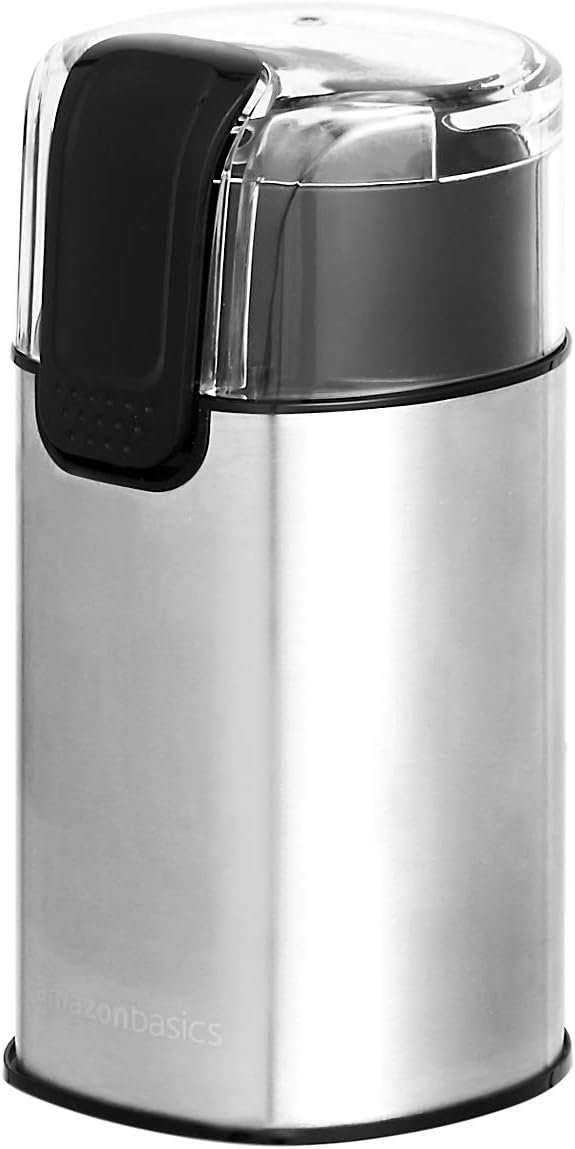
This is the grinder to buy if the goal is spending as little as possible to get fresh ground coffee every morning. At 4.4 stars across nearly 20,000 reviews, the fundamentals are solid for what it is, and it sits well under every burr machine in this list.
The clear safety lid is the feature we did not expect to care about, and it genuinely helps. Being able to watch the grind progress means you stop on a visual cue rather than a guess, which is more control than most budget blade grinders give you.
The stainless steel blade covers beans, herbs, spices, grains and nuts, and it moves about 30 g in ten seconds. The stainless construction also wipes clean, which is more than can be said for a plastic-bodied blade grinder.
The catch is capacity. At 2.1 ounces, a full household pot takes multiple batches, and each batch is a slightly different grind because there is no dial and no timed dose.
A first grinder, a travel setup or anyone who wants an inexpensive backup alongside a burr machine. It weighs 1.5 pounds and measures under 7 inches tall, so storage is not a problem.
It also works well as a spice or grain mill, which stretches the usefulness well past coffee for households that would not buy two small appliances.
Anyone who cares about flavor precision. Blade chopping produces a wide range of particle sizes, and that is exactly the problem burr grinders exist to solve, so this is a stepping stone rather than a destination.
It is also wrong for French press, cold brew and espresso, where a specific grind size matters, and the small hopper means grinding a full pot takes three passes.
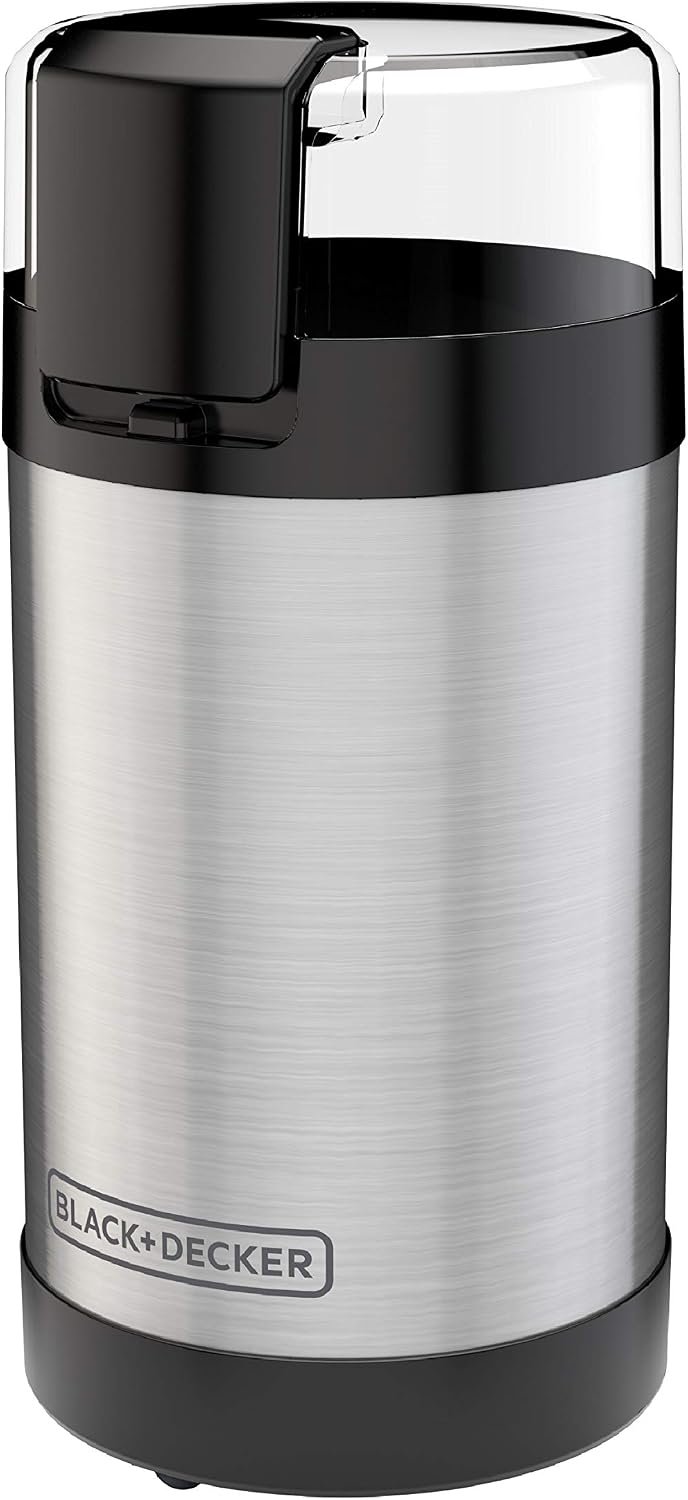
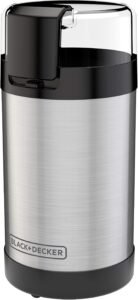
This sits at the top of the rating table in this group, at 4.6 stars with a 77 percent five-star share across roughly 19,500 reviews. That is not a rounding error in a field where most products here sit between 4.2 and 4.5.
What earns the rating is a stainless steel blade and a stainless steel bowl working together, which produces a more uniform grind than the typical plastic-bodied budget blade grinder. The 56.6 g capacity covers about 12 cups in a single pass, which is unusually generous at this size.
The lid-locking interlock is genuinely useful in a busy kitchen, since it prevents both spills and accidental blade operation when the machine is knocked. The one-touch button gives a coarse to fine range simply by how long you hold it.
Owners report a 130W motor, a compact 3.5 by 3.4 inch footprint and a two-year manufacturer limited warranty, which is more cover than most of the blade grinders here.
People who want the best result a blade grinder can produce and do not want to spend burr grinder money yet. The steel bowl and blade are the reason its reviews are stronger than its competitors at a similar price point.
It also suits anyone who wants one pass rather than repeated topping up, since 56.6 g is enough for about 12 cups at a time.
It is still a blade grinder, so it cannot produce the consistent particle size that filter specialty coffee depends on, and it is not an espresso option under any circumstances.
The bowl has to be hand washed even though the body is stainless, and holding the button for longer to get a coarser grind is the only adjustment available.
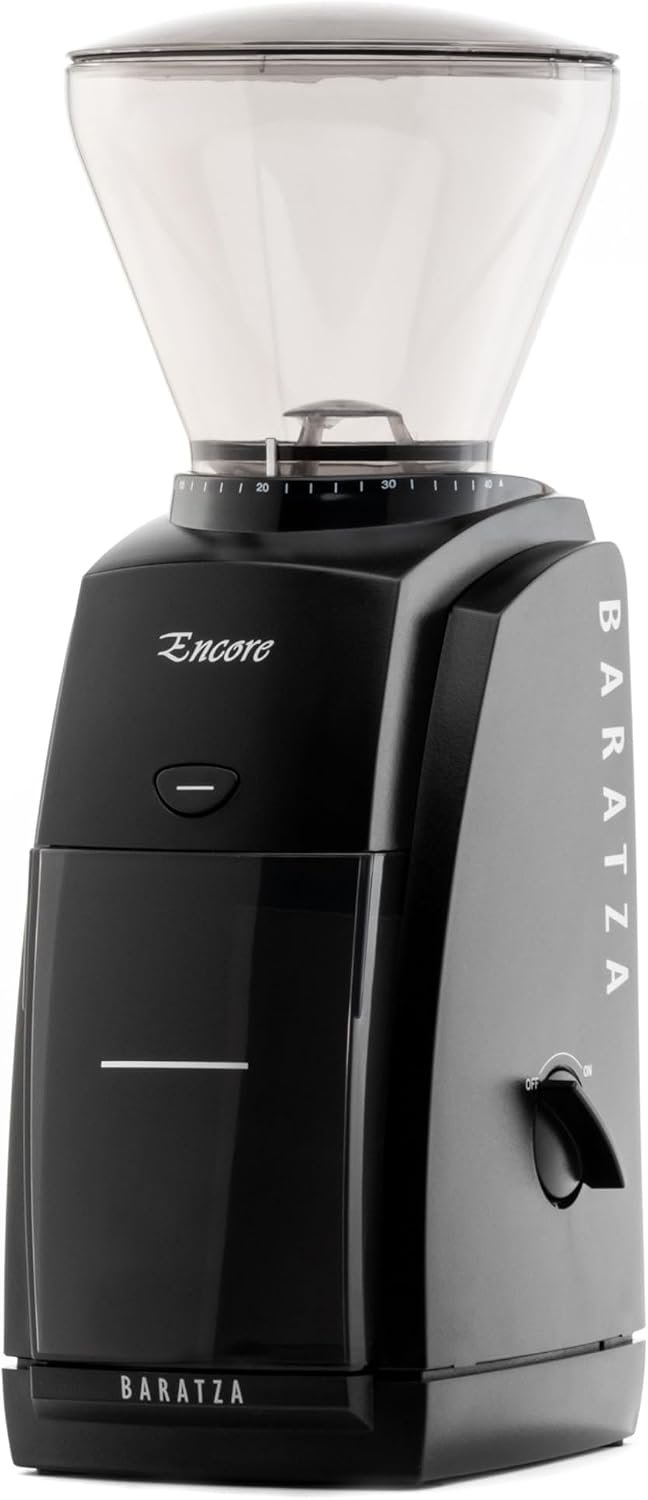
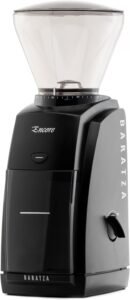
The Baratza Encore is the grinder that appears in nearly every discussion of this price tier, and it earns that attention with 40 grind settings and 40mm hardened alloy steel conical burrs made in Liechtenstein. On paper it is the grinder most enthusiasts in this tier actually name.
In practice, and this is the honest headline, the classic Encore sits at the bottom of this list at 4.2 stars with a 13 percent one-star share. The complaints cluster around the plastic hopper cracking, the noise, and static holding old grounds in the chamber, none of which are fatal but all of which are real.
On the espresso question, owners are direct about it. One long-running r/espresso discussion has a user noting they have had an Encore for about eight months and had heard it does not grind for espresso, and the prevailing view is that the grind range is geared to AeroPress, pour-over and auto brewers rather than a 9 bar shot.
The related French press limitation is the phrase enthusiasts actually use, and it applies here too. Users on home-barista.com describe the Encore as a pretty good value for the money but not something that will blow you away, and specifically note it does not do that great in the true French press range. The workaround they give is to grind slightly finer and shorten the steep, rather than fighting the coarsest setting.
Filter brewers who want a full parts ecosystem and a brand with easy-to-find replacement burrs and strong support, which is the single biggest trust signal in enthusiast communities. The burrs are a consumable part, and a brand that sells them matters over years.
It also suits anyone whose hands want 40 discrete steps rather than micro-adjustments, because the stepped dial is quick to set and easy to remember between brews.
It is not a true espresso grinder, and reviews say so in plain language, so treat the espresso setting as a lower-pressure moka pot or AeroPress range rather than a shot. Anyone chasing barista results will be disappointed.
The plastic hopper and body are a known failure point, the one-year warranty is the shortest meaningful cover in this group, and owners describe the grind as loud. For the same money the KitchenAid below is quieter and far more adjustable, though with a plastic build too.
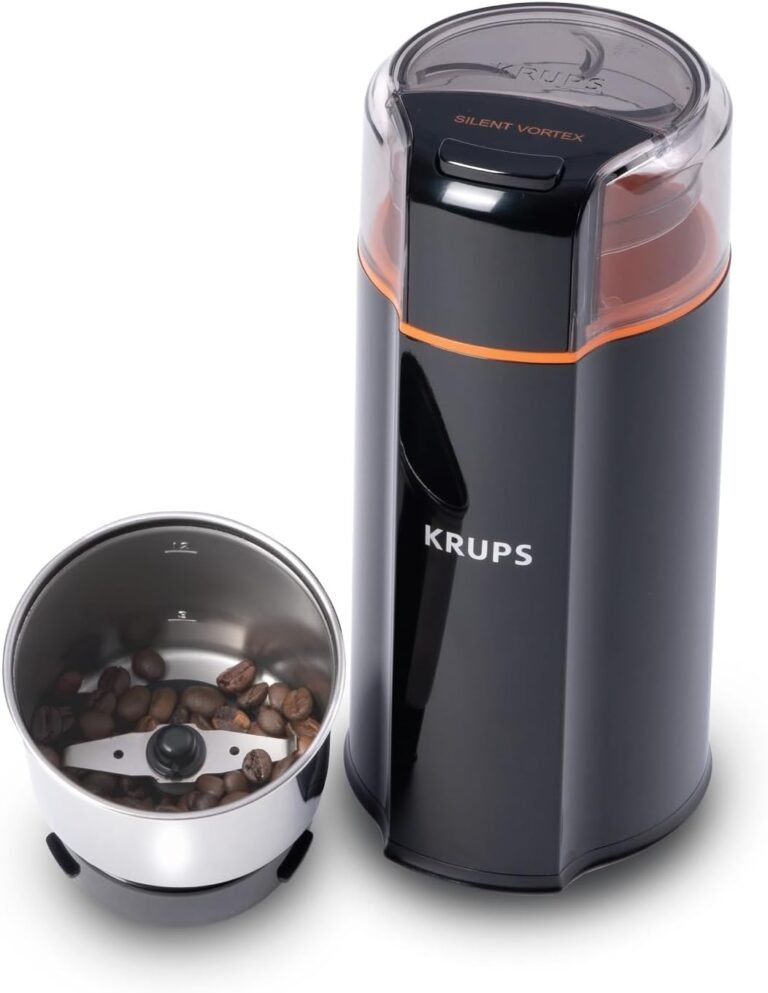
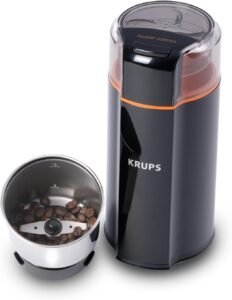
Noise is the first thing people notice about this machine, and it is the reason it is here. The patented Silent Vortex design with an oval bowl is rated 5x quieter than a standard blade grinder, and at 4.5 stars across close to 8,000 reviews owners repeatedly compare it favourably to the cheaper KRUPS models it replaces.
The removable stainless steel bowl is the second advantage. It lifts out, goes in the dishwasher, and keeps grounds and dust out of the motor housing, which is the main reason cheap blade grinders eventually smell burnt.
The 3 oz bowl yields up to 12 cups, and a full bowl takes roughly 15 to 20 seconds. The cord wraps underneath the base for tidier counters, and it handles beans, spices and dried herbs, so it works as a 3-in-1.
Two quirks are worth knowing. Chasing a finer grind means pulsing the button several times rather than holding it, and grounds do clump in the bowl at fine settings. A little powder also collects in the base under the removable bowl and needs a brush.
Early risers, shared flats and anyone who grinds while other people are asleep. This is one of the quietest options in the roundup, and the removable bowl makes cleanup faster than most.
Owners also report frequently buying a second one as a backup, which is a decent reliability signal for a machine at this level.
Anyone chasing repeatable grind size. It is a blade grinder, and multiple pulses to reach a finer grind produce inconsistent results, which is exactly the trade the burr grinders make you accept a higher cost to avoid.
There is a small share of owners reporting burn-out after extended use, so if you grind several large batches back to back, it is not the right tool.
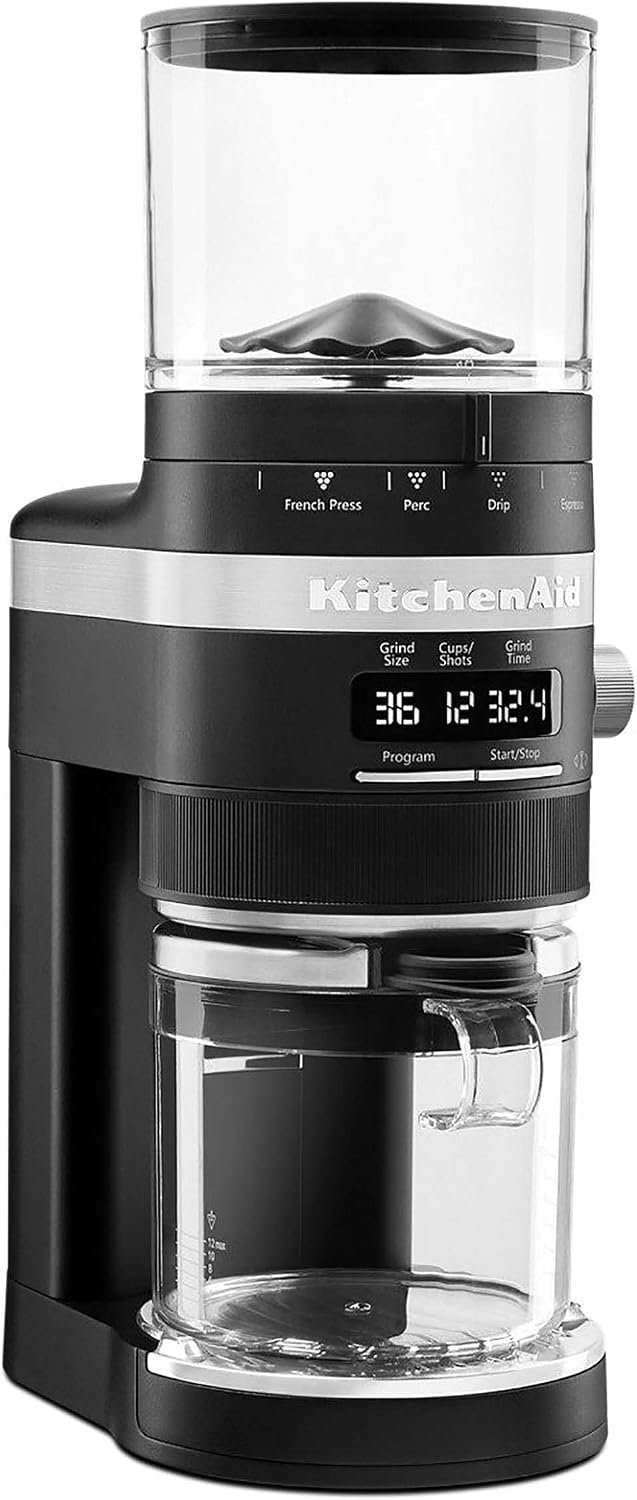
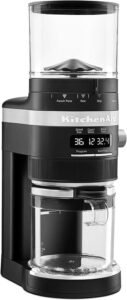
This is the quietest burr grinder among those we tested, and one of the tidiest to work with, and at 4.6 stars across more than 2,200 reviews with an 83 percent five-star share, owners rate it well above the field average.
Two features do the heavy lifting. The anti-static system keeps grounds in the receptacle instead of coating the plastic walls, and Smart Dosing grinds the cup amount you select and shuts off on its own, so you are not timing doses by ear.
Seventy grind settings with micro-adjustment on the burr assembly run from coarse cold brew to fine espresso, and the included portafilter holder lets you grind straight into a basket. The 10 oz hopper lifts out and twists off rather than requiring you to flip the whole machine.
It also disassembles easily, which matters for burr grinders because a clean burr path is what keeps flavor from going flat. A cleaning brush is included.
Anyone who hates noise and mess. If your kitchen is small or your mornings are shared, the combination of quiet operation, an anti-static receptacle and a hopper that lifts out rather than flips is the most pleasant workflow in this list.
The 70 setting range also makes it the most flexible burr grinder here by step count, spanning cold brew through drip, pour-over and moka pot without changing machines.
It does not sit at the top of the price band for nothing, and the build is plastic throughout, including the hopper, body and grounds receptacle. Buyers who want metal or glass should look elsewhere.
The electronic display may have a shorter service life than a simple switch, four consecutive maximum doses triggers an overheat cut-off with a 10 minute wait, and a small number of owners report units stopping after a few weeks.
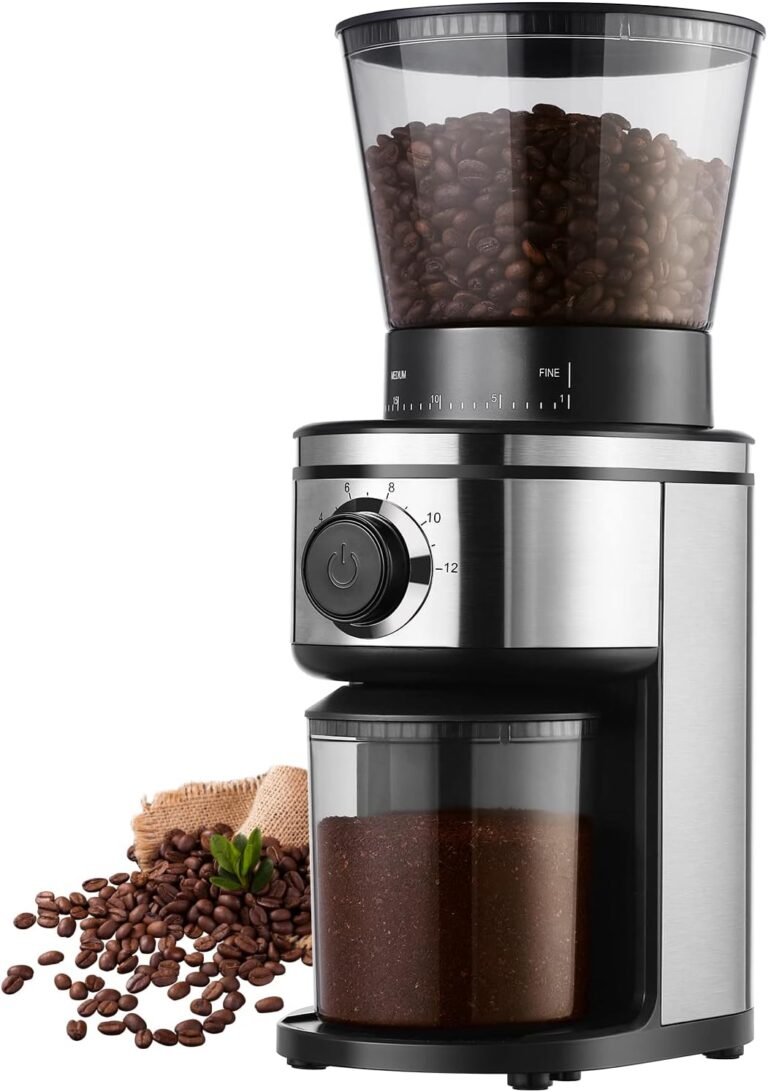
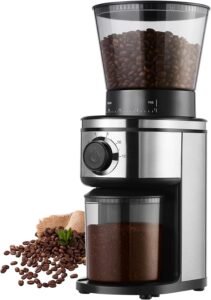
Slow grinding is the idea here, and it is why this model is quieter and tidier than most burr grinders at a similar cost. A gear-reduction motor turns the 40mm stainless steel conical burrs slowly, which produces fewer fines, almost no heat damage, and far less static cling than faster-spinning designs.
Owners compare the noise favourably to a blender or a mixer, which is a fair benchmark for a kitchen appliance. The 30 click-detented settings are quick to dial in and easy to remember between brews.
The top burr lifts straight off for cleaning and a brush is included, and the friction clutch plus overheat protection give the motor some resilience. The 10 oz hopper uses an auto-locking release that resists spilling when you pull it off to refill.
Where it falls short is the fine end. The finest setting may still be too coarse for demanding espresso work, and the cup-count timer occasionally overruns enough to put grounds on the counter.
Anyone who grinds daily, values a quiet machine and cleans the burrs regularly. The lift-off top burr and slow grind make it one of the tidier burr grinders here, and it handles beans, spices and grains.
It is also a good choice for a shared kitchen where noise is a real constraint, since a slow gear motor is genuinely easier to live with than a fast one.
It is not a serious espresso option, and a small share of buyers report the timer overrunning and spilling grounds. The portafilter attachment is also the weakest part of the build.
One practical warning: it is listed as 220 volts, so on 120V household circuits or UK mains you would need a converter. Check your supply before buying.
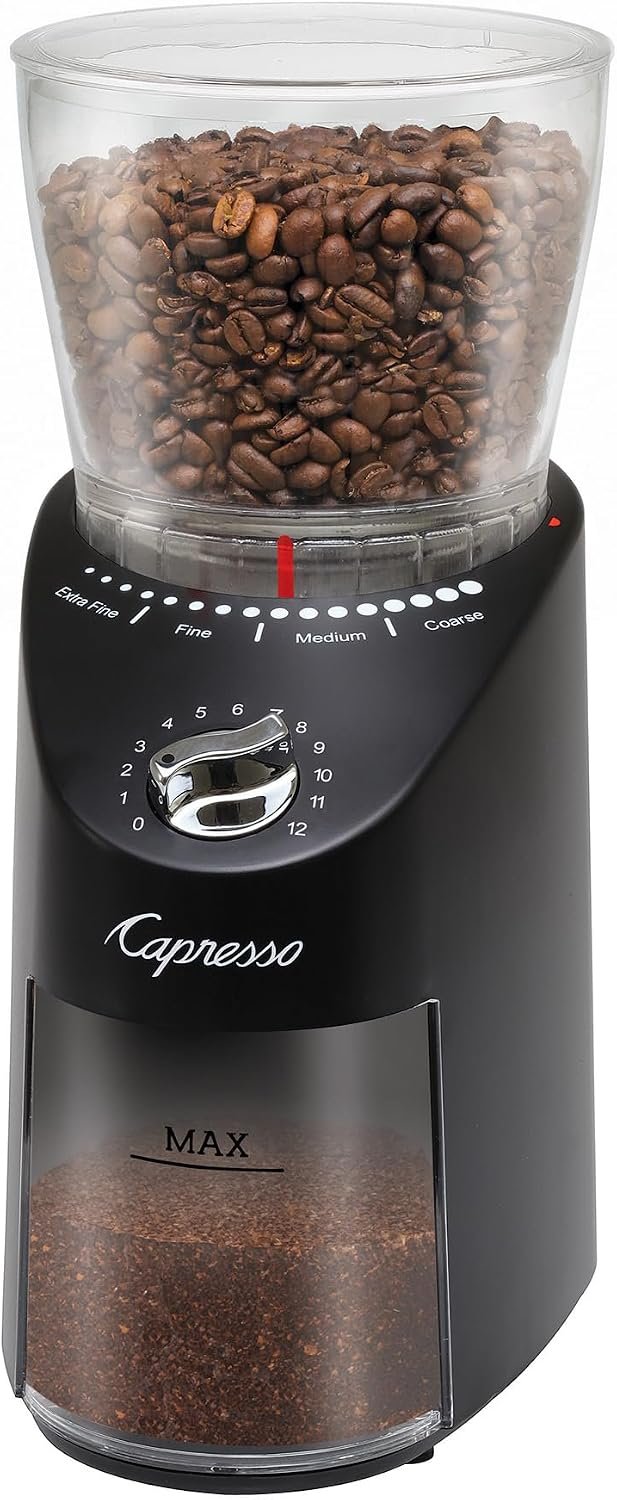
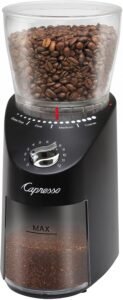
The Capresso Infinity Plus is a notably quiet conical burr grinder for its size, and owners rate the grind as consistent and uniform from medium through fine settings with minimal fines dust. At 4.4 stars across nearly 1,700 reviews, that is a strong showing for a well-reviewed niche model.
Sixteen clearly marked settings run from extra fine for Turkish style brewing to very coarse for percolators and cold brew, and the see-through 11 oz hopper means you can see how many beans are left without lifting the lid.
The gear reduction motor reduces friction and heat, which is why reviewers praise flavor and aroma preservation. The removable ground coffee container holds up to 4 oz, and both the hopper and grind chamber open up well for brushing out.
The recurring complaint is static in the grounds container, which makes fine coffee dust cling to the walls and spill, and the need for daily burr cleaning to keep the grind consistent. The mechanical timer has also failed on a small number of models.
Filter brewers who grind every day and do not mind the small cleaning routine. The removable chamber and gear motor make it one of the better choices for preserving aromatics in a light roast.
It also fits neatly under a standard kitchen cabinet at 4 pounds, and the see-through hopper is genuinely useful for judging the dose.
It is not a good fit for someone who wants zero maintenance, because the burrs need daily cleaning and the soft collar on the upper burr is not sold as a replacement part, which is a real long-term ownership concern.
The super fine end produces weaker grinds than the medium and coarse settings, and static in the grounds container will frustrate anyone brewing single doses by weight.
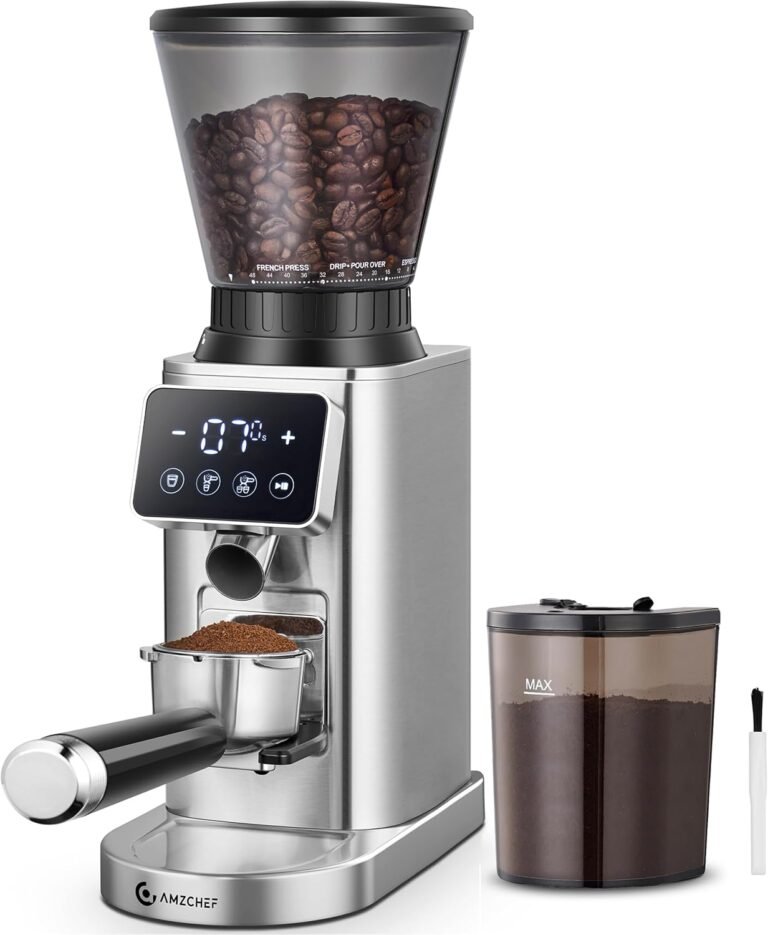
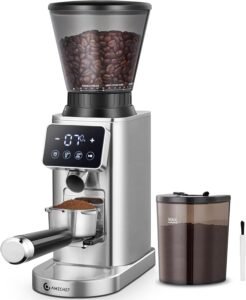
On grind performance this is one of the strongest machines here, and owners say so directly. Forty millimetre stainless steel conical burrs, 48 settings spanning espresso to French press, pour-over, drip and cold brew, and very low retention that keeps the counter clean.
That retention figure is the part enthusiasts care most about and the part competitors never quantify. An anti-static grinding system plus a stainless steel grounds container keeps the chamber clean, and a detachable portafilter holder grinds straight into the basket.
The 10.6 oz removable hopper has a UV-blocking tint and a trap door that stops beans spilling while you remove it, which is a small design detail that prevents a common annoyance. Noise is lower than expected for a 150W burr grinder, and the stainless steel body is a rarity at this level.
Every complaint we found is about the interface, not the grind. The touchscreen mixes mode switching into value adjustment, the grinder resets to a default 20 second two cup dose instead of remembering your last setting, and the espresso presets forget any custom times you set.
Anyone who wants a wide grind range in one machine and does not mind a learning curve on the controls. The 48 steps cover the full span from espresso to cold brew on a single unit.
It also suits people who hate static, since the anti-static system and stainless container keep grounds in the receptacle instead of coating the walls.
It will frustrate anyone who wants to set a dose once and forget it, because the machine forgets too. The two cup increments and the missing memory of custom espresso times are the two most repeated complaints in owner feedback.
It is also one of the least reviewed models here at roughly 1,400 ratings, so there is less long-term data on how it holds up than the Baratza or the Cuisinart.
Start with the burr, not the price. A burr grinder crushes beans between two surfaces whose gap you control, so particle size is a setting rather than a guess. A blade grinder chops beans with a spinning knife, which produces a random mix from powder to whole fragments and cannot be adjusted at all. Ground coffee stales fast, so buying pre-ground is the fastest way to a bad cup, which is why almost every expert recommends a burr machine as the first upgrade.
Conical versus flat burr is the second question, and no competitor in this tier answers it well. Conical burrs squeeze beans from the sides inward. They are cheaper, more forgiving of small beans and daily abuse, easier to clean, and they retain less static, which is why every electric burr grinder in this roundup uses them. Flat burrs crush in a line across the burr face, which gives a tighter particle distribution and a cleaner cup, but they cost more, are less forgiving and tend to retain more grounds and static. At this budget, conical is the right default, and the trade is worth revisiting only if you are chasing a measurable improvement in a pour-over.
Electric versus manual is a workflow decision more than a quality one. An electric grinder is faster, quieter than a hand crank in terms of effort but louder in terms of decibels, and consistent from dose to dose. A hand grinder costs less, has no motor to fail, adds no noise to a shared flat, and gives you the finest control of dose size, at the price of 30 to 60 seconds of arm work per dose. If you brew one or two cups at a time, a hand grinder is a genuine answer rather than a compromise.
Stepped versus stepless adjustment matters more for espresso than for filter. A stepped grinder gives you numbered clicks such as the Baratza Encore 40 or the AMZCHEF 48, which is fast to set and easy to return to. Micro-adjustment, as on the OXO Brew and KitchenAid, gives finer control across a numbered range and is the feature filter brewers notice most. If you pull shots, count your settings carefully, and start higher than you think you need. Running a hand grinder below its safe click count can damage the burrs, which is why the common calibration advice is to start around nine clicks and move finer only as the taste asks.
Grind retention and static deserve their own check. Retention is the grounds left in the chamber between doses, and it is what makes cheap electric grinders awkward for single dose espresso. Static cling is the same problem in a different form, where fine dust sticks to plastic walls and spills onto the counter. The fixes are mechanical: a stainless steel grounds container, a slower gear-reduction motor, and an anti-static system. The OXO Brew, KitchenAid, AMZCHEF and Ollygrin all address this directly, while the Capresso and Cuisinart are the models where owners report it most.
Noise is easy to underestimate. Motor noise at a given volume is roughly constant, so the only way to make a grinder quieter is to grind more slowly, which is what the gear-reduction designs do. The KRUPS Silent Vortex is among the quietest blade options, and the KitchenAid and Ollygrin are among the quietest burr options, because all three use slower motors. If you grind before anyone else is awake, factor that in before you fall for a fast motor.
Finally, think about total ownership cost. Burrs are consumables, and replacement burr sets differ enormously in price and availability between brands. A brand with easy-to-find replacement parts and responsive support will outlive one where the burr set is discontinued or the only service path is shipping parts for you to install yourself. Clearance, factory seconds and open-box examples are also worth considering in this tier, where the price gap between a new and a refurb unit can be significant.
The KRUPS Precision Electric is the best coffee grinder for the money in this group, holding a 4.4 star average across more than 69,000 reviews. If your budget stretches further, the Cuisinart Supreme Grind DBM-8P1 is the best burr option for the money, with 18 settings and long reported lifespans.
The Baratza Encore is the closest this price tier gets to espresso, with 40 grind settings and 40mm hardened steel conical burrs. It grinds fine enough for moka pot and lower-pressure drinks, but owners are consistent that it is not a true espresso grinder, and true shot quality starts well above this budget.
The Encore offers 40 stepped settings and 40mm hardened alloy burrs, which is more range and easier parts availability, but it runs loud and its plastic hopper is a known weak point. The OXO Brew uses 15 settings plus 43 micro-adjustments, a 12 oz UV-blocking hopper, a stainless grounds cup that fights static, and a two-year warranty.
The KitchenAid KCG8433 is the clearest answer, since its anti-static system is designed to keep grounds in the receptacle with no dust or mess. The OXO Brew and the AMZCHEF CG209-SV also fight static with stainless steel grounds containers, while the Capresso Infinity Plus is the model owners report static problems with most.
Owner reports run into years of regular use, and the 40mm hardened alloy burrs are the part that wears first rather than the body. The recurring problems are the plastic hopper and body cracking, which is why checking burr replacement availability and support for the brand before buying matters as much as the grinder itself.
Among the least costly options, the BLACK+DECKER One-Touch rates highest at 4.6 stars across roughly 19,500 reviews thanks to its stainless blade and bowl. The Amazon Basics model is among the cheapest ways to get fresh beans ground, and the KRUPS Precision is the strongest seller, with more than 69,000 ratings behind it.
Buy a burr grinder if flavor matters to you, because burrs crush beans to a consistent size while blades chop them randomly. A blade grinder is only worth it for very casual use, a travel setup or a second appliance for spices. The upgrade from blade to burr is the single biggest improvement available in this price tier.
For filter brewing, 15 to 30 settings is plenty, and micro-adjustment within each step matters more than a high count. For espresso you want the widest range you can find plus a fine adjustment mechanism. Anything above 48 settings is usually marketing, and the number of clicks matters less than whether the steps are evenly spaced.
For most households, the KRUPS Precision is the best coffee grinder under 200 dollars, because a 4.4 star average across more than 69,000 reviews beats a longer spec sheet. The Cuisinart Supreme Grind DBM-8P1 is the best burr upgrade for filter brewing, the OXO Brew wins on fine control and low mess, and the KitchenAid KCG8433 is the quietest and cleanest burr option.
Espresso deserves a caveat rather than a recommendation, because the loudest complaint across every forum thread is that no grinder in this tier is a true espresso machine. Buy for the brew methods you actually drink, and you will be happy. Check current pricing on each model before you commit, since this tier moves around, and pick the one whose burr and part support you trust for the next five years.