
12 Best Amazon Black Friday Sale Under $1000 TV Deals (December 2026) Ranked
Black Friday TV shopping always feels like a race. The model you researched on Monday disappears from the deal page…


Your router sits in a closet or on a shelf, quietly juggling every 4K stream, game download, video call and smart plug in the house. Then one evening everything buffers at once, you check the app, and you realize the cheap box your internet provider handed you years ago is finally the bottleneck. This year that frustration is actually useful timing, because our 11 Best Amazon Black Friday Sale Wi-Fi Router Deals put genuine Wi-Fi 7 and Wi-Fi 6E hardware within reach of almost any budget. One warning before we start: deals change fast during Black Friday week, and a price that is a record low on Monday can vanish by Friday.
My recommendation points straight to the TP-Link Archer BE3600 because it packs real Wi-Fi 7 hardware, two 2.5 Gbps ports and USB 3.0 into the cheapest solid package on this list, with one of the sharpest discounts of the season behind it. If your problem is coverage rather than speed, buy the ASUS ZenWiFi BD4 instead: its three units cover a big house, and its current markdown is the deepest deal we found this year.
We started from what actually matters when a router goes on sale: the hardware underneath the sticker. Every pick here was checked for its Wi-Fi standard and band layout, its wired port selection (2.5 Gbps is the new baseline and 5 or 10 Gbps is the stretch goal), its real coverage figure per unit rather than the marketing total, and the small print that quietly costs money later, such as security subscriptions or a short warranty. We also made sure the list spans single routers, two-packs, three-packs and a true travel router, so no one is told to buy a mesh system they do not need.
Because this is a Black Friday round-up, there is a second filter. Every product below carried a verifiable discount during the current sale window: a deal price documented by a named deals editor in the last two weeks, a Black Friday Deal badge live on its Amazon listing, or a record-low price confirmed against its own history. Where a markdown was modest, the pick earned its place on hardware alone only if the deal was still genuine. Products whose discounts we could not verify were dropped, not padded in.
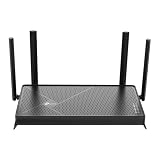
The TP-Link Archer BE3600 is the router that finally makes Wi-Fi 7 ordinary. It broadcasts a dual-band BE3600 signal (2,882 Mbps on 5 GHz plus 688 Mbps on 2.4 GHz), feeds it with a 2.0 GHz quad-core processor, and backs it with two 2.5 Gbps ports, three gigabit LAN ports and a USB 3.0 socket for a shared drive. In the US it is sold as the Archer BE230, so do not be surprised when the listing title says both names. It suits apartments and small houses up to roughly 2,000 square feet with around 60 connected devices, and it supports MLO, EasyMesh and TP-Link’s HomeShield suite.
Right now it is also one of the smartest buys in networking: its Black Friday price drop takes it down to what plain Wi-Fi 6 routers cost a year ago, which is why it earns the top spot. If you have gigabit fiber or faster, this is the least painful way to stop your router being the slow link in the chain.
Setup takes minutes in the Tether app, and our tip is to use it deliberately: plug your desktop, console or work machine directly into one of the 2.5 Gbps ports, and leave the second one free for a future multi-gig modem or an EasyMesh satellite. Turning on WPA3 and automatic firmware updates from the app finishes the job.
This is dual-band Wi-Fi 7, so the 6 GHz band that defines the standard’s tri-band models is missing. You still get Wi-Fi 7 features such as MLO and 4K-QAM, but crowded apartment buildings will push more traffic onto the busy 5 GHz band. If 6 GHz matters to you today, the TP-Link Archer AXE75 below is the cheaper route to that band, while the ASUS ZenWiFi BT10 is the full tri-band Wi-Fi 7 experience.
Buy it if you want modern speed and ports at a price that leaves money for everything else, especially in a smaller home where one unit covers every room. It fits below the mesh picks in this list: the ASUS ZenWiFi BD4 is the step up when one box cannot reach every corner, and the AXE75 is the alternative when wired sharing via USB does not matter but 6 GHz does.

The ASUS ZenWiFi BT10 is the no-compromises option of this list, and it looks the part: two clean, white, internal-antenna towers that cover up to 6,000 square feet together. Inside each unit sits tri-band Wi-Fi 7 rated up to 18 Gbps combined, with a 6 GHz band kept free for modern phones and laptops and for wireless backhaul between the two nodes. The wiring story is what sets it apart: two 10G ports per unit (one 10G WAN/LAN and one 10G LAN) mean a multi-gig fiber gateway, a NAS and a workstation can all connect at speeds no 2.5 Gbps port can deliver. ASUS also includes its network security and parental controls without a subscription, and covers the hardware with a three-year warranty.
Its Black Friday treatment is a real markdown on the two-pack plus a clip-on coupon on top, which is about as good as premium mesh ever gets during a sale. The saving is honest rather than huge, so treat this as a discount on something you would buy anyway.
Setup tip: if you can run a single Ethernet cable between the two BT10 units, do it. Wired backhaul frees the entire 6 GHz band for your devices and keeps speeds at the far node close to the near one, which is where expensive mesh systems earn their price.
Even discounted, the BT10 costs several times what the best-value picks on this page cost, and most homes with internet plans under two gigabits will never touch its ceiling. If your plan is a gigabit or less, the NETGEAR Orbi 770 delivers a similar tri-band Wi-Fi 7 layout with 2.5 Gbps ports for far less money.
This is the pick for large homes on two-gigabit or faster plans, for people who move huge files to a local NAS, and for anyone who wants the mesh to look like furniture. Compared with the Orbi 770, you are paying for 10 Gbps wiring and a longer warranty; compared with the ZenWiFi BD4 below, you are paying for the third band. Everyone else should pocket the difference.

The ASUS ZenWiFi BD4 is a three-pack of compact Wi-Fi 7 nodes rated at 3.6 Gbps combined, with MLO and 4K-QAM squeezing extra performance out of its two bands. Each node carries two auto-sensing 2.5G WAN/LAN ports and a quad-core 1.5 GHz processor, and together the trio is rated to cover up to 6,500 square feet. ASUS explicitly supports Ethernet backhaul for thick walls, includes its security and parental-control features without a subscription, and backs it all with a three-year warranty. Each unit weighs just over a pound and stands about as tall as a coffee mug, so they disappear onto shelves.
The deal is the headline: the BD4’s current Black Friday price is a genuine record low and the steepest discount we found on any router this season, taking an already mid-priced three-pack down to impulse-buy territory for big-home coverage. Nothing else here turns this little money into this much Wi-Fi 7 square footage.
Setup tip: start with the ASUS Router app and place the two satellite nodes on different floors or at opposite ends of the house. If your home has solid walls or multiple storeys, run Ethernet cable to even one satellite; the listing’s Ethernet-backhaul support means each wired node then dedicates its full radio budget to your devices.
The BD4 is dual-band, so unlike the BT10 or Orbi 770 there is no clean 6 GHz lane and no dedicated wireless backhaul band. In busy neighborhoods the 5 GHz band does double duty for backhaul and devices. If your floor plan defeats wireless mesh, wire the nodes and the limitation mostly evaporates; otherwise, step up to a tri-band pick.
This is the value anchor of the list: big coverage, modern standard, honest discount. Choose it over the MSI Roamii BE Lite if you want three units and dual 2.5G ports instead of two units with one; choose it over the BT10 if budget is real and your internet plan is under two gigabits.

The NETGEAR Orbi 770 two-pack pairs the RBE771 router with an RBE770 satellite to cover up to 5,500 square feet for as many as 100 devices. It is tri-band Wi-Fi 7 rated up to 11 Gbps, and Orbi’s long-standing trick still defines it: a dedicated band reserved for the router-to-satellite link, so speeds at the far end of the house stay close to speeds next to the router. A 2.5G WAN port accepts fast fiber gateways, further 2.5G LAN ports feed wired gear, and satellites can be daisy-chained or wired for awkward floor plans. WPA3, VPN support and automatic firmware updates round out the security basics.
Orbi systems rarely go on sale, which is why this Black Friday markdown matters: a straight price cut of this size on a current Wi-Fi 7 Orbi bundle is uncommon enough that deal trackers flagged it the moment it appeared. For large homes, that combination of hardware and timing is hard to beat.
Setup tip: place the satellite roughly halfway between the router and your worst dead zone, not inside the dead zone itself; Orbi’s mesh is strongest when the satellite still hears the router clearly. The app shows the link quality between units, so nudge positions until it reports a strong backhaul.
NETGEAR Armor, the threat-blocking layer, is included only as a 30-day trial, and the warranty runs one year rather than the three years ASUS offers. Neither flaw affects raw performance, but budget-conscious buyers should compare the total cost of ownership with the subscription-free ASUS picks before committing.
Choose the Orbi 770 if your home is too big for any single router on this page and you want tri-band stability without the BT10’s price. The ASUS ZenWiFi BD4 covers slightly more square footage for less money but goes dual-band; the eero Pro 7 is the better match if your household is device-heavy rather than space-heavy.

The Amazon eero Pro 7 is the mesh router for households where the device count has quietly exploded: lights, plugs, cameras, thermostats and speakers all fight for bandwidth, and this tri-band BE10800-class unit is rated for more than 200 connected devices per box. It supports internet plans up to 5 Gbps, offers two auto-sensing 5 GbE ports that accept today’s fastest gateways, and covers up to 2,000 square feet per unit with a 1.5 GHz quad-core brain under the smooth plastic shell. The eero app hides the complexity, pushes automatic updates, and pairs naturally with Alexa for network commands. A three-year warranty is generous for this category.
During Black Friday week the Pro 7 sits under Amazon’s own Black Friday Deal badge on its store listing, which is exactly the kind of first-party discount that tends to hold rather than flicker. Starting with one unit and adding nodes later is a realistic path, so the deal works even for renters.
Setup tip: put the gateway eero in open air rather than behind the TV or in a cabinet, and let the app’s placement hints guide you. If you plan to expand, buy matching Pro 7 nodes so the TrueMesh backhaul stays tri-band; mixing in cheaper eero 7 units works but pulls the system’s ceiling down.
Basic use is complete out of the box, but eero’s more useful parental filters, ad blocking and advanced threat scanning live inside the eero Plus subscription. Amazon also keeps the firmware closed, so tinkerers who want OpenWrt-style control should look at the GL.iNet picks instead.
Buy the Pro 7 if your problem is dozens of simultaneous smart devices rather than raw square footage, and if you already live in Alexa’s ecosystem. The Amazon eero 7 3-Pack below is the coverage-focused sibling at a lower tier; the Orbi 770 is the alternative when tri-band backhaul matters more than the app experience.

The MSI Roamii BE Lite two-pack is the surprise of this sale: a proper Wi-Fi 7 mesh, rated BE5000 with MLO and 4K-QAM, covering up to 5,800 square feet for 120-plus devices, priced like a mid-range single router during the Black Friday window. Each unit carries one 2.5 Gbps port and two gigabit LAN ports, ships with a wall-mount kit, and runs MSI’s FortiSecu protection built on Trend Micro technology. A three-year warranty is a strong statement for a newcomer brand in home networking, and MSI’s gaming pedigree shows in the app’s no-nonsense layout.
The deal is straightforward: a straight Black Friday price cut on the two-pack makes this the cheapest doorway into genuine Wi-Fi 7 mesh coverage in this round-up. For first-time mesh buyers, that is exactly the right product to discount.
Setup tip: use the wall-mount kit to place the second unit high and central, such as on a hallway wall between floors; mesh nodes behave better elevated than hidden behind furniture. Reserve the single 2.5 Gbps port for the incoming gateway line, and treat the gigabit ports as your wired budget for a TV or console.
With only one 2.5 Gbps port per unit and no 6 GHz band, the Roamii BE Lite cannot match the wired flexibility of the ZenWiFi BD4, whose nodes carry two 2.5G ports each. Heavy wired setups, or households that want a clean 6 GHz lane, should look one row up this list.
This is the pick for renters and first-time mesh buyers who want modern hardware at the bottom of the price ladder. Compared with the BD4, you trade one node and a 2.5G port for a lower outlay; compared with the eero 7 3-Pack, you trade ecosystem polish for raw value.

The TP-Link Archer AXE75 is the budget hero for the 6 GHz band. This tri-band Wi-Fi 6E router splits AXE5400 capacity across 2.4, 5 and 6 GHz, with 160 MHz channels and a 2.5 Gbps WAN/LAN port facing your modem. Its listing carries an Editors’ Choice badge from a major PC review outlet, and thousands of buyers a month keep it near the top of the router charts. The pitch is simple: put your newest phone or laptop on 6 GHz, where older devices cannot follow, and the congestion that plagues the 5 GHz band in apartment buildings simply stops applying to you. VPN server and client modes are built in, WPA3 is supported, and OneMesh means you can bolt on compatible TP-Link extenders later.
Its Black Friday pricing makes the 6 GHz upgrade almost disposable: this is one of the cheapest tri-band routers on Amazon in the current sale, and the discount is the kind that historically returns to full price quickly after the weekend. If you have been waiting for a sign to future-proof, this is it.
Setup tip: enable the separate 6 GHz network name during setup and connect only your newest devices to it; leave older gear on 5 GHz where its traffic cannot slow the fast lane. If you travel or work remotely, configure the built-in OpenVPN server before you leave home.
There is no USB port for a shared printer or storage drive, and only the single 2.5 Gbps port breaks the gigabit barrier, so a wired-heavy household will want more. The TP-Link Archer BE3600 at the top of this list adds USB 3.0 and a second 2.5 Gbps port while moving up to Wi-Fi 7, which is why it ranks first.
Buy the AXE75 if your devices are new enough to use 6 GHz and your budget refuses to stretch further. Latency-sensitive players should pair it with fast gear: our guide to the best gaming laptops with 360Hz displays explains why clean airwaves matter as much as panel speed. Everyone else should weigh the BE3600, which costs only modestly more in this sale.

The NETGEAR Orbi 370 Series three-pack (router RBE371 plus two RBE370 satellites) is the friendliest way to blanket a mid-size home in Wi-Fi 7. The system is rated up to 5 Gbps on its dual-band radios and covers up to 6,000 square feet for as many as 70 devices, with a 2.5G WAN port on the router and additional 2.5G LAN capacity for wired gear. Orbi’s app walks you through placement one satellite at a time, and the system is expandable: each extra satellite adds roughly 2,000 square feet, so starting with this bundle does not lock you in. Automatic firmware updates and WPA3 handle the security basics.
The Black Friday angle is timing and track record: this is the entry point of NETGEAR’s Wi-Fi 7 line, it carries Amazon’s Choice badge, and the current sale markdown brings it within reach of buyers who would normally settle for last-generation hardware. Deal editors flagged the price drop on this exact bundle during the current sale window.
Setup tip: follow the app’s signal-strength meter rather than floor-plan instinct, and keep both satellites within range of the router rather than chaining them edge to edge; the dual-band design performs best when each satellite hears the router strongly. Once placed, let the app pick the least-crowded channels.
Like its 770 sibling, the Orbi 370 bundles NETGEAR Armor only as a 30-day trial, and the hardware warranty runs a single year. The dual-band radios also mean there is no dedicated backhaul band, so wired backhaul or careful placement matters more here than on the tri-band Orbi 770 above.
This is the pick for first-time mesh buyers who want the box-and-app experience done properly. The Amazon eero 7 3-Pack covers the same footprint with a friendlier subscription story; the Orbi 770 is the step up when tri-band stability and more speed are worth real money.

The Amazon eero 7 three-pack is the fix for a house where two rooms have great Wi-Fi and the rest does not. Three dual-band Wi-Fi 7 units (BE5000 class, with MLO) cover up to 6,000 square feet together and support 120-plus devices, each unit carrying two auto-sensing 2.5 GbE ports and a compact, cable-friendly design at 1.3 pounds. The system supports internet plans up to 2.5 Gbps, updates itself automatically, and every unit can serve as the gateway or as an extender, which makes expansion trivial: buy one more unit later and place it where the app says coverage dips. A three-year warranty backs the whole set.
The deal earned its slot: the three-pack hit a record-low price during the early Black Friday sales, a cut that deal outlets tracked against the product’s own price history, and it has stayed at that level into the main event. For coverage-per-dollar, it is the strongest eero deal of the season.
Setup tip: space the three units so each one sits roughly in the middle of its third of the house, and put one on each floor if you have multiple storeys. The app’s built-in speed test will tell you if a unit is too far from its neighbor; move it closer before blaming your internet plan.
Each eero 7 unit tops out well below the eero Pro 7’s wireless throughput, and there is no 6 GHz band, so buyers with two-gigabit plans or tri-band ambitions should step up. For typical gigabit-and-under households, though, the ceiling is academic; the three nodes dividing the load is the win.
Buy this if dead zones, not bandwidth, are the complaint, and you want the lowest-maintenance mesh on the list. The MSI Roamii BE Lite is the rival budget two-pack; the Pro 7 is the upgrade when device count and 5 GbE wiring start to matter.

The GL.iNet Beryl AX (model GL-MT3000) is the router you pack, not the router you install. It is a palm-sized Wi-Fi 6 unit broadcasting 574 Mbps on 2.4 GHz and 2,402 Mbps on 5 GHz, powered over USB-C, with a 2.5G multi-gig WAN port, one gigabit LAN port and USB 3.0 in a 196-gram shell the size of a deck of cards. Its party trick is trust: join a hotel, airport or office network in repeater mode, and every device you own rides behind one firewall with WireGuard or OpenVPN tunnels preinstalled, so you never type hotel credentials on a laptop or console again. Under the hood it runs OpenWrt, which makes it a pocket lab for advanced users, and the whole thing carries a two-year warranty.
The deal situation is ideal for a travel pick: the listing carries a live Black Friday Deal badge with a countdown, and GL.iNet’s own sale page confirms the discount window, so you are buying at an official seasonal low rather than a marketing phantom.
Setup tip: configure it at home before the trip. Save your hotel-mode profile, set DNS-over-HTTPS, and wire your VPN provider’s configuration into WireGuard; on the road, the setup is then one tap at the check-in desk. Pack a short USB-C cable and you have router, repeater and VPN gateway in one pocket.
With a single gigabit LAN jack and WireGuard throughput around 300 Mbps, the Beryl AX is a travel tool, not a home hub. Wired desks with several devices, or VPN-heavy gigabit plans, will feel the limits; the Flint 3e below is the home-sized answer.
It is the obvious companion for frequent travelers and a quiet hero for students in dorms: our guide to the best laptops for college students makes the same argument about packing small and reliable gear. At home, the Archer AXE75 or Flint 3e take over where pocket hardware stops.

The GL.iNet Flint 3e (GL-BE6500) is the router for people whose most important network is the one made of cable. It is a dual-band Wi-Fi 7 router rated up to 6.5 Gbps with MLO and 4K-QAM, but the story is the back panel: five 2.5 Gbps Ethernet ports, a configuration that normally lives on routers costing several times more. WireGuard and OpenVPN move around 1,100 Mbps, the 1 GB of DDR4 memory shrugs off heavy VPN and filter rules, and the OpenWrt-based firmware wraps Linux-grade control in an interface a normal person can use. WPA3 is supported, and the two-year warranty covers the experiment-heavy audience this router attracts.
Its Black Friday discount is the deepest percentage cut on a single-box router in this list, with a live Black Friday Deal badge on the listing and GL.iNet’s official sale page confirming the same promotion. For tinkerers, that makes it the cheapest serious multi-gig wired backbone of the season.
Setup tip: use those five ports as a built-in switch. Plug your NAS, desktop and console straight in and let everything else ride on Wi-Fi 7; if you move big project files locally, the difference is night and day. Creators who push huge assets over a LAN will recognize the same logic we apply in our guide to the best laptops for CAD and 3D modeling: the pipeline is only as fast as its slowest link.
The 2,500-square-foot coverage rating trails every mesh pick on this page, and the dual-band radios lack the 6 GHz lane. Large homes can pair it with access points later, but buyers who need one box to fill a house should head straight to the ZenWiFi BD4 or Orbi picks.
Buy the Flint 3e if wired reliability and VPN performance matter more than blanketing every bedroom in signal. It complements rather than competes with the mesh picks above, and alongside the Beryl AX it is the second proof that GL.iNet’s sale prices are the quiet bargain of this Black Friday.
A few more sale items came close to the list. The TP-Link Deco BE63 three-pack brings tri-band Wi-Fi 7 mesh with 5 Gbps-class ports at a healthy discount, and the TP-Link Deco XE75 remains one of the most popular Wi-Fi 6E mesh buys with an extra coupon stacked on its sale price during the current window. ASUS’s own Black Friday guide adds the RT-BE82U, a Wi-Fi 7 single router with 2.5 Gbps ports, at a solid seasonal markdown; any of the three is a sensible substitute if your preferred pick above sells out before the weekend ends.
Wi-Fi 7 is the current standard, and it brings MLO, which lets a device use two bands at once, plus 4K-QAM for denser data packing. But band layout matters as much as the badge: the TP-Link Archer BE3600 is dual-band Wi-Fi 7, meaning all that speed shares the classic 2.4 and 5 GHz lanes, while the ASUS ZenWiFi BT10 and NETGEAR Orbi 770 add a 6 GHz band that older devices cannot clutter. Wi-Fi 6E hardware like the Archer AXE75 still delivers the same clean-air benefit for less money. Check what your phone and laptop actually support; a tri-band router behind two generations of devices is money spent in the wrong place. If your gear list is built around competitive play, our overview of the best gaming laptops shows which machines actually exploit 6 GHz and Wi-Fi 7 speeds.
Wireless numbers sell routers, but wired ports decide whether your internet plan ever reaches full speed. A 2.5 Gbps WAN port is the sensible baseline for modern fiber, which the Archer BE3600, Orbi 770 and Orbi 370 all provide, while the eero Pro 7 steps up to two 5 GbE ports and the ZenWiFi BT10 goes all the way to 10 Gbps. Count the fast ports, not the total: the GL.iNet Flint 3e offers five 2.5 Gbps jacks, meaning a NAS, console, desktop and work machine can all run multi-gig without buying a switch. On mesh systems, also check whether the satellite nodes repeat the fast ports or quietly downgrade to gigabit, which is exactly where the Roamii BE Lite’s single 2.5 Gbps jack per unit becomes a planning decision.
Every mesh system quotes the combined footprint of its full pack: 6,500 square feet for the ZenWiFi BD4 trio, 6,000 for the Orbi 370 and eero 7 three-packs, 5,500 for the two-pack Orbi 770. Those numbers assume open American-style floor plans; plaster, brick and stairwells subtract aggressively. The practical rule is to buy for the pack size that lets you place a unit on each floor or at each end of the house, and to prefer systems that accept Ethernet backhaul, like the ASUS picks, so thick walls stop mattering. Single routers have honest limits: the BE3600’s 2,000 square feet is fine for an apartment and fiction for a split-level. When in doubt, buy the extra node during the sale, because expandability is cheapest now.
Some of the biggest names in this list monetize you after the box is paid for. NETGEAR’s Armor threat protection is a 30-day trial on both Orbi systems here, and eero’s worthwhile parental filters and advanced scanning sit behind eero Plus. TP-Link’s HomeShield splits free and paid tiers, while ASUS and GL.iNet include their security features without a recurring bill. None of these subscriptions affects raw speed, but over a typical five-year router life they can exceed the hardware’s cost. Decide before buying whether you would actually pay monthly for network filtering; if the answer is no, weight the subscription-free picks more heavily than their discounted rivals.
Routers are appliances that you keep for years, so check how they grow. Mesh families only mix within their own brands: eero nodes extend eero, Orbi extends Orbi, while TP-Link’s EasyMesh and ASUS’s AiMesh are more tolerant of mixed hardware. If you like control, the two GL.iNet units run OpenWrt-based firmware, unlocking VPN policies, VLANs and plugin features that closed firmware never exposes. Casual buyers should value automatic updates over tinkering, which is eero’s quiet strength. Related reading: our best laptops for Unreal Engine guide applies the same principle of matching platform openness to how hands-on you actually want to be. Whatever you choose, confirm the system ships automatic firmware updates on day one.
Black Friday prices are not always what they seem, so verify before you trust a badge. First, check the product’s price history with a tracker tool and confirm the current price actually undercuts recent months rather than matching a pre-inflated list price; deal editors openly warn that ‘was’ prices can hinge on rolling averages. Second, compare across retailers in two minutes, because a genuine Amazon deal usually appears at Best Buy or the manufacturer’s own store within hours, as several on this list do. Third, prefer deals that a named outlet dated during the sale window or that carry a live Black Friday Deal badge, as every pick here does. Finally, distrust any discount on hardware older than three years; record lows matter most on current-generation models like these.
Yes, and the pattern is well documented. Routers, especially current-generation Wi-Fi 7 models, hit their lowest tracked prices of the year during the Black Friday and Cyber Monday window, and several picks on this page set genuine record lows this week. The caution is that some ‘was’ prices rely on inflated list prices, which is why we verified each deal against dated deal reports and live badges before including it.
For most buyers this year, yes, because the sale prices removed the usual premium. Wi-Fi 7 adds MLO and 4K-QAM, which help busy households even without 6 GHz, and entry dual-band models now cost what Wi-Fi 6 routers did last year. If you own newer phones and laptops with 6 GHz radios, tri-band Wi-Fi 7 like the BT10 or Orbi 770 is the cleaner long-term buy; otherwise dual-band Wi-Fi 7 already feels like an upgrade.
Count rooms, not gadgets. A single router like the TP-Link Archer BE3600 reliably serves apartments and small single-storey homes up to roughly 2,000 square feet. If your home has two or more floors, exterior-heavy walls or a yard you want covered, a mesh pack such as the ASUS ZenWiFi BD4 or eero 7 three-pack delivers steadier speeds room to room than one powerful router pushed to its limit.
Only if the router is the bottleneck, which it often is. Your internet plan delivers the same line speed regardless, but an old router can throttle real-world throughput, especially on gigabit and faster plans or over long distances. A modern pick with 2.5 Gbps or faster ports, like the Flint 3e, and current radios restores the full plan speed to devices. It will not raise the plan you pay for, and no router changes your ISP’s line.
MLO stands for Multi-Link Operation, a headline Wi-Fi 7 feature that lets one device talk to the router over two bands at the same time, combining their capacity and adding resilience. Practically it means steadier speeds when the house is busy and lower lag spikes. It requires both the router and the device to support Wi-Fi 7, which is why our picks note MLO support in their specs.
There is no single end time: Amazon’s Black Friday Deal badges run through the sale week and typically roll into Cyber Monday, while stock-limited offers can lapse within hours. The record lows on this page appeared during the early-access period and held into the main event, but the safe assumption is that the week of Cyber Monday is the last reliable window before prices drift back up.
For most households, the decision comes down to a single question: is your problem speed or space? The TP-Link Archer BE3600 fixes speed at the lowest price we saw this season, and it is the pick we would buy with our own money for an apartment or small home. Big homes should follow the coverage path to the ASUS ZenWiFi BD4, which turns the deepest discount of the year into whole-home Wi-Fi 7, while device-crowded smart homes and travelers can trust the eero Pro 7 and Beryl AX respectively. Whichever route you take, buy during the current sale window rather than after it: these record lows are seasonal, and the fastest way to lose money on a great router is to pay last month’s price for it.