11 Best Amazon Black Friday Sale Wi-Fi Router Deals (December 2026) Reviews
Your router sits in a closet or on a shelf, quietly juggling every 4K stream, game download, video call and…

Black Friday TV shopping always feels like a race. The model you researched on Monday disappears from the deal page by Wednesday, and the “low” you saw quoted by a friend may already be yesterday’s price. Deals change fast this time of year, and the under-$1000 segment moves quicker than any other, because that is where Amazon, Hisense, Samsung, TCL and the rest do their heaviest holiday volume. That is exactly why this guide tracks 12 Best Amazon Black Friday Sale Under $1000 TV Deals that were verified at a discount or record-low price within the past two weeks, rather than a static list of good TVs.
My recommendation points straight to the Hisense U7 Mini-LED because it combines a native 165Hz panel, VRR gaming features, Dolby Vision IQ and a mini-LED backlight at a price that has been beaten down well below its launch tag. Buyers who want true OLED black levels in a compact room should buy the Samsung S90H OLED instead, while anyone chasing the biggest screen for the least money should pick the Hisense U6 Pro.
Every TV here was judged on the factors that actually separate a good holiday purchase from a regifted one: panel technology and real backlight performance, the size-to-price ratio for the room it is likely to live in, gaming credentials such as native refresh rate and VRR, and the smart platform that runs the whole experience. Brand diversity was deliberately enforced too, so you are not choosing between eleven near-identical panels from one factory; twelve picks span nine brands, from Hisense and Samsung to Sony, TCL, LG, Panasonic, Roku, Amazon and Insignia, each verified as an in-stock Amazon listing.
Because this is a Black Friday guide, a discount was a requirement, not a bonus. Each pick carries evidence of a verified deal within the last two weeks: a dated deal roundup from CNET, Mashable, USA Today or CableTV.com, or a live Black Friday deal badge on the Amazon listing itself. If a model’s discount could not be confirmed from a named, dated source, it was dropped from consideration and another TV took its slot, which is why a few well-marketed 2026 sets are missing here.

The Hisense U7 Mini-LED is the television that most buyers should put in the cart first. It is a 65-inch mini-LED set with Hisense’s Hi-QLED panel treatment, a native 165Hz refresh rate, and VRR stretching up to 330, which is well beyond what console gaming currently demands. Dolby Vision IQ and Dolby Atmos round out a spec sheet that normally belongs to televisions costing far more, and CNET’s mid-November deal roundup flagged the 65-inch model at a fresh low price with a 165Hz mini-LED panel. That combination of panel hardware, gaming features and a genuine holiday discount is why it wears the Editor’s Choice badge.
It is a good deal right now because the Black Friday pricing has pushed it below models with visibly weaker backlights, and the discount applies to one of the most complete gaming televisions in this price class. If you split your week between movie nights and competitive play, this is the one TV on the list that does both without an asterisk.
Setup is simple but worth doing properly. Place the TV about eight feet from the sofa to let the 65-inch panel breathe, plug your console into the HDMI port Hisense reserves for full-bandwidth gaming features, and switch on VRR in the console’s display settings so the 165Hz panel can do its work. In the Fire TV picture menu, leave motion smoothing off for films; the panel is quick enough that soap-opera effect only softens the image.
Hisense runs the U7 on Amazon’s Fire TV platform, and that means the home screen blends sponsored tiles and app promotions into the content rows. You can demote some of it by reordering apps and turning off featured-content settings, but you cannot scrub it out entirely. Buyers who want a cleaner interface usually lean toward Google TV or Roku options on this list.
Buy the U7 if you want one television that handles movies, sports and gaming at a level that feels like cheating at this price. If your budget is tighter, the Hisense U6 Pro keeps the mini-LED panel and glare-free finish while stepping down to 144Hz, and if you would rather have OLED black levels than raw brightness, the Samsung S90H OLED is the premium alternative.
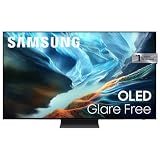
The Samsung S90H OLED is the television CNET named the best OLED of 2026, and for December it sits on Amazon with a live Black Friday deal badge across every size in the range. The 48-inch variant is the one that slips just under this guide’s budget cap, and it brings self-emissive OLED contrast, Motion Xcelerator 165Hz and Samsung’s 4K AI Upscaling Pro processing into rooms where a 65-inch simply will not fit. This is the pick for anyone who has been waiting for OLED pricing to reach a realistic holiday number.
It earns the Premium Pick badge because it is the only OLED on this list with an award-level review pedigree behind it, and because the current discount lands it near the cheapest an award-winning OLED has ever sold for. Movie watchers get pixel-level contrast, gamers get near-instant pixel response, and the ultra-slim panel hangs flush on a wall with a basic bracket.
Two setup habits make the S90H shine. First, turn on the pixel-shift and screen-saver options in the settings menu so static logos and streaming menus never risk burn-in over a long weekend of bingeing. Second, let the AI upscaling do its job by feeding it the highest-bitrate sources you can; the 4K AI Upscaling Pro engine is at its best with high-quality 4K streams rather than heavily compressed feeds.
The deal works beautifully at 48 inches, but every step up in size pushes the price well past this guide’s ceiling. Samsung also skips Dolby Vision across its TV range, favoring HDR10+ instead, so viewers with big Dolby Vision libraries will notice the difference. Neither point is a dealbreaker in a small room, but both matter if you are trying to turn this into a main living-room screen.
The S90H suits apartments, bedrooms, dens and any viewing space under about ten feet. If you need a bigger screen at the same money, the TCL QM8L pushes flagship mini-LED brightness onto a 65-inch panel, and if you want OLED in a size that fits a mid-size living room, the LG C6 OLED at 55 inches is the alternative worth checking.

The Hisense U6 Pro is the deal that turns Black Friday skeptics into believers. CNET’s early-Black-Friday Hisense roundup logged the 65-inch U6 Pro at a steep cut from its list price, and Amazon’s own listing has been carrying a Black Friday deal badge on and off since then. You get a 65-inch mini-LED panel with Hi-QLED color, a native 144Hz refresh rate, a glare-free screen finish and Dolby Vision support, which is an almost unfair list of features for the money it is asking this month.
It is the Best Value pick because the gap between its usual price and its Black Friday price is the widest on this list. For a first big-screen upgrade, a second TV for the family room, or a replacement for an aging 1080p set, nothing else here delivers this much panel technology per dollar.
Put the U6 Pro where ordinary TVs struggle: directly opposite a window or under bright ceiling lights. The glare-free coating does genuine work there, keeping the picture legible during daytime sports. In the picture menu, switch the motion smoothing down when you watch films, because Motion Rate 480 is an interpolation figure and the smoothing can make film movement feel artificial. The native 144Hz panel handles games without any of that help.
Hisense advertises Motion Rate 480, which sounds faster than the U7’s 165Hz until you learn it is a processing label rather than the panel’s true refresh rate. The U6 Pro remains a genuinely fast 144Hz television, but buyers comparing spec sheets should read the fine print. Fire TV’s sponsored tiles also appear here, as they do across the Fire TV picks on this list.
Choose the U6 Pro when budget is the deciding factor but you refuse to give up contrast and brightness. If the difference in price feels small once you are at checkout, stepping up to the Hisense U7 Mini-LED buys you native 165Hz and stronger gaming credentials, and if you would rather spend the savings on a soundbar, the Amazon Ember 4-Series covers the basics for less.

The Sony BRAVIA 6 OLED is the pick for rooms where a 65-inch panel would dominate the wall. At 48 inches it is the compact OLED entry of this list, carrying Sony’s picture processing, a 4K HDR OLED panel, and Google TV with Gemini search, which makes finding a specific film feel like asking a friend rather than typing on a remote. CNET’s confirmed early-Black-Friday Amazon deal list includes the 48-inch BRAVIA 6 OLED at nearly a third off its list price, which is remarkable territory for a Sony OLED.
It is a good deal right now because Sony rarely lets its OLED line drift this close to the three-figure-dollar range, and the current discount puts a premium brand inside a budget cap that usually belongs to Hisense and TCL hardware.
Setup tip: after the initial Google TV sign-in, spend five minutes in the picture-mode menu and select the setting tuned for the room’s lighting rather than leaving it on the showroom standard. OLED panels respond strongly to correct mode selection, and the 48-inch size rewards closer viewing distances of five to seven feet, so position seating accordingly.
The BRAVIA 6 OLED deal works at 48 inches, and that is where it stops. Larger BRAVIA OLED sizes sell well beyond this guide’s ceiling, so living-room shoppers with bigger walls need a different pick. That constraint is the price of Sony processing and OLED contrast at this level, and it is worth accepting in a bedroom, office or den.
Buy the BRAVIA 6 OLED if the room is small and the picture standards are not negotiable. If you want the same OLED contrast on a slightly bigger panel, the Samsung S90H OLED at 48 inches or the LG C6 OLED at 55 inches are the alternatives, and if the wall is truly tiny, the Insignia F40 Fire TV handles a kitchen or bedroom for a fraction of the cost.

The TCL QM8L is TCL’s flagship mini-LED line, and at 65 inches it is the brightest television on this list by a wide margin. CableTV’s Black Friday coverage on November 13 recorded the 65-inch QM8L at roughly 60 percent off its list price, a discount so deep that the listing now carries a live Black Friday deal badge on Amazon. The panel is TCL’s SQD-Mini LED construction with a 144Hz refresh rate, IMAX Enhanced certification and Google TV with Gemini, and it is the natural choice for a sun-drenched room where an OLED’s ambitions collapse into glare.
It is a good deal right now because flagship mini-LED hardware almost never sells inside this guide’s budget cap, and the QM8L does it while still carrying the review awards TCL’s flagship line has collected in recent years.
Setup tip: place it opposite the brightest window in the room rather than beside it, then choose the IMAX Enhanced picture mode for theatrical films; it is tuned to preserve director intent without the brightness collapse you get from energy-saving modes. For sports, the 144Hz panel plus Google TV’s low-latency settings keep motion clean on big plays.
Discounts this deep usually mean a product cycle is clearing out, and the QM8L’s pricing follows that pattern: the 65-inch squeaks under the cap, while larger sizes leap far beyond it. Stock also tends to thin out as Black Friday week progresses, so hesitation on this one costs more than on slower-moving deals.
Buy the QM8L if your room fights sunlight daily and you want the maximum contrast money buys under this ceiling. If you want Samsung’s take on midrange mini-LED instead, the Samsung QN70H Mini-LED is a solid 65-inch alternative, and for a cheaper bright-room panel with a glare-free finish, the Panasonic W85C QD-Mini LED earns its badge on anti-glare hardware.

The LG C6 OLED is the classic movie-lover’s television, and the 55-inch version briefly touched its lowest price ever earlier this month, with Mashable logging the drop at Amazon and Best Buy in their early-Black-Friday coverage. The panel is LG’s OLED evo construction driven by the a11 AI processor, with Dolby Vision handling and a 120Hz refresh rate. In a dark room, this is the picture that makes visitors ask what you changed.
It qualifies as a deal pick because that record low arrived during the current Black Friday window, and LG’s C-series discounts typically persist in waves through the holiday; the current tag still sits at a meaningful cut from list even when the absolute bottom has passed.
Setup tip: choose Filmmaker Mode or the equivalent Cinema setting and leave it there; the a11 processor does its best work with motion smoothing switched off. If your evenings involve streaming, Dolby Vision titles on the major services will trigger the TV’s dynamic metadata automatically, which is exactly where OLED evo contrast earns its reputation.
The C6’s discount has already bounced once since the record low, and LG deal pricing tends to drift up and down as the holiday progresses rather than holding steady. The webOS home screen also carries sponsored rows, though fewer than Fire TV. Buyers should treat the live Amazon tag as the source of truth rather than the number they remember from a deal article.
Buy the C6 if movies in a controlled-light room outrank everything else on your list. If gaming leads your priorities instead, the Samsung S90H OLED brings faster motion handling at the same OLED idea, and if the room needs more brightness than any OLED can deliver, the TCL QM8L Mini-LED is the trade worth making.

The Samsung QN70H is the television for buyers who want Samsung’s Neo QLED mini-LED idea of picture quality without the OLED-tier price. CNET’s confirmed early-Black-Friday Amazon roundup lists the 65-inch QN70H at a solid cut from its list price, and the live listing sits midlist on this guide’s price ladder. Quantum dot color reaches 100 percent Color Volume, the NQ4 AI processor handles upscaling, and Samsung’s Vision AI suite adapts the picture to what you are watching.
It is a good deal right now because mini-LED at this tier rarely dips this far outside of Black Friday week, and the QN70H holds a brand-name panel pedigree that the budget tier below it cannot match.
Setup tip: sign into a Samsung account during first boot so the Vision AI features unlock, then leave the local dimming setting on high for evening viewing. The panel is bright enough for daytime sports without the room-darkening gymnastics OLED owners perform, which makes it an easy family-room recommendation.
Like every Samsung television, the QN70H does not play Dolby Vision, so HDR10+ becomes the top HDR format. Netflix and Apple TV+ viewers with Dolby Vision libraries will get a good-but-not-great version of those films. Samsung’s ecosystem lock-in also means the smart features work best for households already using Samsung devices.
Buy the QN70H when you want a 65-inch brand-name mini-LED and the Hisense and TCL options feel like too much of a gamble. If OLED black levels are the goal instead, the Samsung S90H OLED covers it at 48 inches, and if brightness plus glare control matters more than brand, the Panasonic W85C QD-Mini LED is the cross-shop worth making.

The Amazon Omni Mini-LED is the company’s premium Fire TV, and the 55-inch model dropped to its best price to date ahead of Black Friday, a milestone Mashable recorded on November 12 and CNET’s confirmed Amazon roundup echoed days later. The panel combines mini-LED local dimming with QLED color, hands-free Alexa listens without a button press, and Ambient Experience repurposes the idle screen as an art display. For households already living inside Alexa routines, this is the television that completes the system.
It is a good deal right now because Amazon discounts its own hardware most aggressively during its own sale, and a best-to-date price on the flagship Omni panel is the strongest evidence of that.
Setup tip: enable hands-free Alexa during the initial walk-through, then build a routine that dims the lights and starts your evening channel in one command. Ambient Experience is worth configuring too; it pulls free artwork when the TV is idle, which makes the set feel intentional in a living room rather than like a black rectangle waiting for a remote.
The deal’s sweet spot is the 55-inch panel, and the larger Omni Mini-LED sizes sit clearly above this guide’s ceiling. The Fire TV interface also carries the sponsored-tile issue shared by every Amazon-platform pick here. Neither point hurts the value case, but both define the ceiling of what this purchase is.
Buy the Omni Mini-LED if Alexa runs your home and you want the television to join in. If you are platform-neutral and chasing pure picture value, the Hisense U6 Pro wins on panel specs, and if you want Amazon’s platform at the cheapest possible entry point, the Amazon Ember 4-Series takes the budget slot.

The Panasonic W85C marks the brand’s return to the US television market, and the 65-inch QD-Mini LED flagship is on Amazon with a Black Friday deal tag and a deep cut from its typical price. The hardware story is anti-glare: Panasonic’s Glare Free Ultra finish pairs with Local Dimming Supreme and quantum-dot color, and the set supports both Dolby Vision and HDR10+ on Google TV. No television on this list fights a bright room more directly.
It is a good deal right now because the listing’s Black Friday tag represents a large percentage cut from Panasonic’s launch pricing, which has been adjusting downward fast since the W85C arrived this year.
Setup tip: position the W85C directly opposite the biggest window in the room; the coating is the reason you bought it, so let it work. In Google TV’s picture menu, pick the mode that keeps local dimming aggressive for evening films, and check that the OverClock setting is enabled if you connect a gaming console, since the panel needs it to approach 120Hz motion.
Panasonic’s own materials advertise 120Hz OverClock on the W85C, while the retail listing describes a 60Hz panel underneath that mode. The result is a television that looks superb for films and daytime viewing but will not match a native 144Hz set like the Hisense U7 Mini-LED for high-frame-rate gaming. Fast-motion sports fans and competitive players should weigh that before checkout.
Buy the W85C if your room is bright, your taste is cinematic and you want a full-size 65-inch panel with every HDR format on board. If gaming speed outranks glare control, the Hisense U7 Mini-LED is the swap, and if you want Samsung’s mini-LED engineering with a bigger retail support network, the Samsung QN70H Mini-LED is the safer cross-shop.

The Amazon Ember 4-Series is the least expensive way to put a 55-inch 4K screen from a major brand in a living room this holiday. USA Today’s deal desk covered the newest Ember’s record-low Black Friday pricing, and CNET’s confirmed Amazon roundup carries the 55-inch 4-Series at a fraction of its list price. The spec list is honest rather than glamorous: 4K resolution, HDR10+, a fast processor for smooth Fire TV navigation, and Alexa in the remote.
It is a good deal right now because Amazon treats its own televisions as loss-leaders during Black Friday week, and a record-low price on a 55-inch panel is exactly that strategy in action.
Setup tip: budget for a soundbar, because the onboard speakers are the one place the cost-cutting shows, and the set pairs cleanly with Amazon’s own compact soundbars. Configure Ambient Experience during setup so the screen shows personal photos or free artwork when idle; it softens the television’s presence in a shared room far more than you would expect.
The speakers are thin, and the Fire TV home screen leads with sponsored content the way every Amazon platform device does. Neither flaw hides the fact that this is a 55-inch 4K smart TV at a near-record price, but buyers comparing it against the Hisense U6 Pro should know the Hisense spends more of its cost on the panel and audio path.
Buy the Ember 4-Series for a first apartment, a guest room upgrade or any situation where size per dollar is the mission. If fifty dollars more buys a better picture for your main room, the Amazon Omni Mini-LED adds mini-LED dimming and hands-free Alexa, and if you want Roku’s simpler interface instead, the Roku Select QLED is the platform swap.

The Roku Select QLED is the 50-inch answer to a very common question: what is the cheapest television that still looks good and does not fight its owner? The 2026 model pairs a 4K QLED panel with Roku’s famously simple operating system, and deal trackers have followed its price sitting below list since early fall, with CNET’s confirmed roundup logging a fresh Black Friday low this month. QLED color at this tier is the headline; usually this price buys plain LED.
It is a good deal right now because the Black Friday tag compounds a discount that has been building since autumn, and price-history data shows Amazon has not charged less for it during the entire tracking window.
Setup tip: the Roku interface rewards a lean app list, so uninstall what you do not use and pin your top three channels to the home row. The Enhanced Voice Remote includes a lost-remote finder, a small feature that earns its keep in shared households. At 50 inches, seating between six and eight feet keeps the 4K panel crisp without eye strain.
Roku’s platform monetizes attention, and the home screen’s right-hand column promotes content and services whether you asked for them or not. Settings can mute some of it, but the platform’s commercial character is fundamental. Buyers who want an ad-light experience should weigh Google TV picks like the TCL QM8L, which hides it better.
Buy the Roku Select QLED for dorms, apartments, RVs and second rooms where a 50-inch QLED is the right physical size. If a 55-inch screen still fits your space and budget, the Amazon Ember 4-Series enlarges the picture for similar money, and for a bedroom at the smallest size on this list, the Insignia F40 Fire TV drops both the price and the inches.

The Insignia F40 is the list’s reality check, and its inclusion is deliberate. At 32 inches with a 1080p Full HD panel and Fire TV built in, it appeared in CNET’s confirmed early-Black-Friday Amazon roundup as the cheapest television in the entire holiday field. This is the set for a kitchen counter, a kid’s room or a guest bedroom, where viewing happens at four feet and a 4K panel would be wasted money.
It is a good deal right now because its Black Friday price undercuts most 32-inch competitors while keeping the Fire TV experience and Alexa voice control intact, which is more than most bargain-bin sets manage.
Setup tip: keep seating within four to five feet, where 1080p stays sharp at this size. Because Fire TV runs the same interface as the bigger Amazon picks here, any household that already uses one can set this up in minutes without relearning anything, and the free and live TV channels built into Fire TV make it functional straight out of the box.
The F40 tops out at 1080p, and no size of it changes that. For a bedroom or kitchen that is a non-issue; for a main living room, it would bottleneck every console and every 4K stream in the house. The same money sometimes catches a 43-inch 4K set on sale, so decide by room, not by reflex.
Buy the F40 when the room is small, the budget is fixed and the content is mostly streaming and daytime TV. If the room can host a 55-inch panel, the Amazon Ember 4-Series is the natural next rung on the ladder, and if a 50-inch QLED fits the space and the budget, the Roku Select QLED adds real color performance for a modest bump.
Three more discounted sets deserve a mention without full rankings. The Hisense S7 CanvasTV took a dramatic Black Friday cut and turns the wall into an art display with an anti-glare matte panel, but it would have given Hisense a third entry here. Samsung’s 43-inch M70H blurs the line between smart monitor and television for dorm rooms and desks. And TCL’s QM7L, the QM8L’s slightly softer sibling, held a Black Friday badge of its own while this guide went to press.
Under $1000, the panel decides everything. Mini-LED sets such as the Hisense U7 Mini-LED and TCL QM8L Mini-LED use hundreds of tiny dimming zones behind the LCD to reach brightness OLED cannot match, which matters in rooms with windows. OLED sets such as the Samsung S90H and LG C6 switch each pixel off individually, delivering the black levels that make night scenes look their best. Standard LED panels like the Amazon Ember 4-Series accept flatter contrast in exchange for size and price. Decide which of those three pictures you want before comparing discounts, because a deal on the wrong panel type is not a bargain.
The right screen size is a function of the room, not the wallet. A 65-inch panel wants roughly eight feet of distance, which is why the Hisense picks dominate large living rooms, while a 50-inch Roku Select QLED or a 48-inch OLED suits apartments and dens at six feet. A 32-inch set like the Insignia F40 Fire TV only makes sense within four to five feet. Buying too large for the room produces eye strain and glare problems that no discount can repair, so measure the wall and the seating distance before a deal pressure-sells you upward.
Console and PC players should read two numbers on the box. Native refresh rate is the panel’s true speed, and 144Hz or 165Hz, as on the Hisense U7, Hisense U6 Pro and TCL QM8L, keeps fast motion clean. Variable refresh rate, or VRR, lets the screen follow the game’s frame pace and eliminate stutter; the U7’s VRR support is the deepest on this list. Watch out for processing labels such as Motion Rate figures, which describe smoothing rather than panel speed. If gaming is the main use, put native refresh and VRR ahead of brand and price.
Every television in this price class runs an advertising-supported platform, but the loads differ. Fire TV, on the Hisense, Amazon and Insignia picks, mixes sponsored tiles into content rows most aggressively. Roku’s home screen keeps a permanent promotions column. Google TV, on the TCL, Panasonic and Sony picks, buries its recommendations deeper, and Samsung’s Tizen sits somewhere in between. Pick the platform whose layout you can live with, since you will stare at it every day, and check that your must-have streaming apps are all supported before the discount tempts you.
Almost nothing under $1000 sounds as good as it looks, and the thinnest offenders are the budget sets like the Amazon Ember 4-Series, where modest onboard speakers are the trade-off for the low price. Dolby Atmos decoding on the Hisense U7 and Samsung S90H helps, but a soundbar remains the single highest-impact accessory purchase. The practical move is to match the TV deal with a soundbar deal from the same sale window, which is why the cheapest TV on a list is not always the cheapest complete setup.
Black Friday pricing games are predictable, so check three things before checkout. First, compare the current tag against the list price shown on the same Amazon page; a genuine deal badge should sit far below the listed typical price, as it does on the Samsung S90H OLED and TCL QM8L listings right now. Second, run the model number through a price-history tracker to see whether today’s price is genuinely low or merely back to ordinary. Third, look for a named, dated deal report from an outlet you recognize, because outlets that cover deals daily flag list-price games quickly. If a discount cannot survive those three checks, treat it as ordinary pricing wearing a holiday costume.
Related reading: more hands-on buying guides and tech reviews at AI Arena Pro.
Before checkout, run this checklist:
Yes, the verified deals in this guide show real cuts rather than recycled pricing. Several sets, including the Amazon Omni Mini-LED and the Ember 4-Series, hit their best-ever prices during this window according to dated deal coverage, which is the strongest evidence a discount is genuine. Price-history trackers confirm that Black Friday week moves under-$1000 televisions below any other time of year.
Buy the deal that is verified today, because television discounts this year have been rolling out since early November rather than waiting for a single day. Record lows on the Ember and Omni models arrived mid-November, and stock on deeply discounted flagships like the TCL QM8L thins as the week progresses. Cyber Monday rarely beats a confirmed record low on the same model.
It depends on seating distance. At six to eight feet, a 48-inch panel such as the Samsung S90H OLED or Sony BRAVIA 6 OLED looks appropriately sized and delivers perfect-black contrast that no same-price LED can match. In larger rooms with ten-foot viewing distances, the panel will feel small, and a 55-inch LG C6 OLED or 65-inch mini-LED set becomes the better fit.
A native 120Hz is the current console standard, and 144Hz or 165Hz panels provide headroom for PC gaming. The Hisense U7 Mini-LED leads this list with a native 165Hz panel and VRR up to 330, while the U6 Pro and TCL QM8L run native 144Hz. Avoid sets that quote only processing-based motion numbers without a stated native refresh rate.
Yes, both platforms mix sponsored tiles and promotions into their interfaces, and this is true of every budget smart TV platform to some degree. Fire TV on the Hisense, Amazon and Insignia picks shows the heaviest sponsored content, while Google TV on the TCL, Panasonic and Sony picks buries recommendations deeper. Some settings reduce the clutter, but none remove it entirely.
Only for close-range, small-room use. A 32-inch 1080p set like the Insignia F40 Fire TV looks sharp at four to five feet, which makes it sensible for kitchens, bedrooms and kids’ rooms. For any main living room, 4K is now the floor, because consoles, streaming catalogs and even mid-range phones output content that a 1080p panel cannot display as intended.
The honest advice for Black Friday week is to buy the verified deal in front of you rather than the one you hope will appear. The Hisense U7 Mini-LED is the safest answer for almost any living room because it does nothing badly and its price has been beaten down hard for December. If the room is small and the picture standard is high, the Samsung S90H OLED earns its premium badge; if the budget is the boss, the Hisense U6 Pro delivers more panel than its price has any right to. Verify the live tag, order before stock thins, and spend a slice of the savings on a soundbar, because that is the upgrade every television on this list secretly wants.