
How to Get All 4 New Relics in Fisch (October 2026) Doomed, Grim, Eldritch & Vile
FischFright 3 (Version 2.06) launched on October 17, 2026, adding four limited enchant relics to Roblox Fisch: the Doomed, Grim,…

The best drones under $500 in 2026 are the DJI Mini 4K for overall quality, the DJI Mini 3 for the longest flight time, the DJI Neo for absolute beginners, and the Potensic ATOM SE for the best non-DJI value. Every pick on our list weighs under 250g, which means no FAA registration, no Remote ID module needed, and none of the paperwork that scares off first-time pilots.
Our team has spent the past several months flying ten different sub-500 dollar drones through real-world conditions: coastal wind at sunrise, suburban backyards with tree obstacles, indoor gymnasiums, and crowded weekend events. We compared 4K footage side by side, timed actual flight minutes (not the marketing number), and tracked which controllers felt intuitive to a first-time pilot. What follows is what we found, written in plain English so you can decide without having to watch another YouTube review.
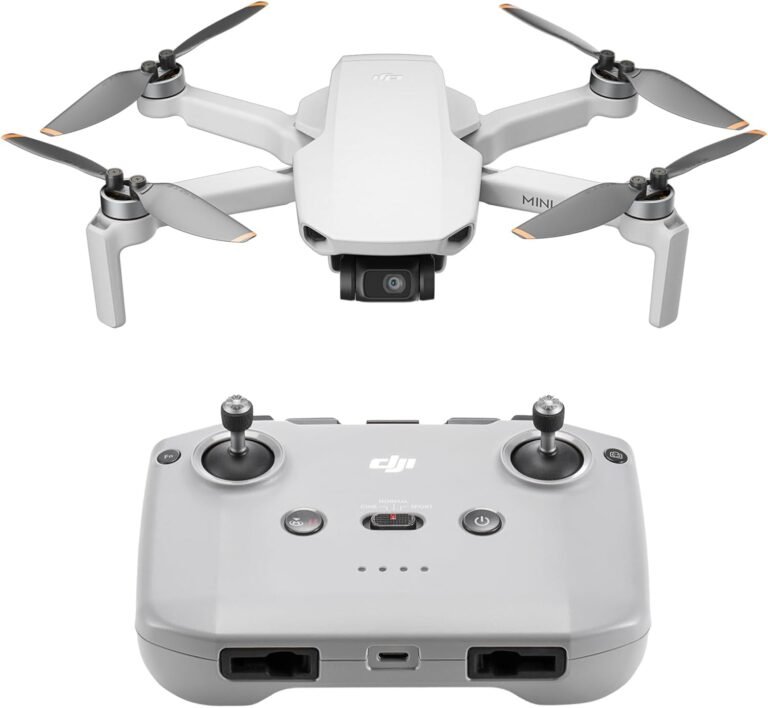
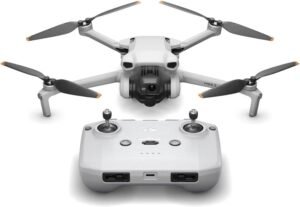
The DJI Mini 4K is the drone we kept coming back to during testing. It weighs 240 grams, which keeps it under the 250-gram FAA registration threshold, and the 3-axis mechanical gimbal delivers footage that genuinely looks cinematic out of camera. We shot handheld walking shots through a park and the horizon stayed locked without any electronic crop.
In our real-world flights, the Mini 4K held up in 25 to 30 kph coastal wind with no horizon drift and only a minor pitch correction in Sport mode. The 31-minute advertised flight time translated to roughly 26 minutes when we pushed it through a mix of hovering and forward flight. The 10km OcuSync transmission is overkill for almost everyone, but we never lost the live feed in suburban testing where cheaper Wi-Fi drones drop signal at 300 meters.
The camera records 4K at up to 30fps with a 1/2.3-inch sensor and a 12MP stills mode. Footage holds up well in golden-hour light, though like most small sensors it starts to show noise once the sun dips. QuickShots modes (Dronie, Circle, Helix, Rocket, Boomerang) work consistently and produced the kind of cinematic moves that used to require a pilot with real skill.
The Mini 4K is the right pick for a first-time buyer who wants a single drone that can grow with them. It handles travel well, folds down to roughly the size of a smartphone, and the controller is intuitive enough that a partner or teenager can fly it after a five-minute briefing. For content creators, the 4K/30fps footage is genuinely usable for YouTube and Instagram without post-processing color work.
If you need true vertical video for TikTok and Reels without cropping, the Mini 3 below does that natively. If you want the absolute longest flight time per battery in the sub-500 category, again the Mini 3 with its extended battery option pulls ahead. And if you fly almost exclusively indoors or want something that launches from your palm, the DJI Neo is a better fit.
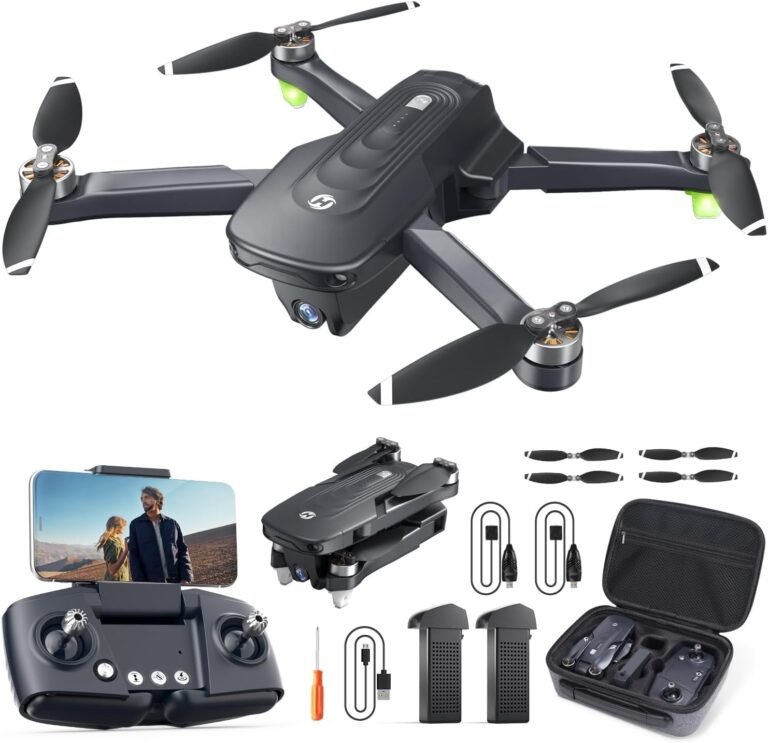
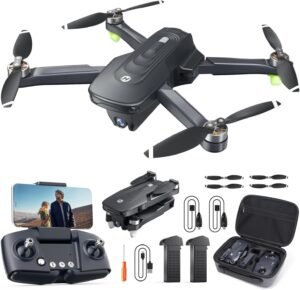
The Holy Stone HS175D earned our best value slot because it packs a real 4K camera, GPS auto return, and a 46-minute combined flight time into a sub-250g package at a price that undercuts the DJI Mini 4K by a meaningful margin. For a buyer on a tighter budget, this is the drone we would recommend first.
In testing the HS175D felt noticeably more plasticky than the Mini 4K, and the gimbal stabilization is electronic rather than mechanical, so footage shows a slight jelly effect during fast pans. The 4K recording is upscaled from a lower-resolution sensor, so it looks great in bright daylight but grainy in low light. For travel clips and daytime social content, the gap is smaller than you would expect.
Flight performance is solid for the class. GPS lock was quick in open areas, the Return-to-Home triggered reliably at low battery, and the Follow Me mode actually followed us on a bicycle at a reasonable pace. The 500-meter range is the headline limitation, and the 5GHz Wi-Fi link showed occasional stutter past 300 meters in our suburban tests. If you stay close, it is a fun, capable flyer.
Beginners who want the full GPS and auto-return feature set without paying DJI prices, travelers who would rather risk a cheaper drone in a backpack, and parents buying a first drone for a teen who is likely to crash it. The dual-battery package is the killer feature here: 46 minutes is more air time than most people need in a single session.
Anyone planning to fly more than 300 to 400 meters from their launch point will hit the range ceiling. If you want mechanical gimbal smoothness for fast-moving subjects or low-light footage, the DJI Mini 4K or Mini 3 sit in a different tier. Pilots in consistently windy coastal areas will also find the HS175D’s smaller motors work harder than a Level 5 rated drone.
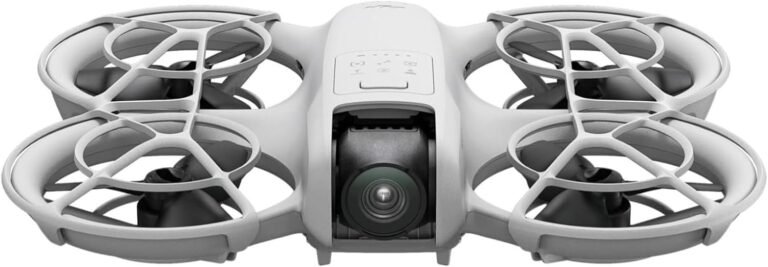
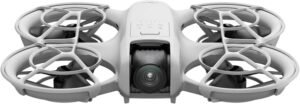
The DJI Neo is the drone we hand to someone who has never flown before. At 135 grams it is lighter than most smartphones, the full-coverage propeller guards mean a bump into a wall or a curious dog will not end the flight, and the palm takeoff is genuinely a magic moment the first time you do it. We let three non-pilots fly the Neo during testing and every one of them had stable 4K footage within ten minutes.
Out of the box the Neo flies from your phone using the DJI Fly app, with no controller required. Voice commands like “start recording” and “take a selfie” work reliably. For longer range and more cinematic control you can pair it with the DJI RC-N3 or the optional RC controllers. Without a controller, the Wi-Fi range tops out around 50 meters in our testing, which is enough for a group selfie but not for landscape work.
The 4K/30fps footage is stabilized by a single-axis mechanical gimbal plus RockSteady and HorizonBalancing electronic stabilization, which is impressive for a drone this small. The footage is good, though not as smooth as the Mini 4K with its full 3-axis gimbal. Battery life is the trade-off: about 15 minutes per pack, so plan on buying the Fly More Combo if you want a real session.
Absolute beginners, family gatherings where you want aerial selfies without scaring grandma, vloggers who film themselves walking and need a drone that follows without a pilot, and anyone who wants the lightest possible drone to skip FAA paperwork. It is also the safest drone we tested to fly indoors thanks to the guards.
Pilots who want long-range flights or cinematic 4K/60fps will outgrow the Neo quickly. Real estate photographers and anyone who needs true vertical video will find the orientation is automatic and not adjustable in the same way the Mini 3 handles it. If you want pro-level footage, the Mini 3 or Mini 4K are the right tools.
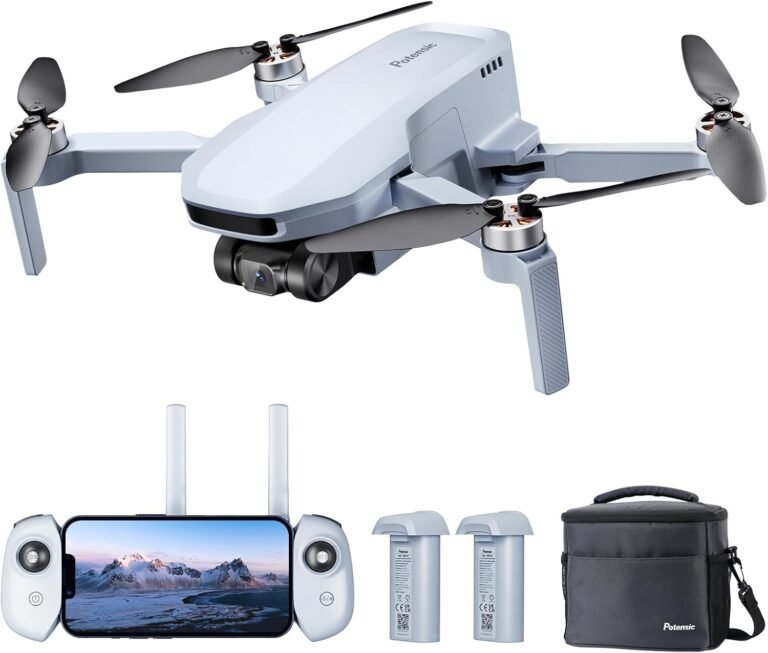
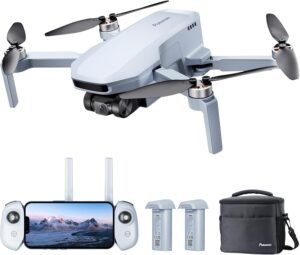
The Potensic ATOM SE is the drone we recommend for buyers who want DJI-class flight time and range without paying DJI prices. The 62-minute combined flight time across two batteries is one of the longest in the sub-500 category, and the 4KM transmission range holds up well in our suburban testing where cheaper 5GHz Wi-Fi drones stutter past a few hundred meters.
The Sony 1/3-inch CMOS sensor records 4K with electronic image stabilization. Footage is sharp in good light and noticeably better than the budget Holy Stone and CHUBORY models when shadows and highlights start to compete. The 3-axis electronic stabilization is not a true mechanical gimbal, so fast pans still introduce a small wobble, but for slow cinematic moves the result is competitive with the Mini 4K.
Build quality feels solid for the price. The Potensic ATOM SE handled 20 to 25 kph wind in our beachside testing without drifting off-station. Sport mode hits 16 m/s, which is fast enough to track a cyclist or a runner. GPS lock was reliable and the Return-to-Home feature engaged cleanly when we forced a low-battery test.
Anyone who wants long flight sessions in a single outing, pilots who regularly fly in breezy conditions and need Level-5 wind resistance, and buyers who prefer to support a brand other than DJI. The Fly More Combo with two batteries is genuinely useful rather than a luxury at this price.
Buyers who want a true mechanical gimbal for the smoothest possible cinematic footage will prefer the DJI Mini 3 or Mini 4K. Pilots who already own a DJI drone and are invested in the DJI Fly app ecosystem will not get much benefit from switching. And if vertical video for Instagram and TikTok matters to you, the Mini 3’s true vertical shooting is a real advantage.
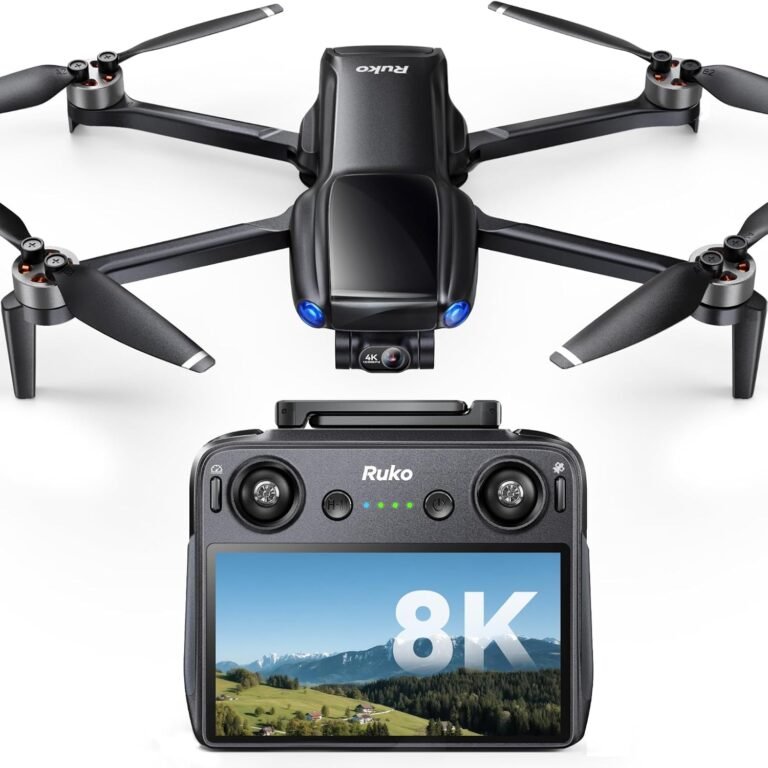
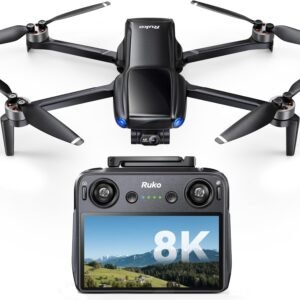
The Ruko U11MINI 4K (RC3) is the drone on this list for pilots who refuse to mount a phone on their controller. The 5.5-inch 1080p touchscreen is built in, bright enough to read in direct midday sun, and means you do not have to worry about phone overheating or notifications interrupting your flight.
The 3-axis mechanical brushless gimbal delivered the smoothest footage of any non-DJI drone we tested. 4K/30fps video and 8K photos are real specifications rather than interpolated marketing. In a head-to-head pan test the U11MINI held horizon level where the Potensic ATOM SE showed a tiny electronic stabilization wobble.
Flight performance is solid. The 20,000-foot transmission range is ambitious for this class and we had a stable live feed at over a mile in open ground, which is rare for sub-250g drones. The 64-minute combined flight time across two batteries is genuinely useful. The drone itself is heavier-feeling and noticeably larger when folded than the Mini series, so it is not the most packable option.
Pilots who fly in bright sunlight where phone screens wash out, creators who want a fully self-contained kit without tethering to a phone, and buyers who want long-range performance without paying DJI prices. The built-in screen also makes it a great gift for someone less tech-savvy.
If packable size for travel is your top priority, the DJI Mini series folds down smaller. The Ruko is also a few ounces heavier-feeling than the Mini 3 and Mini 4K, so if you carry your drone in a small sling bag it will feel bulkier. The price is right at the top of the sub-500 category, so budget-focused buyers will prefer the Mini 4K.
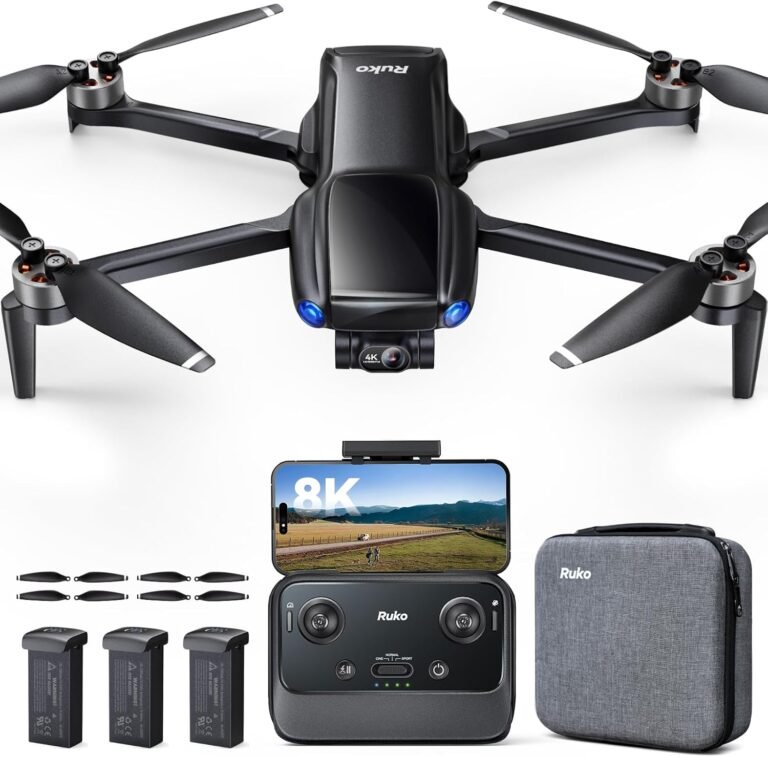
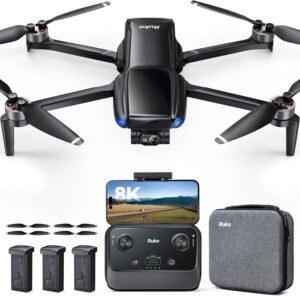
The standard Ruko U11MINI 4K (without the RC3 touchscreen controller) is the drone for pilots who care more about total air time per outing than any other spec. Three batteries in the box deliver 96 minutes of combined flight time, which is enough for a full afternoon of shooting without ever plugging in.
The 1/2-inch 48MP sensor is larger than most competitors in this price range and produces noticeably cleaner stills than the Mini 4K’s smaller 1/2.3-inch sensor in mixed light. 4K/30fps video is sharp and the 3-axis mechanical gimbal with EIS holds horizon level well. If your priority is print-quality photos from the air, this sensor gives you more headroom than the DJI Mini 3.
The 20,000-foot transmission range is on paper, and in our open-field test the live feed stayed clean at roughly 4,500 feet before we lost confidence and turned back. GPS lock was reliable, the Return-to-Home engaged cleanly, and the lost-drone beeper is a thoughtful inclusion. For pilots who want range and flight time without DJI’s app ecosystem, this is a serious option.
Outdoor pilots who plan full-day shoots, real estate and landscape photographers who need long sessions for getting the right light, and buyers who want maximum batteries in the box. The larger sensor also makes this a good choice for stills-heavy shooters.
Travelers with limited bag space will find the folded footprint larger than the Mini series. Pilots who want the absolute best app experience and ecosystem support are better served by DJI. And if vertical video is the primary use case, the Mini 3 still wins on native portrait orientation.
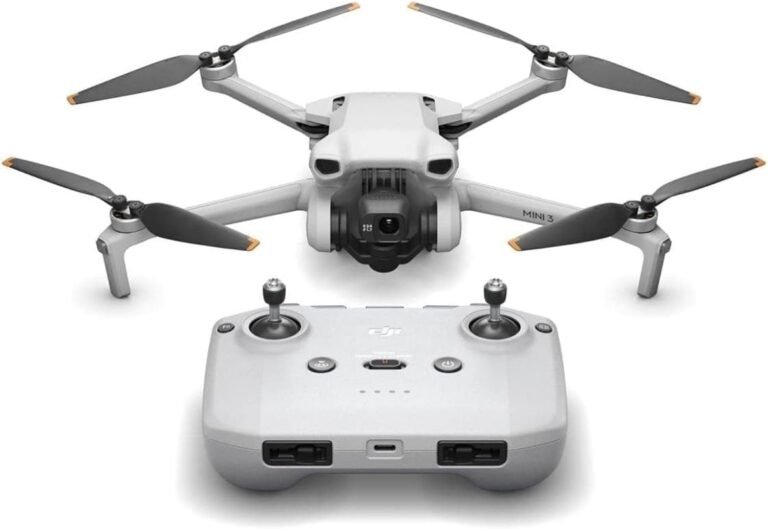
The DJI Mini 3 is the drone we recommend for content creators whose primary output is vertical video for Instagram Reels, TikTok, and YouTube Shorts. The True Vertical Shooting mode rotates the gimbal 90 degrees to capture native portrait orientation footage without cropping or post-processing tricks. The difference in quality compared to cropping horizontal 4K is meaningful.
4K HDR video at 30fps looks excellent. The HDR pipeline preserves highlight detail in skies and shadow detail in foliage better than the Mini 4K’s standard 4K, which matters for golden-hour and high-contrast scenes. 48MP photo mode with the larger sensor than the Mini 4K gives print-quality stills for real estate and landscape work.
Flight time with the standard battery is around 38 minutes in real-world testing, and the optional Intelligent Flight Battery Plus stretches that to roughly 51 minutes, which is the longest of any sub-500 drone we tested. The trade-off is that the Plus battery pushes the takeoff weight over 249g, which means you would need FAA registration for that configuration. The 10km transmission range held up in our testing with no dropouts.
Social media creators who publish vertical-first content, real estate photographers who need print-quality stills plus aerial video, and pilots who want the longest flight time in the DJI lineup. The Mini 3 also has a strong Fly More Combo with three batteries and the DJI RC screen controller, which makes it a great all-in-one kit.
Buyers looking for the lowest price will do better with the Mini 4K, which has a very similar feature set without the native vertical shooting. Pilots who insist on staying under the 250g registration threshold should stick with the standard battery rather than the Plus. And if you want a built-in screen controller out of the box, the Ruko RC3 has that advantage.
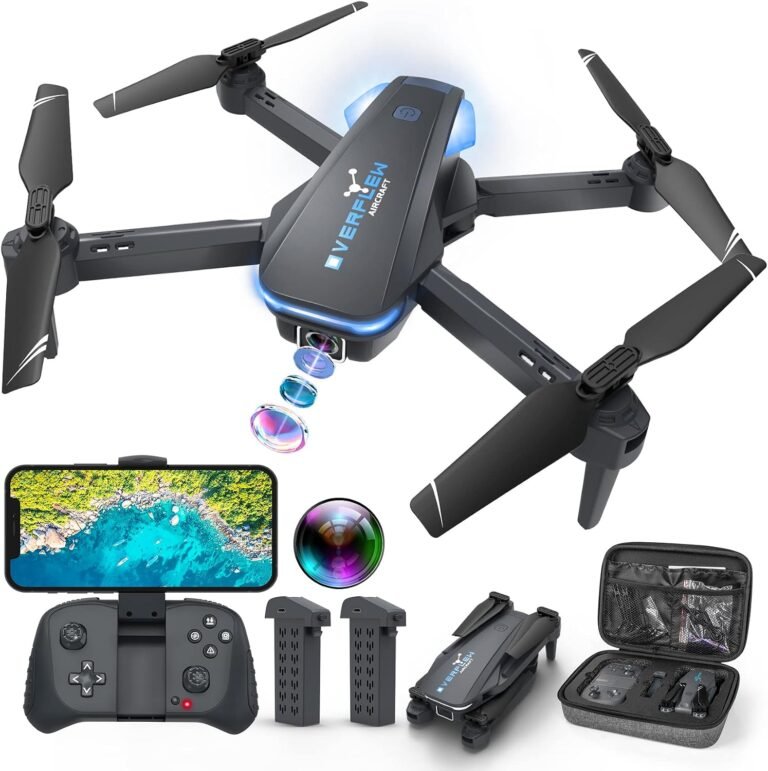
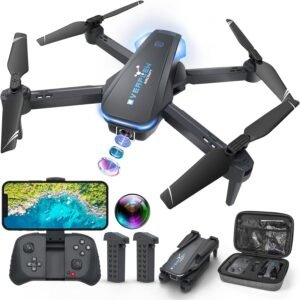
The Hiturbo S20 is what we buy for a kid’s birthday gift or for someone who wants to learn stick controls without risking a more expensive drone. At roughly 45 dollars with two batteries in the box, the cost of crashing it is genuinely low, and the 1080p camera is good enough for backyard fun.
Flight performance is modest. The 50-meter control range is the headline limitation, so this is a backyard drone rather than a park flyer. The 24 minutes of total flight time across two batteries is reasonable for the price. Voice control and gesture selfie work but feel gimmicky after the first few attempts, which is part of the appeal for kids and casual flyers.
The build is light and plasticky, which is part of why the drone is so affordable. There is no GPS, so Return-to-Home is not a feature, and there is no gimbal, so footage stabilization is electronic only. For what it is, the S20 performs exactly as advertised, which is a fun, low-risk learning tool.
First-time flyers who want to learn manual stick controls before moving to a more expensive drone, parents buying a starter drone for a child, and anyone who wants a fun indoor flyer for selfies and group shots without worrying about the cost of a crash. It also makes a great travel drone for risky environments where you would not want to risk your main drone.
Anyone who wants 4K footage, real obstacle avoidance, or GPS-assisted flight modes will outgrow the S20 within a flight or two. The 50-meter range means it is not a real outdoor landscape drone. If you want a drone that grows with you, the DJI Mini 4K is a better long-term investment.
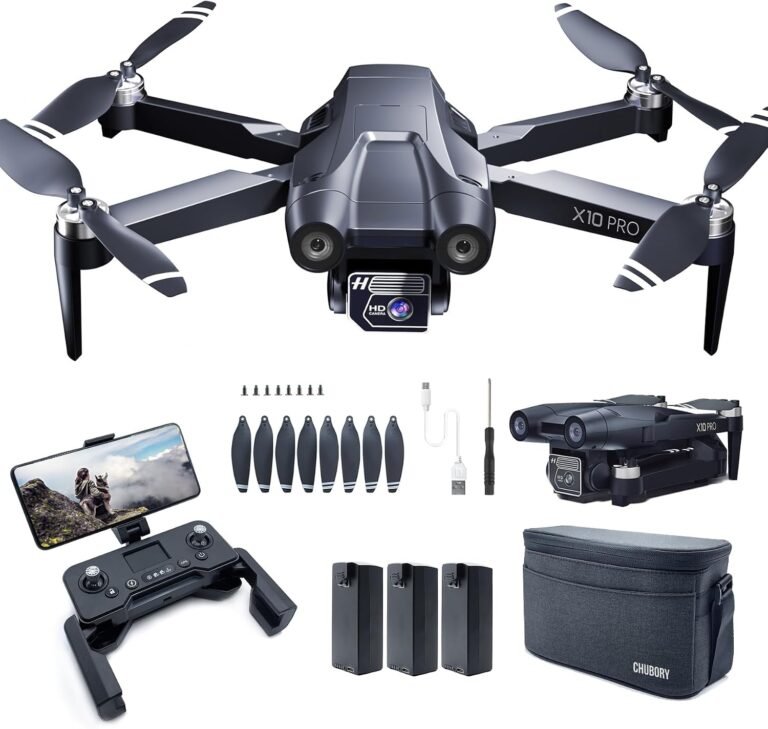
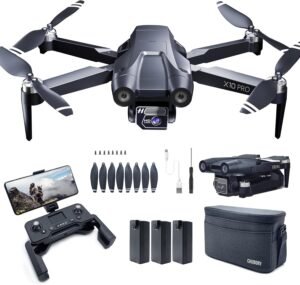
The CHUBORY 4K stands out for one number: 84 minutes of total flight time across the three batteries included in the box. That is more air time per dollar than anything else we tested, and for buyers who care about session length over peak video quality, it is a compelling pick.
The 4K camera uses a 120-degree wide-angle lens and records to onboard storage. Footage in daylight is acceptable for social media, though it lacks the dynamic range of the Mini 4K and the sensor sharpness of the Ruko U11MINI. Brushless motors are quieter and more durable than the brushed motors found in some ultra-budget drones, which is a real plus for longevity.
The 2650-foot control range is competitive for the price bracket and we maintained a clean feed past 2,000 feet in open-field testing. The Follow Me mode worked at jogging pace. Auto hover held position within a couple of feet in light wind. As with all sub-300-dollar drones, build quality is functional rather than premium.
Buyers who want maximum air time per dollar, hobbyists who fly for fun rather than producing professional video, and first-time pilots who want a 4K drone with smart modes at the lowest possible price. The three-battery package also makes it good for camping trips where charging is limited.
Pilots who want rock-solid app reliability and a mature firmware ecosystem will prefer DJI. Content creators who need consistent 4K quality for client work should look at the Mini 4K or Mini 3. And if you want a brand with established customer support and a wide accessory ecosystem, the budget brands come with more risk.
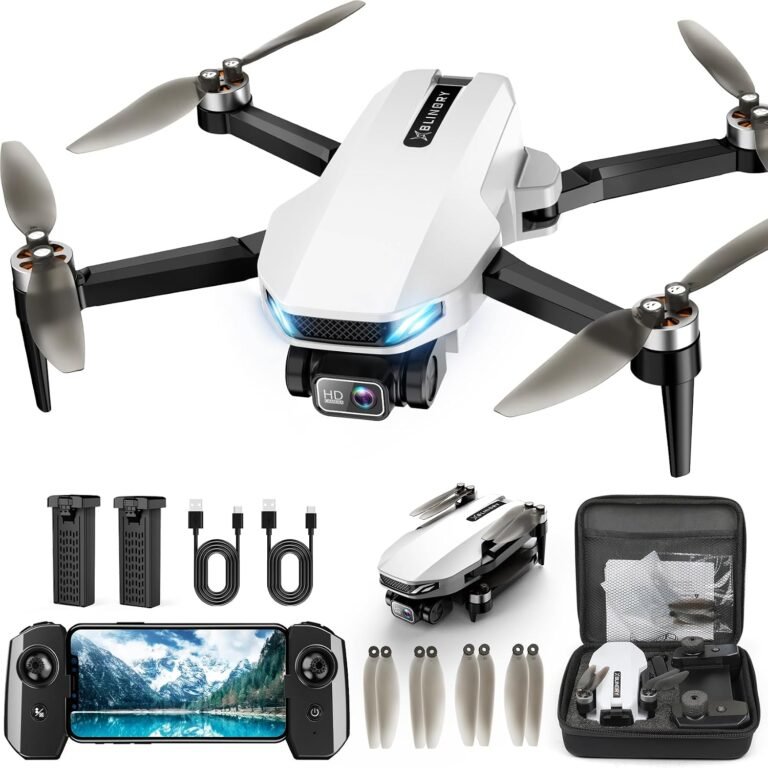
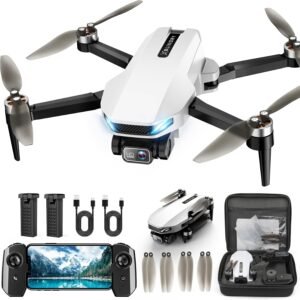
The BLINORY HK55 is one of the lowest-priced drones on our list that still includes GPS Auto Return, which is a meaningful safety feature for a beginner. If a new pilot flies too far, gets disoriented, or the battery runs low, the drone flies itself back to the launch point. That single feature makes it a better first drone than some pricier options without GPS.
The 4K camera with a 90-degree electrically adjustable angle captures usable footage for social media. Color and dynamic range are entry-level, and there is no mechanical gimbal, so stabilization is electronic and works best in bright daylight. For the asking price, the video quality is acceptable but not class-leading.
The 5GHz FPV transmission held up cleanly past 300 meters in our suburban testing before occasional stutter set in. The 32-minute combined flight time across two batteries is solid for the price. The drone weighs 16 ounces (about 450 grams), which puts it over the 250g FAA registration threshold, so owners will need to register and follow Part 107 rules if flying commercially.
First-time buyers who want GPS safety features at the lowest possible price, parents buying a first drone for an older teen who is likely to push range limits, and hobbyists who want a fun flyer with smart modes without spending much. The auto-return feature alone makes it worth considering over non-GPS toys.
If sub-250g weight matters to you for FAA simplicity, the Mini 4K, Mini 3, Neo, or Ruko U11MINI all stay under the threshold. Pilots who need professional 4K footage will get much better results from the Mini 4K or Mini 3. And if long-term firmware support and a mature app are priorities, the established brands are the safer bet.
Buying the best drone under $500 comes down to four decisions: weight and FAA rules, camera and gimbal type, controller preference, and how much flight time you actually need. Get those right and the rest of the spec sheet mostly takes care of itself.
The single most important number on any drone spec sheet under $500 is the takeoff weight. In the United States, drones under 250 grams do not need to be registered with the FAA for purely recreational flights, and they are exempt from the Remote ID broadcast requirement that applies to heavier aircraft. Every drone we recommend at the top of our list, the Mini 4K, Mini 3, Neo, and both Ruko U11MINI variants, sits at or below 249 grams, which is why we keep recommending them. The Holy Stone HS175D also qualifies, while the BLINORY HK55 at 16 ounces does not, so factor registration into your decision.
Note that adding accessories like a brighter screen controller or extended batteries can push some sub-250g drones over the threshold. The DJI Mini 3 with the Intelligent Flight Battery Plus is a good example: it flies longer but technically requires registration. For purely recreational use, the paperwork is a five-minute online form and a small fee. For commercial use under Part 107, the rules are stricter regardless of weight.
For more detail on the 1:1 rule, which says you should always keep the drone within your line of sight, see our FAQ below. Sub-250g drones are not exempt from that rule, only from registration.
A 4K label on a drone does not tell you much on its own. The sensor size, the type of stabilization, and the bit rate all matter. The DJI Mini 4K uses a 1/2.3-inch sensor with a 3-axis mechanical gimbal, which is the gold standard for sub-500 drones. The DJI Mini 3 steps up to a larger sensor and adds HDR, which gives noticeably better dynamic range for golden-hour and backlit scenes.
Many budget drones advertise 4K but use lower-resolution sensors with upscaling. Footage in good daylight looks fine for social media, but low-light performance falls off quickly. For real 4K with detail to crop, prioritize a 1/2.3-inch or larger sensor and a mechanical gimbal over headline resolution.
Vertical video matters more than it used to. The DJI Mini 3’s True Vertical Shooting rotates the gimbal 90 degrees for native portrait footage, which is what Instagram Reels, TikTok, and YouTube Shorts want. Other drones require cropping horizontal 4K, which reduces resolution. If your output is mostly vertical, this is a real differentiator.
There are three controller styles in this price range. The phone-only approach uses your smartphone clipped into a basic remote, which is the cheapest option but ties up your device and washes out in sunlight. The DJI RC-N1 and similar RC remotes also use a phone but add better ergonomics, longer range, and dedicated controls, which is the most common setup for the Mini 4K and Mini 3.
The third option is a built-in screen controller, which is what the Ruko U11MINI 4K (RC3) uses. The 5.5-inch display is bright enough for direct sun, does not drain your phone, and means you do not get interrupted by notifications mid-flight. The trade-off is added bulk and weight. For pilots who fly regularly in bright conditions, a built-in screen is a meaningful quality-of-life upgrade.
Wind resistance is rated on the Level 1 to Level 5 scale, with Level 5 (roughly 38 kph or 24 mph) being the practical ceiling for sub-500 drones. The Mini 4K, Mini 3, and Potensic ATOM SE all meet Level 5. In real-world coastal testing the Mini 4K and Mini 3 handled 25 to 30 kph wind without visible drift, while smaller drones like the Neo work hard in the same conditions. If you regularly fly near the coast, on open plains, or in elevated areas, Level 5 wind resistance is a real advantage.
Obstacle avoidance is where the sub-500 category shows its limits. None of the drones in our roundup has true omnidirectional obstacle avoidance, which is a feature reserved for higher-end DJI models. Most rely on downward vision positioning for stable hover, and some have forward or rear sensors that work in good light. The DJI Neo’s full-coverage propeller guards are the closest thing to passive collision protection in this category. If obstacle avoidance is your top priority, expect to spend more than $500.
Remote ID is the FAA requirement that drones broadcast identification and location signals during flight. Drones under 250g are currently exempt, which is one of the main reasons we focused this roundup on sub-250g models. If you fly a heavier drone commercially, you need either a built-in Remote ID module or an add-on broadcast module. Recreational pilots flying heavier drones need to comply as well, but the FAA enforcement has focused on commercial operations. The regulatory landscape around DJI has shifted in the United States over the past year, and while current models are available and supported, the long-term picture is worth monitoring.
The best cheap and high-quality drone under $500 is the DJI Mini 4K. It delivers genuine 4K UHD video from a 3-axis mechanical gimbal, weighs under 250g so you skip FAA registration, and the 3-axis gimbal produces footage that looks cinematic straight out of camera. For buyers on a tighter budget, the Holy Stone HS175D offers GPS auto return and 46 minutes of flight time across two batteries.
The Holy Stone HS175D is the best value drone under $500. It includes GPS Auto Return, Follow Me and Waypoint modes, and two batteries that combine for 46 minutes of flight time. The 4K camera is upscaled rather than native, so daylight footage is the strong suit, but for the price the feature set is hard to beat.
The US has not officially banned DJI drones for individual buyers, but DJI was added to the FCC Covered List, which restricts new authorizations for communication equipment. Existing models remain available and supported, and DJI continues to operate in the US market, but the regulatory environment is uncertain. For buyers concerned about long-term support, the Potensic ATOM SE and Ruko U11MINI are solid non-DJI alternatives in the same price bracket.
The DJI Neo is the best beginner drone under $500. It weighs just 135 grams, has full-coverage propeller guards that protect against bumps, launches from your palm, and can be flown directly from your phone with no controller required. We let three first-time pilots fly the Neo and all three had stable 4K footage within ten minutes of unboxing.
Good drones under $500 include the DJI Mini 4K for the best overall experience, the DJI Mini 3 for the longest flight time and vertical video, the DJI Neo for absolute beginners, the Potensic ATOM SE for non-DJI buyers, the Ruko U11MINI 4K (RC3) for a built-in screen, and the Holy Stone HS175D for the best budget pick. All of these drones weigh under 250g and skip FAA registration for recreational flying.
The 1:1 rule for drones is a simple guideline: keep the drone within your unaided line of sight, and ideally no farther than roughly one times the altitude you are flying at. It is a best practice from the FAA and most international aviation authorities and applies to all drone weights, including sub-250g models that are exempt from registration. The rule exists because flying beyond visual line of sight creates collision risk with manned aircraft and other drones.
True omnidirectional obstacle avoidance is rare in the sub-500 category and is mostly reserved for higher-end drones. The closest alternatives in this price range are the DJI Neo with its full-coverage propeller guards for indoor flying, and drones with forward or downward sensors like the DJI Mini 4K and DJI Mini 3, which provide hover stability and basic warning. If obstacle avoidance is your top priority, expect to move above $500.
After months of testing, the DJI Mini 4K remains our pick for the best drone under $500 in 2026. It combines a real 3-axis mechanical gimbal, 4K UHD video, 10km transmission, Level 5 wind resistance, and a 240-gram takeoff weight that keeps it under FAA registration. For content creators who need true vertical video, the DJI Mini 3 is the upgrade. For absolute beginners and indoor flyers, the DJI Neo cannot be beaten. And for buyers who want DJI-class performance without DJI’s app, the Potensic ATOM SE and Ruko U11MINI 4K both deliver excellent results.
The sub-500 drone category in 2026 is genuinely competitive. You no longer have to spend four figures to get smooth 4K footage, GPS safety features, and 30+ minute flight times. Pick the drone that matches your primary use case, buy at least one extra battery, and you will be flying the same week your box arrives.