
Anime Last Stand Tier List (December 2025) Best Units Ranked
Welcome to the most comprehensive Anime Last Stand tier list you’ll find anywhere! I’ve spent countless hours analyzing every unit…

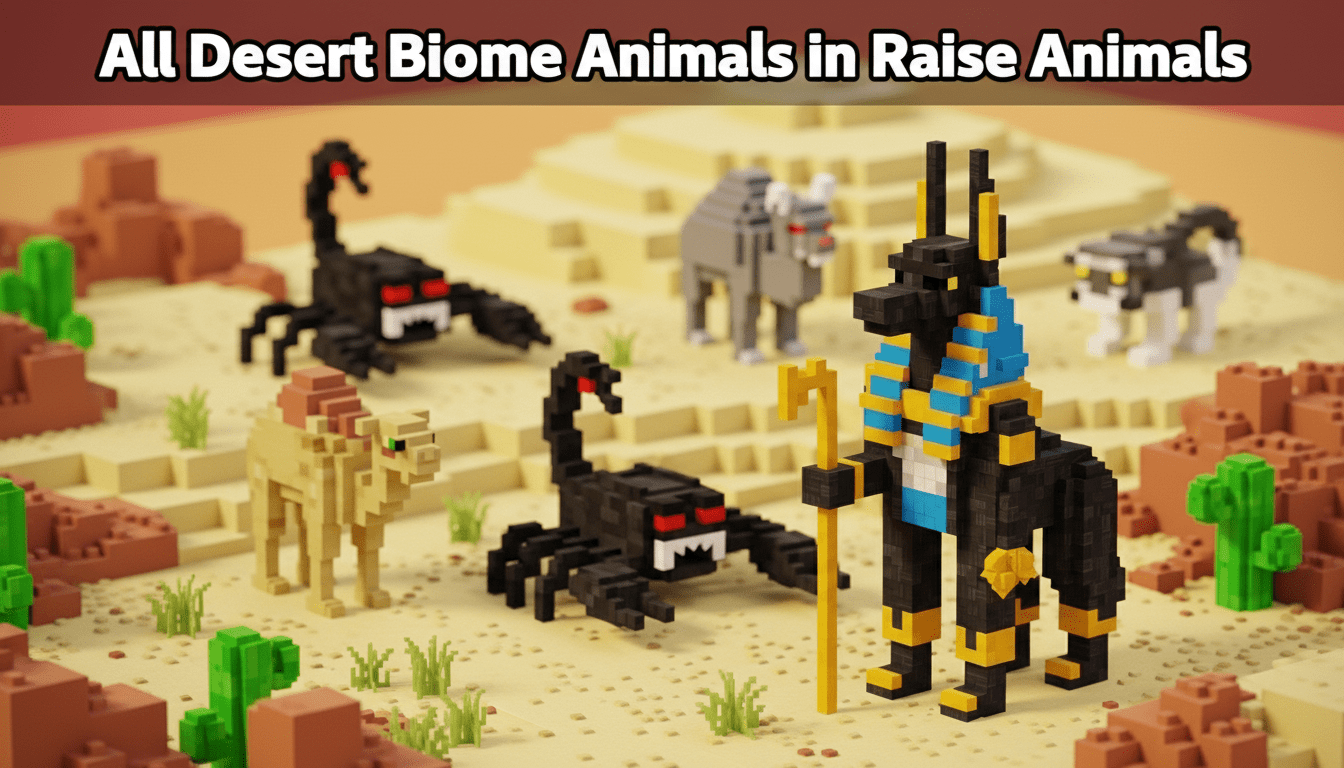
Welcome to the ultimate guide for all Desert Biome animals in Raise Animals! The Desert Dunes update, released on November 16, 2025, brought a massive expansion to this beloved Roblox tycoon simulator with ten brand-new catchable animals, exclusive rewards, and challenging terrain that’ll test your lasso skills. I’ve spent countless hours exploring every sandy corner of this biome, and I’m excited to share everything you need to know about catching, taming, and maximizing these incredible desert creatures.
Whether you’re hunting for the exclusive Anubis, grinding Water Drops for the Oasis Revival event, or simply want to complete your zoo collection, this comprehensive guide covers every single animal in the Desert Dunes biome with detailed stats, abilities, catching strategies, and production rates.
| Feature | Details |
|---|---|
| Total Animals | 10 unique species |
| Biome Unlock Cost | $7.5 Million in-game cash |
| Release Date | November 16, 2025 |
| Event Currency | Water Drops |
| Rarest Animal | Anubis (Exclusive) |
| Best Producer | Deathstalker Scorpion (50 drops/5 min) |
| Update Name | Desert Dunes (Update 4) |
The Desert Dunes biome introduced ten completely new animals ranging from Basic tier all the way to Exclusive rarity. Each animal offers unique passive abilities, different movement speeds, and varying Water Drop production rates that make them essential for event progression.
Rarity: Exclusive
Speed: 17-19
Hearts: 3
Water Drop Production: Currently Unknown (Estimated 50+ drops/5 minutes)
The crown jewel of the Desert Dunes update, Anubis represents the ultimate prize for dedicated players. This Egyptian god-themed animal features one of the most powerful abilities in the entire game.
Passive Ability: Soul Tempest
Anubis devours another animal every 2 seconds upon collision, summoning devastating sandstorms across the map that slow down and inflict Fear status on other animals. After devouring an animal, both Anubis and its rider become invincible to crash damage temporarily.
How to Get Anubis:
Unlike other desert animals, Anubis cannot be reliably caught through normal gameplay. While it technically can spawn in the Desert Dunes biome during lasso runs, the spawn rate is extraordinarily rare (less than 0.1% chance). The practical method to obtain Anubis is purchasing it from the Oasis Revival event shop for 60,000 Water Drops.
Why Anubis Matters:
Beyond being an incredible status symbol, Anubis provides continuous Water Drop generation when placed in your zoo, creating a self-sustaining loop where the animal helps you earn more currency for future purchases.
Rarity: Shine
Speed: 17-19
Hearts: 3
Water Drop Production: Currently Unknown (Estimated 30-40 drops/5 minutes)
The Pharaoh Eagle is the signature Shine animal added with the Desert Dunes update and breaks the traditional spawning pattern seen with other Shine creatures.
Passive Ability: Desert Wings
When the passive meter fills, the Pharaoh Eagle dashes forward and flies into the air, summoning three separate sandstorms that appear every 3-5 seconds in different directions. These sandstorms slow down other animals caught in their path, giving you a significant advantage during crowded runs.
How to Spawn Pharaoh Eagle:
According to community testing, the Pharaoh Eagle spawns randomly in the Desert Dunes biome without requiring any specific ritual or sequence. However, some players report increased spawn rates after riding 3-4 Sand Cats consecutively, though this hasn’t been officially confirmed by developers.
Catching Strategy:
The Pharaoh Eagle can be tamed much faster than other Shine animals in Raise Animals, making it one of the more accessible high-tier creatures. I recommend using your best lasso and prioritizing it whenever you spot one during runs, as you can catch multiple copies to speed up Water Drop farming.
Rarity: Rainbow
Speed: 17-20
Hearts: 3
Water Drop Production: 50 drops every 5 minutes
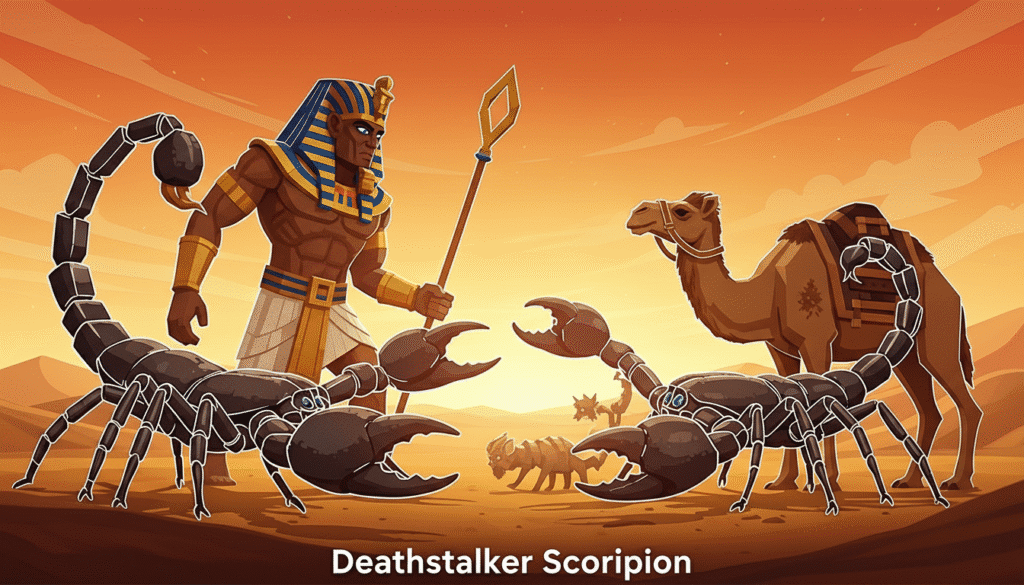
The Deathstalker Scorpion holds the distinction of being the highest Water Drop producer among all Desert Dunes animals, making it the most valuable creature for event farming.
Passive Ability: Burrow Ambush
This incredible ability allows the Deathstalker Scorpion to burrow underground for 5 full seconds, gaining +100% movement speed while completely preventing crashes and collisions with obstacles or other animals.
Strategic Value:
The combination of highest production rate (50 drops/5 minutes) and an incredibly powerful evasion ability makes the Deathstalker Scorpion the ultimate desert animal. A full zoo plot of these creatures would generate 600 drops per hour per animal slot.
Spawn Rate:
As a Rainbow tier animal, the Deathstalker Scorpion has an extremely low spawn rate (estimated 1-2% chance per Desert Dunes run). Expect to complete 50-100 runs before successfully catching one without shop purchases.
Rarity: Legendary
Speed: 17-19
Hearts: 1
Water Drop Production: 40 drops every 5 minutes
The Sand Cat serves as one of the backbone animals for Water Drop farming, offering excellent production rates with reasonable spawn frequency.
Passive Ability: Relentless Hunt
Every 15 seconds, the Sand Cat enters a 5-second hunt mode where it gains +30% movement speed and marks all nearby animals as “hunted.” Any marked animal that collides with the Sand Cat gets instantly devoured.
Farming Priority:
I rank the Sand Cat as a top-3 priority animal for several reasons:
Catching Tips:
Sand Cats typically appear 1-2 times per 10 Desert Dunes runs. Focus on catching your first one, then purchase additional copies from the shop to fill your zoo slots efficiently.
Rarity: Legendary
Speed: 17-19
Hearts: 1
Water Drop Production: 40 drops every 5 minutes
The Dromedary Camel shares identical Water Drop production with the Sand Cat but offers a completely different passive ability tailored specifically for Desert Dunes gameplay.
Passive Ability: Desert Endurance
This ability grants +5% movement speed every 5 seconds when traveling in the Desert Dunes biome, stacking up to 5 times (maximum +25% speed). After reaching 5 stacks, the Dromedary Camel gains complete immunity to terrain debuffs like quicksand.
Strategic Use:
The Dromedary Camel excels as a riding animal specifically for grinding the Desert Dunes biome itself. The immunity to quicksand (which slows other animals significantly) combined with stacking speed buffs makes extended farming sessions much smoother.
Dual Purpose Value:
Unlike purely production-focused animals, the Dromedary Camel serves double duty as both a Water Drop generator and an excellent mount for active Desert Dunes exploration.
Rarity: Epic
Speed: 17-19
Hearts: 1
Water Drop Production: 25 drops every 5 minutes
The Fennec Fox represents the best mid-tier producer in the Desert Dunes biome, offering solid returns without the extreme rarity of Legendary and Rainbow animals.
Passive Ability:
The Fennec Fox does not have an active passive ability, making it purely a production and aesthetic choice.
Production Analysis:
At 25 drops per 5 minutes (300 drops/hour), the Fennec Fox generates 2.5x more Water Drops than Rare tier animals and 5x more than Basic tier creatures. This makes it an excellent “filler” animal while you hunt for higher-tier catches.
Spawn Frequency:
Fennec Foxes appear approximately once every 5-7 Desert Dunes runs, making them reasonably accessible for building a solid production base early in your Water Drop farming journey.
Rarity: Epic
Speed: 17-19
Hearts: 1
Water Drop Production: 10 drops every 5 minutes
The Sidewinder Snake shares Epic rarity with the Fennec Fox but produces significantly fewer Water Drops, making it a lower priority for farming purposes.
Passive Ability: Venom Spit
Every 10 seconds, the Sidewinder Snake spits venom at the animal directly in front of it. Any animal hit by this venom becomes poisoned, suffering from slowed movement and marked as “prey.” The snake can then devour marked animals on contact.
Practical Value:
While the Venom Spit ability offers interesting gameplay mechanics, the low Water Drop production (120 drops/hour) makes the Sidewinder Snake primarily a collection/gameplay choice rather than an optimal farming animal.
When to Catch:
I recommend catching one Sidewinder Snake for collection purposes and trying out the ability, but replace it with Fennec Foxes or higher-tier animals once available.
Rarity: Rare
Speed: 17-19
Hearts: 1
Water Drop Production: Currently Unknown (Estimated 10 drops/5 minutes)
The Desert Lark represents one of the more common catches in the Desert Dunes biome but offers limited strategic value for serious farmers.
Passive Ability:
The Desert Lark does not have a documented passive ability.
Role in Progression:
As a Rare tier animal, the Desert Lark serves primarily as an early-game placeholder. Catch these to fill empty zoo slots immediately after unlocking the biome, but plan to replace them with Epic or Legendary animals as soon as possible.
Spawn Rate:
Desert Larks appear frequently (approximately 15-20% of runs), making them easy to collect in bulk for initial Water Drop generation.
Rarity: Rare
Speed: 17-19
Hearts: 1
Water Drop Production: 10 drops every 5 minutes
The Sand Scorpion offers slightly better production than Basic tier animals but falls short of Epic tier creatures.
Passive Ability:
The Sand Scorpion does not have a documented passive ability.
Production Value:
At 10 drops per 5 minutes (120 drops/hour), the Sand Scorpion produces exactly 2x what Basic tier Lizards generate. This makes them acceptable early-game fillers but definitely not endgame optimization choices.
Replacement Timeline:
I recommend replacing Sand Scorpions within the first 2-3 days of Desert Dunes farming once you’ve accumulated enough Fennec Foxes or Legendary animals through shop purchases.
Rarity: Basic
Speed: 17-19
Hearts: 1
Water Drop Production: 5 drops every 5 minutes
The Fringe-toed Lizard (often simply called “Lizard” in-game) represents the most common and lowest-value animal in the Desert Dunes biome.
Passive Ability:
The Fringe-toed Lizard does not have a passive ability.
Strategic Role:
Despite being the weakest producer at just 5 drops per 5 minutes (60 drops/hour), Fringe-toed Lizards serve a crucial purpose: filling empty zoo slots immediately. An empty slot produces zero drops, so even a Basic tier animal generating 60 drops/hour is infinitely better than nothing.
Usage Recommendation:
Catch Fringe-toed Lizards during your first few Desert Dunes runs to ensure every zoo slot starts generating currency. Replace them systematically as you catch or purchase better animals, starting with your oldest/first-placed Lizards.
Before you can catch any of these amazing animals, you need to unlock access to the Desert Dunes biome itself. This is a one-time permanent unlock that adds the biome to your rotation.
Step-by-Step Unlock Process:
What to Expect:
Once unlocked, the Desert Dunes biome spawns randomly between other biomes during lasso runs. You’ll recognize it immediately by distinctive sand dunes, towering cacti, natural stone arches, Egyptian-style statues, and the new Tumbleweed obstacles.
No Additional Requirements:
Unlike some biomes in other games, the Desert Dunes has no level requirements, quest prerequisites, or progression gates beyond the initial $7.5 million purchase price.
The Desert Dunes biome introduces several new environmental challenges that make it one of the more difficult biomes to navigate successfully.
Static Obstacles:
Dynamic Obstacles:
Navigation Tips:
The combination of moving Tumbleweeds and vision-blocking sand dunes creates a significantly harder biome than earlier areas like Ocean or Plains. I recommend:
The Water Drops currency system introduced with the Desert Dunes update represents one of the most player-friendly passive income mechanics in Raise Animals history.
Automatic Generation:
Water Drops generate automatically every 5 minutes from any Desert Dunes animal placed in your zoo. Production happens whether you’re actively playing, AFK in the lobby, or completely offline.
Rarity-Based Scaling:
Each animal’s rarity tier directly determines its production rate:
Collection Requirement:
While production happens automatically, you must actively collect accumulated Water Drops. The game has a maximum accumulation cap, after which production stops until you claim your current total.
No Mutation Impact:
Weather mutations in Raise Animals increase the monetary sell value of animals but have absolutely zero effect on Water Drop production rates. Focus purely on rarity tier when optimizing for event farming.
| Animal | Rarity | Drops per 5 Min | Drops per Hour | Drops per Day |
|---|---|---|---|---|
| Deathstalker Scorpion | Rainbow | 50 | 600 | 14,400 |
| Sand Cat | Legendary | 40 | 480 | 11,520 |
| Dromedary Camel | Legendary | 40 | 480 | 11,520 |
| Fennec Fox | Epic | 25 | 300 | 7,200 |
| Sand Scorpion | Rare | 10 | 120 | 2,880 |
| Sidewinder Snake | Epic | 10 | 120 | 2,880 |
| Fringe-toed Lizard | Basic | 5 | 60 | 1,440 |
The Oasis Revival event serves as the exclusive shop where you can spend your hard-earned Water Drops on premium rewards.
Event Schedule:
Available Rewards:
Anubis (Exclusive Animal)
Rainbow Bone Fence (Decoration)
Strategic Spending:
Most competitive players recommend prioritizing Anubis first due to its functional benefits and continued Water Drop generation. However, collectors or aesthetic-focused players may prefer unlocking the exclusive Bone Fence first since it costs less and may not return if the event is truly time-limited.
After extensive testing and community collaboration, I’ve developed a proven strategy for maximizing Water Drop production.
Goals:
Action Steps:
Expected Results: 2,000-4,000 drops per day with mixed-tier setup
Goals:
Action Steps:
Expected Results: 8,000-12,000 drops per day with optimized setup
Goals:
Action Steps:
Expected Results: 12,000-18,000 drops per day, reaching 60,000 for Anubis in 5-10 days
This creates the most powerful farming loop in the Desert Dunes event:
Cost Analysis:
Each Legendary animal costs approximately $500K-$1M from the shop. While this seems expensive initially, the Water Drop returns pay for themselves within 24-48 hours of passive generation.
Through my own experience and watching countless players, I’ve identified seven critical mistakes that dramatically slow Water Drop farming progress:
Mistake #1: Empty Zoo Slots
Every empty slot wastes 5-50 drops every 5 minutes depending on potential occupants. Even a Basic tier Lizard generating 60 drops/hour is infinitely better than an empty slot generating zero. Fill every single slot immediately.
Mistake #2: Infrequent Collection
Players who collect once daily hit the accumulation cap and waste hours of production. The cap prevents further generation until you claim current drops. Set phone alarms to collect every 2-3 hours minimum.
Mistake #3: Ignoring Shop Purchases
Many players rely solely on catching animals, missing the massive efficiency boost from buying duplicate high-tier animals. Shop purchases let you build an optimized plot in days rather than weeks of grinding.
Mistake #4: Wrong Lasso Priority
Using weak lassos in Desert Dunes dramatically reduces catch rates for Legendary animals. Invest in better lassos (Diamond or Trident tier) before extensively farming the biome.
Mistake #5: Selling Desert Animals
Some players sell desert animals for cash without realizing these animals generate event currency. Never sell animals currently producing Water Drops—their event value far exceeds sell price.
Mistake #6: Missing Oasis Revival Windows
The event shop only appears for 10 minutes every hour. Missing multiple windows means you accumulate drops without ability to spend them, reducing motivation to farm. Set alarms for hourly check-ins.
Mistake #7: Waiting for “Perfect” Animals
Players who refuse to place anything except Rainbow/Shine animals leave slots empty for hours. Build with what you have and upgrade progressively. A full plot of Rare animals outperforms a half-empty plot with Legendaries.
The Desert Dunes event’s offline generation is absolutely crucial for players with limited active playtime.
Setup Before Logging Off:
Offline Calculation Example:
Maximizing Offline Value:
Time your return to coincide with Oasis Revival event windows. Log in 5-10 minutes before the hourly spawn to collect offline earnings and immediately spend during the event window.
Important Note: Weather mutations do NOT affect Water Drop production rates.
Mutations increase an animal’s cash value for selling but provide zero benefit for event farming. This means:
Smart players farm Water Drops while progressing other game objectives:
Simultaneous Goals:
Efficiency Mindset:
Don’t treat Water Drop farming as an isolated activity. Integrate it into your overall Raise Animals progression strategy for maximum account development.
The Desert Dunes update introduced two additional weather types that can spawn in the Desert biome:
Sandstorm Weather:
Heat Wave Weather:
Mutation Reminder:
While these mutations increase sell value, they do NOT increase Water Drop production. Focus on catching high-tier animals regardless of active weather when farming for the event.
The Desert Dunes update introduced the first stage of zoo customization through the Fence Decoration system.
Standard Fence Types (Lasso Gacha):
Exclusive Event Fence:
How to Change Fences:
Catching desert animals requires understanding the lasso minigame mechanics and animal-specific patterns.
Tier Rankings:
Investment Priority:
Upgrade to at least Trident tier before intensive Desert Dunes farming. The improved catch rates for Legendary animals pay for themselves within days.
General Strategy:
High-Value Target Priority:
Based on community data collection across 1,000+ runs:
Here’s everything that came with the Desert Dunes update on November 16, 2025:
New Content:
New Codes:
Balance Changes:
Quality of Life:
Yes, Anubis can technically spawn and be caught in the Desert Dunes biome during lasso minigame runs. However, the spawn rate is extraordinarily low (estimated less than 0.1% chance), making this method extremely unreliable. The practical and recommended approach is purchasing Anubis from the Oasis Revival event shop for 60,000 Water Drops.
The Pharaoh Eagle spawns randomly during Desert Dunes biome runs without requiring any specific ritual or sequence. Some community testing suggests riding 3-4 Sand Cats consecutively may increase spawn rates, but this hasn’t been officially confirmed. Unlike other Shine animals in Raise Animals, the Pharaoh Eagle doesn’t need special summoning conditions.
The fastest Water Drop farming method involves filling your entire zoo plot with Legendary-tier animals (Sand Cat and Dromedary Camel producing 40 drops/5 min each). A full plot of 10 Legendary animals generates 4,800 drops per hour. Combine this with collecting every 30-60 minutes and purchasing duplicate Legendary animals from the shop once unlocked for maximum efficiency.
No, weather mutations have zero impact on Water Drop generation rates. While mutations increase animals’ monetary sell value, they don’t affect Desert Dunes event currency production. Focus purely on animal rarity tier and quantity when optimizing for Water Drops, not mutation status.
With moderate play (2-3 hours daily) and an optimized plot of Legendary animals, expect 7-10 days to reach 60,000 Water Drops. Aggressive farming (6-8 hours daily) with maximum optimization can achieve this in 4-5 days. Casual players focusing primarily on offline generation may take 2-3 weeks. The timeline improves dramatically once you fill your plot entirely with Legendary-tier animals.
Yes, once you purchase the Desert Dunes biome for $7.5 million, it becomes a permanent addition to your biome rotation during lasso minigame runs. It will continue spawning randomly between other biomes indefinitely, and you retain access to all Desert animals even if the Oasis Revival event ends.