
6 Best Tabletop Patio Heaters Under $200 (November 2026) Compared Side by Side
Setting up a small balcony bistro table for weekend brunches leaves you searching for the best tabletop patio heaters under…

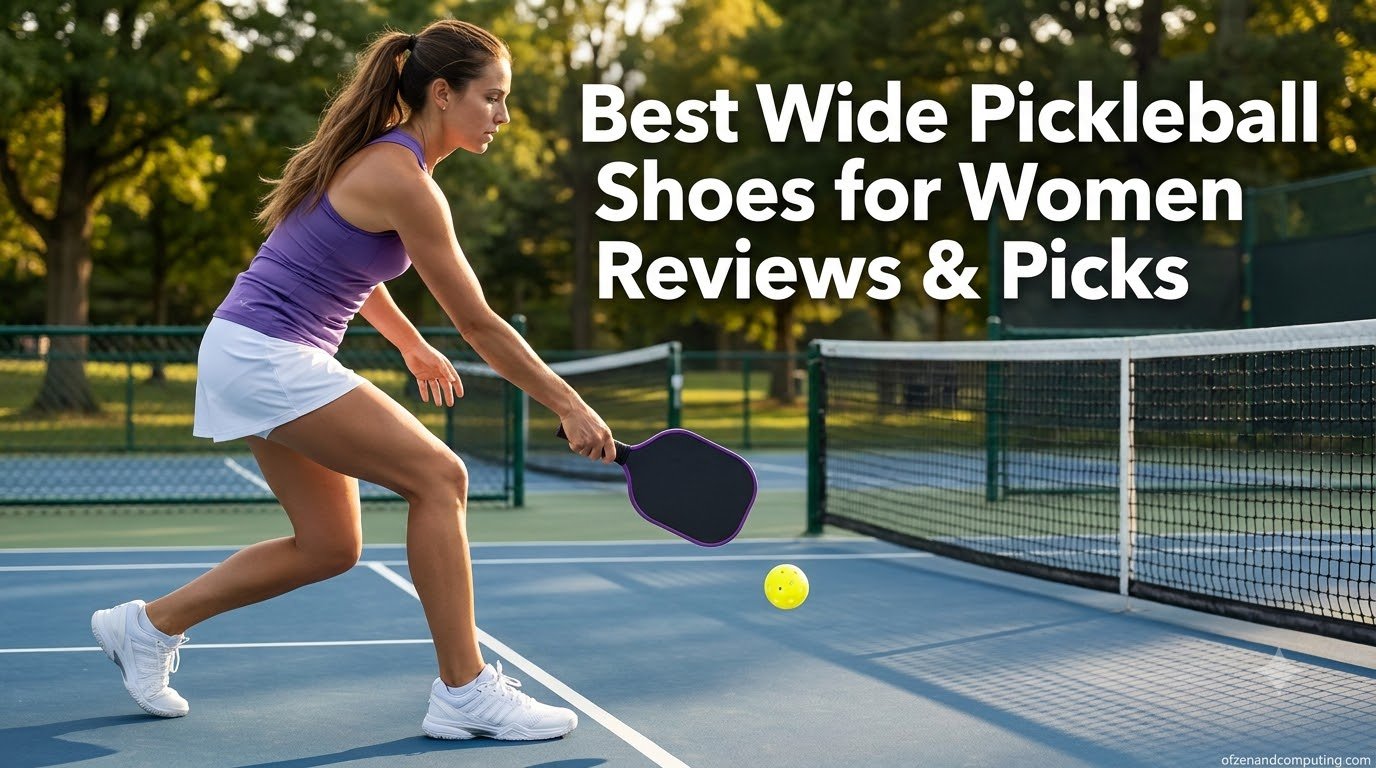
A woman standing on a pickleball court at her local park, her current shoes pinching the ball of her foot and her heel sliding, while her playing partners wait for the next game, knows the cost of a wrong pair: every stop stings and every step feels loose. Finding the best wide pickleball shoes for women comes down to a few things you can settle before you spend: room across the forefoot and toe box, a heel that stays locked through lateral pushes, and a women’s-specific last that puts the arch where your foot curves. I feel for anyone who has bought a bigger size hoping for width and ended up with a sloshing heel instead. A men’s wide court shoe sized down is a different kind of product, built for maximum forefoot volume, and it is not what this guide covers.
My plain view is to start with the Skechers Viper Court Pro Pickleball Shoe, because its relaxed fit gives room at the toe and forefoot in your normal size, which is the everyday fix for a pinched ball of the foot during park games. If you need firm lateral containment for tournament play, look past it to the Tyrol Drive V Pickleball Shoes, whose shank and reinforced heel counter hold the foot through side-to-side shuffles.

Forefoot room came first, because a shoe that pinches the ball of your foot ruins every game no matter how well it grips. The picks were weighed on whether the width comes from the last itself or from a size change, since extra length leaves the forefoot just as narrow and sets the heel sliding.
Heel lockdown and midfoot security got close attention, because a loose heel rolls your foot inward on a cut. A removable insole counted for anyone with custom orthotics, and a women’s-specific last counted for arch placement. Court traction and lateral stability rounded out the search for the best wide pickleball shoes for women.
This is the pick when a standard court shoe has been crushing your forefoot, because the roomy cut starts at the toe instead of arriving through a size change. Skechers describes the relaxed fit as giving roomy comfort in the toe and forefoot, and that shape answers the pinch most narrow shoes cause.
Order your normal size here rather than going up half a size, since the width comes from the last itself and extra length would only set your heel sliding. Get that wrong and you trade forefoot pain for heel blisters, which is no kind of trade.
The build pairs a supportive mesh upper with synthetic overlays, and the mesh is the part that needs a gentle hand. After a dusty park session, brush the grit out of the mesh with a soft brush and let the shoe air dry, because ground-in dirt wears those fibers long before the Goodyear Gold outsole gives up its grip.
The overlays carry the structural work alongside the podiatrist-certified arch support, so a little care at the mesh keeps the whole shoe in rotation longer. Ultra Flight cushioning underfoot absorbs landing shock and keeps the ride light on quick court steps.
The mesh upper brings less abrasion protection than leather, and that shows fastest on toe drags. A player who scrapes her toe on every serve will wear a hole sooner than a leather shoe would allow. Feet that stay off the pavement will hardly notice the difference.
If your forefoot goes numb in ordinary court shoes, I would start here, because the roomy fit solves that pinch without any sizing tricks. The relaxed cut also stays kind to feet that swell over a long park session. A serious toe dragger needs a harder shield up front, since the mesh here gives up ground to leather. For comfortable, supported park play on a shoe that grips and cushions, this is the easiest yes on the list.

Tournament players get the most from this shoe, because the wide, deep toe box lets toes spread and stops the jamming that narrow shoes cause at quick stops. The fit itself runs medium in a women’s last with generous depth, so order your normal size and let that depth handle the splay; an extra half size mostly adds length and can loosen the heel the curved cradle is there to lock. Inside, the shock-absorbing Polyurethane insole lifts out, which matters if custom orthotics are part of your setup, since a glued-in insole would take away that depth and tilt your whole stance.
Day to day, this is a shoe built to be worked rather than babied. Tyrol says the torsional control shank under the midfoot teams with the reinforced heel counter to stop the foot rolling during side-to-side shuffles, and that platform is what you feel on every recovery step.
The Vibram X Abrade rubber grips grit acrylic and gym floors alike, so one pair travels across venues without a traction surprise. Expect a planted, solid ride rather than a feathery one, since the build carries more heft than a bare-bones speed shoe.
The medium width is the honest catch here: a foot at the far end of the wide scale may still feel squeezed even with all that depth. Sizing up to escape it undermines the heel lock, so the widest feet face a real trade-off. The heavier build also costs a little quickness against featherweight court racers, though tournament grinders will call that sturdiness instead. Medium-wide feet never run into either problem.
This shoe earns its keep on tournament weekends, where the shank, the heel counter and the gripping outsole all get used at full intensity. It also works for casual court days, and the shock-absorbing insole carries a long session in comfort, but its heft is wasted on a player who mostly strolls through rec games. The removable, orthotic-friendly insole adds another layer of fit control for serious competitors. If wide feet and hard lateral moves define your week, this is the pair built for exactly that job.

Here the width comes as its own size option, and that is the whole trick: wide sizes exist across the full 6 to 11 range, so your forefoot gets room without any extra length. Order your usual size in the wide width rather than going up a number, since extra length leaves the forefoot just as narrow and sets the heel sliding in a shoe that aims to center it. The memory foam sock liner lifts out as well, which leaves room for a custom insert if your arches need one.
Living with them is easy in the small ways that matter weekly. The synthetic leather upper wipes clean with a damp cloth after a dusty court morning or a sidewalk round of errands, with no mesh to baby.
Avia says the compression-molded EVA midsole and cantilever heel cradle center the heel and soak up shock as the foot lands, and that pairing is what carries a standing day as well as a casual match. From pickleball and tennis to walking and travel, the same shoe handles the whole range without a change.
The cushioning is tuned for walking and casual court time, not for hard competitive play. Push into tournament-level matches and the EVA midsole will feel flat under heavy lateral loads before long. For casual games and everyday wear, that softer character never becomes a problem.
This is the pair for the woman who wants one wide shoe for a casual pickleball morning and a full afternoon of errands. The wide width, the removable sock liner and the wipe-clean upper cover the whole week, not just court hours. A player chasing competitive matches needs firmer, sportier cushioning, which this pair was never built to give. As an everyday wide shoe that plays casual pickleball on the side, it lands right where you live.

Easy cleanup is the main reason to put the Skechers Go Train Viper Court Smash in your gym-and-park rotation. Its non-marking outsole covers indoor and outdoor play, and Skechers says it grips gym floors and outdoor courts without scuffing the surface. You can move between venues without carrying a second pair.
Room at the toe and forefoot comes from the relaxed fit, with ultra-lightweight cushioning underneath. A molded EVA insole adds targeted comfort and support, and the upper uses 100% vegan materials. I like the washable build most because dusty outdoor sessions stop being a cleaning project.
Wash the pair after a gritty park session instead of scrubbing the upper by hand, then let it dry fully before your next game. That simple routine keeps the shoes fresher with less work. The support is less structured than a stability shoe, so players who rely on firm lateral containment should notice that difference.
The upper is made from 100% vegan materials, so you need to be comfortable with that construction rather than expecting leather. This matters if you prefer a traditional leather court shoe; it is much less important when easy washing and a roomy forefoot lead your list.
A player splitting time between gym floors and park courts gets the clearest benefit here, especially when quick cleaning matters. The relaxed forefoot gives you more room, but the Avia Avi-Union II offers Medium or Wide sizing when you want an explicit width choice. That Avia also has a removable liner for a more personalized underfoot setup. Keep this Skechers at the top of your list when washable convenience and indoor-outdoor traction shape your week.

Width selection is the detail to get right with the Avia Avi-Union II, because it comes in Medium or Wide and sizes 6 to 11. Choose the Wide option when your forefoot needs extra space rather than simply buying a longer shoe. Added length can leave your heel loose, which works against a secure feel during errands and light court time.
Avia says its Cantilever Technology, compression molded EVA midsole and anatomical heel cradle center the heel and absorb shock. The removable MEMORYfōm liner responds to your foot’s curves to reduce pressure points. You can also take that liner out when you want to use your own insert, then check that your heel still sits securely.
Synthetic leather gives the upper a straightforward surface for day-to-day upkeep. Wipe off street dirt before it builds up around the heel and forefoot, particularly if you wear the white version for work and walking. That small habit keeps one pair looking presentable between court sessions and errands.
For regular pickleball, the missing pickleball-specific outsole detail leaves court grip unproven. That is a real concern for frequent lateral play, but less central if you mainly walk, stand and run errands with only occasional light court time.
A woman seeking one cushioned shoe for daily tasks and occasional court time is the natural match, especially in the Wide width. The removable liner is useful when pressure relief or your own insert matters more than a sport-specific tread. If easy cleaning after outdoor play is the bigger need, the Skechers Go Train Viper Court Smash is machine washable and has a non-marking indoor/outdoor outsole. This Avia makes the most sense as your everyday wide shoe with pickleball as a secondary use.

Abrasion protection, rather than extra width, is the K-Swiss Express Light’s reason for being in your rotation. Dragguard reinforces high-wear areas at the toe and heel, and Durawrap adds another defense against excessive toe dragging. That combination speaks directly to players who scrape the front of the shoe during court movement.
Give yourself a few gradual sessions to adjust to the stability fit, especially if you have played in a sneaker or neutral athletic shoe. K-Swiss designed it for the short lateral and front-back movements of pickleball, so the feel can differ from a softer everyday trainer. A heel-lock lacing pattern can help secure an average-width heel without sizing up for more forefoot room.
The OrthoLite open-cell foam liner moves moisture away from your foot for a cooler, drier feel through long games. After play, remove the liner if it comes out easily and let the shoe air dry before the next session. Keeping moisture from sitting inside helps the liner do its job more comfortably over repeated matches.
The stability fit can take time to accept after a sneaker or neutral athletic shoe. That break-in matters if you want an immediately familiar feel for casual play, but it is less troubling when you specifically want more structure for short lateral and front-back movements.
An average-width player who wears through toes and heels will get more from this shoe’s abrasion guards than from a roomier casual option. No wide fit is offered, so a wide forefoot needs a different route rather than a larger size that could loosen the heel. The Avia Avi-Union II meets that need better with Medium or Wide sizing and a removable MEMORYfōm liner. For your toe-dragging game in an average-width foot, this K-Swiss is the focused durability pick.
Your forefoot width decides more than any size label on the box, so measure it before you spend a cent. Stand on a sheet of paper, trace the outline of your foot, and measure across the widest point, usually the ball.
If your foot measures 100 mm and a shoe’s published wide last is 98 mm inside, it will pinch, so look for a last at least 5 mm wider than your foot.
A wide width adds room around the whole ball of the foot, and a wide toe box adds height and spread at the front. Some shoes carry a standard B-width upper on a wide outsole and call it a wide fit, which leaves your forefoot just as pinched. Read the last description, not the badge.
Leave a thumb’s width, about 10–12 mm, between your longest toe and the shoe’s end when you stand. Court shoes need that margin for sudden stops. Measuring once at home beats guessing in a store aisle with a game waiting.
Heel lockdown keeps your foot from sliding sideways during a lateral push, and it matters more than any cushioning layer underfoot. A heel counter that resists thumb pressure without collapsing holds the heel better than a soft one. A deep heel cup cradles the back of your foot, and a shallow one lets the heel ride up no matter how tight you tie the laces.
If the counter flexes easily and the cup is shallow, a heel-lock lacing pattern buys you a little time but not a secure fit. The Skechers Viper Court Pro Pickleball Shoe earns its place here because its relaxed fit starts at the toe, so you can order your normal size and keep the heel seated instead of sizing up for forefoot room.
Midfoot security comes from the same place. A shoe that grips the middle of your foot holds the heel in line when you cut. When the midfoot feels loose, your foot rolls inside the shoe and the ankle takes the strain. Test that grip before you worry about how soft the ride feels.
A women’s-specific last scales the heel, arch and forefoot to female proportions, and that is the difference between a shoe that fits wide and one that fits wide and stays put. Men’s 2E or 4E models sized down give maximum forefoot volume, but the heel and arch often sit longer and higher, so the heel slips. The best wide pickleball shoes for women come from a last built for the foot, not from a bigger men’s size.
Arch placement is the part most shoppers miss. If your heel-to-ball length is 185 mm and a men’s last puts its arch apex at 195 mm, the arch presses behind your natural arch. A women’s last with a 180 mm apex matches your foot’s curve. That mismatch is why some wide shoes feel roomy at the front and wrong under the middle.
A wide toe box with a standard-width heel can work if your forefoot splays and your heel is average. A heel-lock lacing pattern and a deep heel cup help that combination stay put. The Tyrol Drive V Pickleball Shoes take this route with a medium-width women’s fit and generous depth.
Custom orthotics need a removable insole and enough depth under it, or your heel rides high and the shoe turns unstable. Pull the stock insole out and look at the cavity. A removable insole at least 4 mm thick gives you equivalent volume when you swap it out.
Some shoes claim to be orthotic friendly and still glue the insole down. An insole that lifts at the edge leaves the depth an orthotic needs. The Avia Verge Sneakers and the Avia Avi-Union II Non Slip Shoes both use a removable memory foam sock liner, and the Tyrol Drive V Pickleball Shoes lift out a shock-absorbing polyurethane insole.
Once your orthotic is in, lace up and walk a few steps. Your heel should sit at the same height as before, and the arch should press where your foot curves. A raised heel changes your balance on court, and that is the last thing you want during a quick lateral move.
Traction comes from the outsole compound and pattern, and the wrong one for your surface costs you grip or durability. Herringbone gum rubber grips indoor wood and gives slightly on abrasive concrete. A modified herringbone or a hard rubber with pivot points holds up better outdoors. A soft indoor outsole on rough park concrete wears smooth fast.
Lateral stability is a separate job, handled by the shank and the sidewall. Push off sideways in the store and watch the upper: a soft sidewall that collapses invites an ankle sprain. The Tyrol Drive V Pickleball Shoes use a Torsional Control Shank with a reinforced heel counter for this, and the K-Swiss Express Light Pickleball Shoe is built as a stability shoe for short lateral and front-back movement.
Never play in running shoes. Their heel flare and soft midsole create instability during quick cuts on court. Pickleball shoes wide fit women can trust start with a firm base and a pattern suited to where you play most.
Hard courts eat outsoles, and a single pair rarely lasts multiple seasons of regular play on concrete. Toe draggers wear through the side first, because the front edge scrapes the surface on every low ball. The K-Swiss Express Light Pickleball Shoe answers that with Dragguard at the toe and heel plus Durawrap over the toe.
Watch the tread depth. A smooth herringbone pattern means the grip is gone even if the upper still looks fine.
Rotate two pairs to let midsoles recover and outsoles wear evenly. That habit stretches the useful life of both. If your wide forefoot pushes through the side of a shoe within a couple of months, the upper is too soft for your foot, and a firmer sidewall will last longer.
Trace your foot and measure across the ball; the shoe’s internal width should clear it by at least 3–5 mm.
Press the heel counter with your thumb and reject any shoe that collapses under light pressure.
Pull the insole out; a removable insole at least 4 mm thick leaves room for orthotics.
Match the outsole pattern to your main surface: herringbone for indoor wood, harder rubber for outdoor concrete.
Leave about 10–12 mm between your longest toe and the shoe’s end when standing.
Replace shoes when the tread pattern has worn shallow or the midsole shows permanent creases.
A narrow forefoot squeezes the ball of the foot and cuts circulation during long rallies. You can measure your forefoot at its widest point and compare it with the shoe’s internal width, aiming for a few millimeters of clearance. The Skechers Viper Court Pro Pickleball Shoe uses a relaxed fit that starts at the toe, giving that room without moving to a longer size. That extra space keeps toes from going numb.
A shallow heel cup or a soft heel counter lets the heel slide during side‑to‑side moves, and lacing alone cannot fix it. Press the counter with your thumb; it should resist without collapsing. Order your normal size instead of sizing up for forefoot room, then use a heel‑lock lacing pattern to pull the heel back into the cup. This keeps the heel stable on quick lateral shifts.
If women’s wide shoes still feel tight, men’s wide sizes are not the first solution. Men’s 2E or 4E models add forefoot room but often lengthen the heel and raise the arch, causing slip on quick lateral moves. I recommend trying a women’s wide model such as the Avia Avi-Union II Non Slip Shoes, which offers a wide width option. That fit keeps the heel and arch scaled to your foot for better stability.
Yes, if the insole lifts out and leaves enough depth for your orthotic. A removable insole at least four millimeters thick gives equivalent volume when swapped. The Avia Verge Sneakers, the Avia Avi‑Union II Non Slip Shoes and the Tyrol Drive V Pickleball Shoes all have removable insoles. A glued‑in insole raises your heel and reduces stability, so avoid it.
They differ in where the width comes from and how the heel is secured. Some use a women’s last with a roomy toe, some add a wide‑size option, and some build a stability shoe for lateral movement. Match the shoe to your widest measurement and heel shape, then pick the outsole for your court surface. This lets you choose the right balance of room and control.
One season of regular play on concrete is a realistic expectation, and toe draggers may wear through the side sooner. Watch the tread and replace the shoes when it becomes shallow or the midsole shows permanent compression lines. Rotating two pairs helps both last longer and keeps the cushioning fresher. This simple habit extends the useful life of any court shoe.
The Skechers Viper Court Pro Pickleball Shoe spares you the forefoot pinch that narrow court shoes cause, because its relaxed fit starts at the toe in your normal size.
Tournament players who need lateral stability get it from the Tyrol Drive V Pickleball Shoes, where a torsional control shank and reinforced heel counter hold the foot through quick shuffles.
The Avia Verge Sneakers give you a wide width across the full 6 to 11 range and a wipe-clean upper for casual games and errands.
Start with the Skechers Viper Court Pro Pickleball Shoe, since its roomy toe and forefoot solve the pinch without any sizing tricks, and that is the problem most wide-footed players bring to the court. For the usual buyer, a park player whose forefoot goes numb in ordinary court shoes, that relaxed cut is the reason to begin there. If you need firm lateral containment for hard tournament play, the Tyrol Drive V Pickleball Shoes are the better buy instead. Whichever you pick, brush grit out of the mesh with a soft brush and let the shoe air dry, because ground-in dirt wears the fibers long before the outsole gives up its grip.