
10 Best Touchscreen Laptops Under $500 (November 2026) Expert Reviews
When your laptop hesitates between tabs or makes small text hard to read, I know that daily work becomes frustrating.…

A hobbyist photographer stands in a camera store or scrolls late at night. They want a mirrorless body for travel and family moments, and they know the wrong pick means missed shots and wasted money. I understand that pressure because a camera you enjoy using matters as much as the numbers on its box. The best mirrorless cameras under $500 turn on sensor size and resolution, video recording capabilities, and autofocus speed and coverage.
Canon F4.5-6.3 EOS R100 gets the common case right, and I commit to it for travel and family photographers. Look past it when moving kids and pets matter most, because the Sony Alpha A6000 Mirrorless Digital Camera reaches up to 11 fps and uses phase-detection autofocus.
These picks target photographers whose work ranges from family trips to hybrid video projects, with each body fitting a different daily role. Sensor size and resolution affect cropping, low-light output, and print size. Autofocus speed and coverage matter because point counts cannot show how well a camera tracks children, pets, or moving subjects.
Video capabilities were judged through 4K detail, microphone connection, and recording limits that shape a shooting day. Lens mounts and bundled zooms affect what you can add later and what you must carry. Stabilization matters when handheld stills or video must stay sharp, so the best mirrorless cameras under $500 earn their place only when their visible features support the photographer’s actual work.

For travel and family days that outrun any battery in the bag, the Canon F4.5-6.3 EOS R100 starts from one number: 37 hr of recording capacity. The charger can stay home. One detail worth knowing before the first lens purchase sits on the mount. The camera uses the Canon RF mount, and any lens added later must be compatible with that system. That mount spans the EOS R-series mirrorless bodies, APS-C and full-frame alike, so glass bought today can follow an upgrade later.
Living with it day to day is straightforward. Set up the wireless link once over Wi-Fi and Bluetooth, and 24.1MP files travel to a phone with no cable involved. A built-in flash handles dim rooms, so no accessory needs packing. Flash sync lands at 1/250 sec, quick enough for fill light on bright afternoons.
Canon credits its Dual Pixel CMOS AF with coverage of up to 143 zones, plus face, eye, animal, and vehicle detect for moving subjects in mixed light. Files arrive as Raw, C-RAW, or JPEG, which leaves editing room the day you want it. The 10 seconds self timer earns its keep on group shots.
The 3 in LCD is fixed, with no tilt or swivel. Framing over a crowd or down at a toddler means crouching or composing blind. Eye-level family and travel work never notices the difference.
Hobbyist travel and family photographers who shoot from morning to night are exactly who this body rewards, because the 37 hr capacity outlasts a full itinerary and the 143 autofocus points track kids who rarely hold still. A 1 year manufacturer warranty backs a current entry-level model. The 24.1MP APS-C sensor also leaves room to crop a busy frame. Every added lens must match the RF mount, and shooting stays at eye level given the fixed screen. Buy it for the longest days, and let the battery be the last worry.

Choose a lens that uses the Sony E mount, because the camera will not accept other mounts without an adapter that adds bulk and can reduce autofocus speed. The same rule applies to memory cards: only Memory Stick Pro Duo, SDHC, or SDXC cards work, so a mismatched card will stop recording entirely.
Its anti-dust system combines a charge-protection coating on the optical filter with an ultrasonic vibration mechanism. Turn the camera off, point the opening downward, and attach the new lens before powering on again.
Exposure control stops at Automatic and Programmed AE, leaving no manual or shutter-priority option for creative motion blur or frozen action. My honest take: that gap only bites photographers ready to grow past automatics, while candid family shooters can live with it for years.
Action and candid family photographers will appreciate the 24.3MP resolution, 25 autofocus points, and built‑in flash that keep moving kids and pets sharp in everyday light. At 12.16 oz the body slips into a small bag without bulk, and the Sony E‑mount lens system plus Memory Stick Pro Duo, SDHC, or SDXC cards cover most starter kits. If you need much longer video clips, the Canon F4.5‑6.3 EOS R100 delivers 37 hr of capacity compared with 29 minutes here. This camera fits the shooter who values light weight and quick stills over extended recording.

Video-first shooters get a willing partner in the Panasonic LUMIX G7, and I get why one body that flips its screen for a clip and still manages an afternoon of stills is so appealing. The 3 in touchscreen swivels and tilts for overhead or waist-level framing, and the 16MP Micro Four Thirds sensor records 4K UHD 2160p video.
Panasonic’s 4K photo mode goes further, pulling individual high resolution stills from 4K video filmed at 30 frames per second to catch split-second expressions. Daily use stays easy. The battery covers a full day of mixed shooting, the electronic shutter enables silent capture in quiet rooms, and the dials put exposure settings under your fingers.
Getting set up right saves the first month of frustration. The lens mount is Micro Four Thirds, so anything added beyond the 14-42 mm kit lens has to belong to that system.
Plug a standard microphone into the 3.5 mm external mic port for better sound, with output over micro HDMI Type D or USB. Keep clips planned around the 30 minutes recording capacity.
Contrast-detection autofocus hunts when a subject races toward the lens, so sports and running pets sit outside its comfort zone. The F2.2-F5.6 aperture range also narrows dim-room shooting. Digital zoom stops at 2, which restricts distant framing. A vlogger can use the articulating touchscreen for framing at a steady distance.
Choose this camera for casual shooting and vlogging when a flip-out touchscreen and microphone port matter more than action tracking. The 49 autofocus points and silent shooting mode handle posed family work and quiet venues without fuss. Stay within the Micro Four Thirds lens family and use SD, SDHC, or SDXC cards. When the plan centers on video and everyday stills rather than fast motion, this Panasonic belongs on the short list.

The OM System Olympus OM-D E-M10 centers on steady handheld shooting indoors or while traveling. OM SYSTEM says its built-in 5-axis image stabilization compensates for up to 4.5 stops of camera shake, helping you photograph in dim rooms without a tripod. Its weight is 1.1 lb.
Start with an SDXC card because the camera lists that card type, then attach the Olympus 14-42 mm IIR lens to its Micro Four Thirds mount. The tilting 3 in LCD helps with high and low angles, while the electronic viewfinder supports a more traditional shooting position. Eye Detection and 81 autofocus points help you keep family subjects in view, and HDMI or USB handles transfers to computers and external storage.
The camera exposes one clear limit: its exposure control is Automatic, so it gives beginners little direct control over manual exposure choices. That limitation matters if you want to learn shutter, aperture, and ISO combinations as your skills develop. It matters less for indoor family snapshots where automatic focus and exposure handle the quick changes caused by children or low light. The 81 autofocus points and eye detection ease subject tracking, but they do not expand manual control.
The OM System Olympus OM-D E-M10 is the better match for indoor family and travel photographers who want sharp handheld stills without carrying a tripod. Its 5-axis stabilization directly addresses slow shutter speeds in dim rooms, and the 81-point autofocus system supports people-centered shooting. Choose it for low-light stills and travel; keep a separate plan for advanced manual exposure work. The included 14-42 mm II R lens also gives you a normal zoom without another purchase.
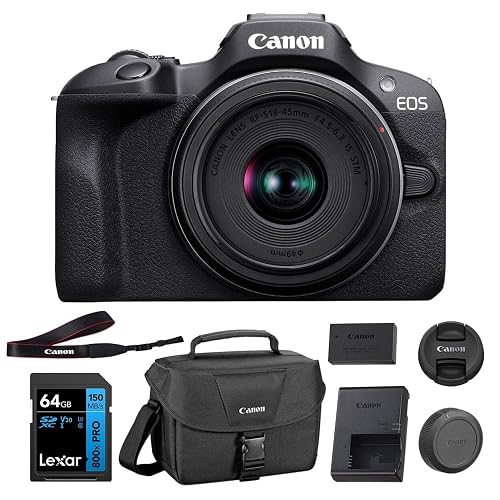
The Canon EOS R100 turns a new mirrorless setup into a simple family kit, with the 18-45mm lens, shoulder bag, and 64GB SD card included. Simple controls and a compact body reduce the learning curve, while the 24.1 mp APS-C sensor gives you detailed stills. Canon says its Dual Pixel CMOS AF covers up to 143 zones and adds face and eye detection for moving family members.
Set up the camera by mounting the included 18-45mm lens, inserting an SD or SDXC card, and using shutter priority when shooting. The fixed 3 in screen shows 307,200 dots, the pop-up flash adds light in dim rooms, and Wi-Fi transfers images to a phone for quick sharing. For storage planning, remember that the included card is 64 GB and the camera uses UHS-I, which limits write-speed performance. The included shoulder bag gives the body and lens a protected place between outings.
The Canon EOS R100 can feel restrictive once you want more creative control. Its exposure control is Shutter Priority, and its variable F4.5-F6.3 aperture can struggle in low light. UHS-I card support also limits write-speed performance. Those costs matter for low-light shooters and advanced users, but they affect the family-photo use less because the built-in pop-up flash and straightforward setup cover routine indoor snapshots.
The Canon EOS R100 is the straightforward option for new mirrorless photographers who want a ready-to-shoot kit for family photos. The included lens, bag, and 64GB SD card remove several first purchases, and its Limited 1 Year Warranty adds reassurance for a new owner. It works especially well for children, adults, and everyday scenes that benefit from face and eye detection. Video creators who need more manual exposure control will find the Shutter Priority setup less accommodating.

The Olympus PEN E-PL8 is built for getting pictures immediately with its image-stabilized 14-42mm EZ zoom lens included. I like that arrangement because a new photographer can frame wide shots and tighter views without planning a separate lens purchase. Watch the Micro Four Thirds system when adding lenses or accessories, because that is the mounting standard and incompatible mounts will not attach. The kit lens has a 37 mm filter size and electronic zoom, and the camera weight is 11.6 oz.
Start with the included 14-42mm EZ lens, whose electronic zoom handles framing from wide to close, and charge the lithium ion battery before a long outing. The built-in flash fills dark rooms, automatic AF handles the shot, and 1080p video covers simple clips. At 60 minutes, the recording capacity gives you a practical limit for longer sessions, while the 3 in LCD keeps the controls visible for everyday snapshots.
The PEN E-PL8 gives you automatic exposure control and limited flash modes, which narrows manual and creative lighting options as you advance. Its international version carries no local warranty coverage, so buyers needing local support should account for that difference before purchase. These tradeoffs matter more for experienced shooters and flash-heavy creators than for beginners who want simple snapshots. The included zoom and 60 minutes of recording capacity still make it useful for learning and travel.
The Olympus PEN E-PL8 handles ready-to-shoot snapshots and light travel video well for photographers who want one camera-and-lens kit. Its included 14-42mm EZ lens removes the need for a separate starting lens, and automatic exposure and autofocus make the camera approachable for beginners and casual family photographers. For photographers who need extensive manual exposure control, its Automatic setting leaves less room. It is the easier first camera for everyday snapshots, not a dedicated manual-control body.

Fujifilm builds the X-T1 for photographers who plan to work outdoors in weather and cold. The company says its water- and dust-resistant construction protects the camera in harsh conditions. That protection requires weather-resistant lenses, so match the lens to that requirement rather than assuming the body seals every lens. Use SD, SDHC, or SDXC UHS-II cards, and keep the 1 year warranty terms in mind for labor and parts coverage. Batteries and accessories not made by Fujifilm fall outside that coverage.
On an outing, its APS-C sensor and 49 autofocus points support detailed stills and active subjects, while the 8 FPS rate helps catch motion. A tilting 3 in LCD gives you low and high framing angles, and the electronic viewfinder keeps the screen out of bright glare. The body records FHD 1080p at 30fps and supports Raw or JPEG files, so outdoor work does not force one output format. Plan around Fujifilm X lenses and compatible memory cards when assembling the shooting kit.
Eight-bit video gives you less latitude for grading than a deeper workflow. The limitation matters when you make heavily corrected commercial or cinematic edits, but it does not prevent ordinary 1080p clips or still photography. It remains the main compromise in an otherwise weather-ready body.
For an outdoor photographer who values weather resistance, fast capture, and manual exposure control, the X-T1 covers the hard part of the journey. Its 49 autofocus points and up to 8 FPS support active subjects, and the APS-C sensor and tilting LCD support stills from varied angles. The body-only package requires you to add a Fujifilm X lens, and the 8-bit video limit makes it less natural for intensive grading. For outdoor travel that accepts standard video depth, it remains a strong weather-focused body.

The Panasonic DMC-G5KK is an SLR-style mirrorless camera for photographers who want manual exposure control and a familiar everyday body. A 3 in free-angle touch LCD, electronic viewfinder, and built-in flash make framing and shooting flexible in changing light. Its 23 autofocus points and Full HD 1080p video cover stills and basic video work.
The body accepts Micro Four Thirds lenses and arrives with a Panasonic 14-42mm Zoom. A lens on another mount will not attach, so keep future lens purchases within this system. The box includes a battery, charger, body cap, remote, shoulder strap, and HDMI cable, so charging the battery and attaching the strap cover first setup. It also supports automatic, Aperture Priority, Shutter Priority, Program, and Manual exposure as your shooting becomes more deliberate.
Contrast Detection autofocus is the G5KK’s main limitation, with 23 autofocus points and no phase-detection option. This matters most when children, pets, or sports enter the frame and the focus has to keep up. The older 16.1 MP sensor also limits action and low-light performance for demanding work. For portraits, landscapes, and tripod shooting, those constraints stay in the background rather than blocking everyday use.
The G5KK is for photographers who value manual exposure controls, an articulating touchscreen, and a bundled zoom without moving to a large professional body. It gives access to Aperture Priority, Manual, Program, and Shutter Priority, so it can grow beyond automatic shooting as the owner becomes more deliberate. Micro Four Thirds lens compatibility also gives you a clear path for adding glass, while the 920,000-dot display keeps controls easy to read. Its contrast-based focus and older sensor make it less attractive for fast action or demanding low-light work, but it remains a capable everyday tool for deliberate stills and Full HD video.

The Panasonic Lumix DMC-GF3 combines its body and bundled 14–42mm zoom at 9.28 oz, giving you a compact kit for trips. Panasonic describes the body as about as wide and tall as a typical smartphone and keeps lens interchange available. Its Micro Four Thirds mount accepts lenses in that system, so another lens mount will not attach. Choose an SD, SDHC, or SDXC card before heading out, because those are the supported formats.
Before a long outing, charge the included battery and format a supported card. The 30-minute recording limit means you should plan Full HD shooting in shorter sessions rather than expecting one uninterrupted take. The 3 in touchscreen supports touch focus and control, and the electronic viewfinder helps with composition away from the screen. The lens cap, body cap, shoulder strap, instruction manual, battery, and charger cover the core packing needs, and the built-in flash handles simple fill light.
The 12 MP sensor gives you less room for aggressive cropping and large-format prints than a higher-resolution camera. That matters if you frame loosely, print large, or want more detail to work with during editing. It does not prevent ordinary travel photos, web images, or modest prints, so it remains workable for straightforward shooting. That resolution ceiling is the compromise to accept before taking on detailed print work.
This camera weighs only 9.28 ounces with its 14‑42mm zoom attached. Its 3‑inch touchscreen handles focus and menu navigation without a viewfinder. The 12‑megapixel sensor records Full HD video for up to 30 minutes per clip. You get a compact Micro Four Thirds kit that fits in a small bag for everyday trips.
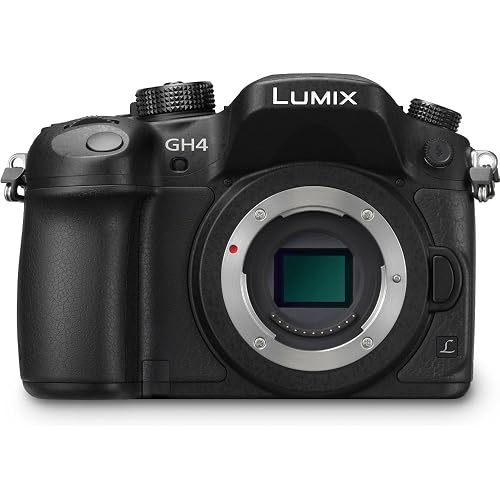
Panasonic LUMIX DMC-GH4KBODY 16.05MP is aimed at hybrid creators who want capable stills and video tools in one camera, especially those who already shoot with interchangeable lenses. Panasonic credits 4K 24p cinematic recording and 49-area high-speed autofocus for hybrid work.
The articulating touchscreen OLED helps frame video without holding the camera at a fixed angle, and manual exposure options give you control over each scene. I favor this body for creators who value those video tools and already own suitable lenses, because the camera adds capability without replacing their lens collection.
Plan your media before recording by using SDHC or SDXC cards, which are the compatible flash memory types listed for this camera. The 3 in touchscreen makes menu changes and framing adjustments direct.
Lens compatibility deserves equal attention because the body accepts Micro Four Thirds lenses, so your existing collection should match that mount before you plan a hybrid kit. Its 220-minute recording capacity gives long sessions a clear time target, and the hotshoe offers a connection point for flash equipment.
For hybrid creators who already own Micro Four Thirds lenses, the separate lens purchase is mainly an added upfront cost rather than a usability problem. It matters more to a first-time buyer, while established lens collectors can use the body with gear they already have.
Creators who already own Micro Four Thirds lenses should choose the GH4 when 4K video, manual exposure, and an articulating touchscreen matter most. A shopper who wants one camera purchase with a 14-42 mm lens will find the Panasonic LUMIX G7 more convenient because its lens is included with the camera. The GH4 instead demands a separate lens, but that cost is offset for buyers who can reuse compatible gear. Its 220-minute recording capacity and manual exposure controls make it the right fit for an established hybrid kit.
Sensor size changes both framing and the lenses you can carry. APS-C gives shallower depth of field and better high-ISO performance than Micro Four Thirds. The Canon F4.5-6.3 EOS R100 pairs APS-C with a 24.1 mp maximum image size. Higher resolution supports cropping, though lens quality and available light still shape the result.
Micro Four Thirds puts more emphasis on small bodies and light lenses. The Panasonic LUMIX DMC-GH4KBODY 16.05MP uses that format for creators already invested in its lens ecosystem. The Panasonic LUMIX G7 and Panasonic DMC-G5KK also accept Micro Four Thirds lenses. For roomier bags or larger prints, APS-C gives you the stronger starting point.
Before glass, your lens mount sets the long-term cost. Among the best mirrorless cameras under $500, the Canon F4.5-6.3 EOS R100 earns my overall pick because its RF mount supports both APS-C and full-frame lenses. The Sony Alpha A6000 Mirrorless Digital Camera uses Sony E, while Micro Four Thirds bodies use that system’s lenses. Match the mount to your planned lenses before choosing a body-only deal.
Your video choice comes down to 4K detail, microphone control, and framing flexibility. The crop also changes framing after recording begins, so framing for still photos may not transfer directly to video.
The Panasonic LUMIX G7 has a 3.5 millimeter external microphone port and an articulating touchscreen. The Sony Alpha A6000 Mirrorless Digital Camera supports 1080p, microphone input, and a tilting screen. For 4K at 24p, the Panasonic LUMIX DMC-GH4KBODY 16.05MP serves hybrid creators who already own compatible lenses.
A 4K label alone does not reveal every limitation. Listings may omit heavy crop factors, recording limits, or the absence of a microphone port. My rule is to compare framing, audio connections, and screen movement before resolution. A camera that records usable sound and stays composed can work better than one with extra resolution and frustrating controls.
Moving children and pets reward autofocus behavior more than a large point count. The Sony Alpha A6000 Mirrorless Digital Camera has 25 autofocus points, while the Canon F4.5-6.3 EOS R100 has 143. Those numbers do not measure tracking speed by themselves, because some points use slower contrast detection and their coverage varies across the frame.
For candid action, I would start with the Sony Alpha A6000 Mirrorless Digital Camera and test it with the lens you intend to use. The Canon F4.5-6.3 EOS R100 offers greater point coverage for family scenes, while the OM System Olympus OM-D E-M10 has 81 points. Point counts cannot replace a real test with running children, jumping pets, and ordinary indoor light.
Test autofocus in low light before your trip, then update the firmware immediately after the camera arrives. Continuous autofocus, burst shooting, and a bright screen consume more power than single-shot focusing. Treat those settings as part of your autofocus decision, because they affect both missed shots and battery life.
Image stabilization matters most when dim rooms, walking footage, or slow shutter speeds make camera shake visible. In-body stabilization moves the sensor to counter movement, but it cannot stop a running child from becoming blurred. The OM System Olympus OM-D E-M10 includes 5-axis stabilization rated at up to 4.5 stops, which gives indoor and travel shooters more room to work handheld.
A stabilized lens offers a different kind of help. The Olympus PEN E-PL8 comes with an image-stabilized kit lens, so its stabilization comes from the glass rather than the body. Canon RF and Sony E lenses include stabilized options, but lens availability depends on the particular mount. A fast shutter speed remains useful when moving subjects cannot stay still.
I would favor body stabilization for handheld video or frequent low-light stills. Without it, a stabilized lens, a suitable shutter speed, or a tripod becomes part of the shooting plan. For bright outdoor travel, stabilization may matter less than autofocus, lens range, and how comfortably the camera rides in your bag.
Storage and charging habits protect a camera between busy family days and longer trips. The Canon F4.5-6.3 EOS R100 states 37 hr of capacity. Other capacity figures include 220 minutes for the Panasonic LUMIX DMC-GH4KBODY 16.05MP, 60 minutes for the Olympus PEN E-PL8, and 30 minutes for the Panasonic LUMIX G7 and Panasonic Lumix DMC-GF3. Treat published figures as starting points because test methods can differ.
Keep the camera dry in a padded bag, and clean the lens and body gently before packing it. Test USB-C power delivery while recording if the camera supports it, and format the memory card after copying important pictures.
For a used body, ask for the shutter count, test autofocus in low light, and inspect the screen, sensor, and battery before the trip. Firmware and USB-C power delivery should also work as expected when those features are part of the camera. Never point the camera at the sun through the viewfinder or lens. Use only manufacturer-approved batteries and chargers, and keep the camera dry when moving between temperature extremes.
Choose lenses that fit the RF, Sony E, or Micro Four Thirds mount.
Charged spare battery for long days
Autofocus test with children or pets
Microphone port and movable screen check
Used-camera shutter count and sensor inspection
Ready-to-shoot lens, battery, and memory card
Probably not if the mount and firmware path match your plans. The Canon F4.5-6.3 EOS R100 carries a 1 year warranty, while older enthusiast bodies can still serve travel and family work for years. Choose a model whose lenses, batteries, and firmware support you expect to keep using. Review the return policy before keeping a used body.
The gap is very large on paper, but test methods may differ. The Canon F4.5-6.3 EOS R100 lists 37 hr, while the Panasonic LUMIX DMC-GH4KBODY 16.05MP lists 220 minutes. Treat both as starting points rather than full-day guarantees. For a family day, carry a charged spare battery and reduce screen use, continuous autofocus, and video when conserving power.
Autofocus can struggle when distance changes quickly, light is low, or the subject crosses the frame. The Sony Alpha A6000 Mirrorless Digital Camera is the action-focused pick here, even though its 25 autofocus points are fewer than the Canon F4.5-6.3 EOS R100’s 143. Point count does not predict tracking by itself, because contrast-detect points can be slower. Test the exact lens, light, and subject distance before relying on a burst for important moments.
Yes, some models accept an external microphone. The Panasonic LUMIX G7 has a 3.5 millimeter external microphone port, and the Sony Alpha A6000 Mirrorless Digital Camera supports microphone input for 1080p recording. The Canon EOS R100’s 4K mode has no microphone jack, so external audio needs another recording path. A movable screen helps with framing, but it cannot replace a clean audio connection.
A high shutter count does not automatically mean a camera is near failure, though it gives useful context. Ask for the count and inspect the shutter, sensor, autofocus, battery, and card slot before buying. Test low-light focusing with the lens you will actually use. Confirm the return policy so you can address a fault that appears after delivery.
The Panasonic Lumix DMC-GF3 is the lightest by stated weight at 9.28 oz. For rugged outdoor use, the Fujifilm X-T1 has water- and dust-resistant construction, but it needs weather-resistant lenses for full protection. Weight alone does not determine durability, so consider the weather, grip, lens size, and number of batteries your trip requires.
Yes, every usable setup needs a lens, charged battery, and memory card unless those items are already included. Some kits bundle a kit lens and battery, while body-only purchases leave you with accessories to buy. Charge the battery, format a compatible card, mount the lens, and update the firmware before your first outing. These setup steps prevent early disappointments that have nothing to do with the camera body.
Panasonic LUMIX G7 spares vloggers the hassle of a fixed screen with its flip‑out touchscreen and built‑in microphone port.
For candid family photographers shooting moving kids and pets, the Sony Alpha A6000 Mirrorless Digital Camera supports up to 11 fps continuous shooting and uses phase-detection autofocus to capture the moment.
Canon F4.5-6.3 EOS R100 gives travel and family photographers a 37 hr capacity, so they can stop planning around battery limits during long days.
Start with Canon F4.5-6.3 EOS R100 for the family-and-travel photography that usually drives this purchase, because its 37 hr capacity lets you focus on the day instead of battery planning. If your priority is candid action with moving children or pets, choose Sony Alpha A6000 Mirrorless Digital Camera instead, but know that its exposure control is limited to Automatic and Programmed AE.