11 Best RV Dehumidifiers for Winter (November 2026) Top Picks & Reviews
An RVer parked in a snowy campground or storing a rig over winter watches condensation bead on the windows and…

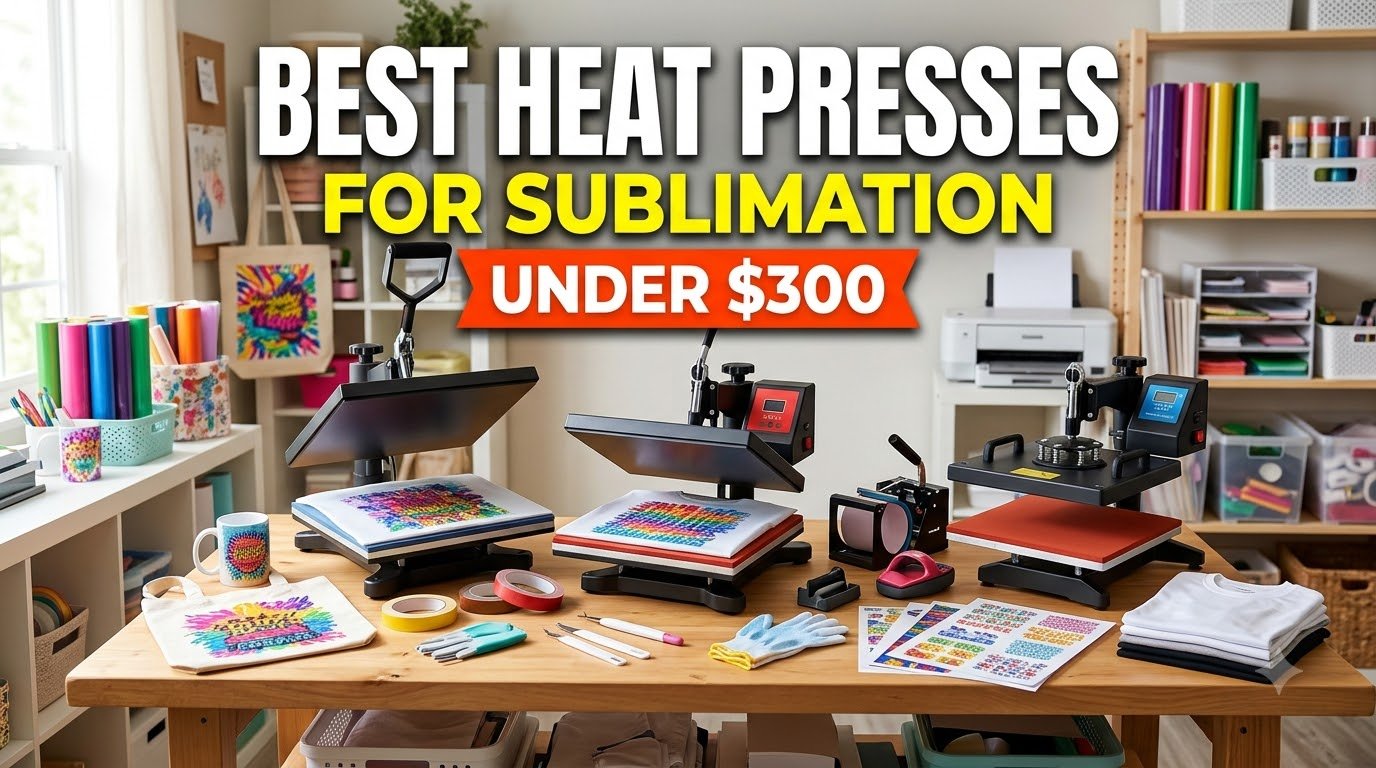
A home-based crafter in a spare bedroom needs a reliable press to start selling sublimated shirts without overspending. A wrong pick shows up as washed-out transfers, shiny seam marks, or a plate too small for a full back, and each of those costs you blanks and reprints. The best heat presses for sublimation under $300 come down to temperature accuracy, pressure consistency, platen size and heat-up time, and I know how much rides on getting those four right when the money is tight. A mug press or a small craft iron does a different job on curved blanks, so this guide stays with flat presses for shirts and similar work.
Fancierstudio Digital Heat Press opens my shortlist for the usual buyer: someone pressing a few shirts a week at home who wants repeatable settings without a big outlay. The exception is a crafter whose blanks are mostly hoodies and seamed garments, where Delclynee High Pressure Heat Press is the better fit.
The moment you know a press was the wrong one comes when a transfer lifts at the edge after the first wash or a seam presses shiny. So the picks were weighed on how steadily each controller holds its set temperature, since sublimation ink needs a narrow band to turn rich rather than blotchy.
Pressure came next, because a plate that meets a thick seam evenly saves reprints. Platen size got a hard look, since a 15 x 15 in surface covers a standard front but not a 3XL back. Heat-up time and the feel of the frame rounded out the best heat presses for sublimation under $300.

The Fancierstudio Digital Heat Press is the one to beat here for a home crafter taking the step from weekend hobby to first paid shirt orders. Its 1800 W element is the highest power figure on this list, and that headroom shows up as quick recovery between presses when you are working through a stack of blanks. Electronic time and heat control let you dial a setting and repeat it, with a time range of 0-999 s and a temperature range of 0-699 degrees F.
Fancierstudio fits a silicon-gel base board under the lower platen, and the maker says it spreads the clamping force so the top plate meets the garment evenly instead of biting at one edge. That matters most on thick seams and layered vinyl, where a hard spot shows as a shiny patch. The platen carries a Teflon coating, and the pressure knob adjusts for different materials.
The 15 x 15 in platen is the size to think about before you commit. It handles standard fronts and backs, but a 3XL shirt or a full hoodie often needs two placements, so plan your layout around that. The press measures 33 x 23 x 20 in, so give it a bench with room to swing the top plate clear.
Keep the Teflon face clean between jobs. A stray thread or fleck of vinyl on the platen transfers straight onto the next shirt, and wiping the surface while it is warm lifts residue before it bakes on. The fitted lower pad cover on this press protects the base pad, and a clean pad keeps pressure even across the whole print.
Three months of cover is thin for a press you plan to run hard, and that is the real weak spot here. If the element or controller fails in month five, the repair lands on you. Curved blanks are the other gap, since there are no mug, hat or plate attachments, so tumblers and caps need a separate press. For a hobbyist pressing a few shirts a week, the short term rarely bites. For someone taking paid orders every week, budget for the risk.
This press is for the home crafter who has outgrown a starter unit and is ready to take paid shirt orders. If you press a lot of thick hoodies and want more clamping force, the Delclynee High Pressure Heat Press brings a floating top platen that levels itself over seams. The Fancierstudio still earns its place as the pick for a first paid setup, where fast heat and precise settings count for more than raw pressure.

The Delclynee High Pressure Heat Press is built for the crafter whose blanks are not flat. Hoodies, sweatshirts and anything with a seam put an uneven stack under the platen, and this press answers that with an automatic floatation top platen. Delclynee says the mount self-levels, so a thick seam gets the same force across its width instead of a hard spot. The lower platen threads, which lets you slide the back of a shirt underneath and press a single layer.
A fitted lower pad cover keeps the base clean and stops the pad shifting as you load and unload. The digital gauge runs time from 0-999 seconds and heat from 32-455°F, and an audible 5-beep signal tells you when the target temperature is reached or the countdown ends. That beep saves you from hovering over the gauge on long runs. A secondary handle on the base adds stability while you work the top plate.
The lower board is fixed and does not slide, so loading takes more care than a drawer-style press. Line the shirt up before you close the platen, because the fixed board gives you no second chance to nudge it. The press measures 21 x 15 x 12 in, which leaves a compact footprint on a bench.
Power sits at 1250 W, below the 1500 W of the Fancierstudio DG Heat Press. That gap shows up as slower recovery between presses on a long batch, so the DG is the quicker pick for high-volume flat work. For seamed garments, the floating platen on the Delclynee does more for your results than the extra wattage would.
The fixed lower board is the first thing you will notice. Every shirt has to be positioned before the platen comes down, and a crooked placement means starting over. That is a minor annoyance for a careful presser and a real drag if you like to slide garments in and out quickly. A hobbyist pressing a few hoodies a month can live with both. Someone running daily production should weigh the fixed board and the absent warranty term before buying.
Pick this one if your work leans toward hoodies, sweatshirts and other seamed garments that need even pressure across a lumpy surface. The floating top platen and threadable lower platen are built for exactly that job, and the 15 x 15 in surface covers a full front. If your output is mostly flat shirts in long runs, the Fancierstudio DG Heat Press brings 1500 W for faster recovery between presses. The Delclynee remains the better match when the garment itself is the challenge.

The HTVRONT Auto Heat Press takes the arm work out of pressing, which is the whole point for someone selling shirts. The motorized platen presses and releases on its own, so each cycle repeats the same force without you leaning on a handle. Load the shirt, push the ironing board in, press the R button, and the machine does the rest.
The drawer slide design keeps your hands away from the hot plate, and the ironing board sits apart from the heating plate. The maker also states the press reaches 320°F /160°C within 4 mins, so warm-up is short.
The 15 x 15 in platen is the size to plan around, and the press runs on 120 V. It covers a standard front print, but a full back on a large shirt or a wide blanket may need two placements. HTVRONT states the press handles ceramic coasters and wood signs up to 1″ in thickness, so flat blanks beyond fabric are in reach. The press runs on 120 V and is FCC certificated, per the maker.
Give the machine a level surface with clearance for the drawer to slide fully out. A cramped bench stops the board short and throws off your placement. The auto-off also means you should not count on it staying hot between long gaps in a session.
Thirty days of warranty is short for a press with a motor and a controller inside. If the drive fails after the first month, the repair is yours to arrange. There are also no mug, hat or plate attachments, so curved blanks need a separate press. For a crafter pressing shirts in steady volume, the hands-free cycle is worth the trade. For someone who wants long cover on a motorized machine, this is the weak point to weigh.
This press is for the crafter selling shirts who wants the same press every time without standing over a handle. The motorized platen and auto release deliver repeatable force, and the drawer keeps your hands clear of the heat. If you also press curved blanks like mugs and caps, a combo press covers that ground better. The HTVRONT is the pick for flat shirt work where consistency and free hands matter most.

The PowerPress Industrial-Quality Digital Sublimation is the press to pick when you plan to run it hard and want to keep it going rather than replace it. Its 15 x 15 in Teflon coated plate covers a full shirt front in one press, and the digital control board sets temperature from 32-455 F and time from 0-999 s. PowerPress says the silicon mat is not glued down, so you can lift it off, clean it and put on a new one when it wears.
That mat and a replaceable fuse are the two parts that decide how long the machine stays in service. The fuse guards against overheating and electric shorts, and a worn mat is the usual reason a press starts leaving uneven transfers. Keep a spare mat on hand and treat the fuse as a service part, not a fault.
The plate is 15 x 15 in, which handles most adult shirt fronts but leaves 3XL and oversized hoodies needing a second press or a repositioned design. Plan your layout around that size before you take on a large-garment order.
Against the Fancierstudio Digital Heat Press, the gap is power: 1400 W here against 1800 W there. The stronger element heats faster and recovers quicker between presses, so a busy day of back-to-back jobs leans toward the Fancierstudio, and steady daily work with servicing in mind leans here.
Three months of warranty is thin cover for a press you run every day, and a heating element or control board failure after that lands on you. If you press occasionally for gifts and personal projects, the short term matters little. For a shop depending on the machine most days, budget for parts and keep the replaceable mat and fuse on hand so a small failure does not stop a run.
This one is for the crafter who presses most days and wants a machine that can be opened up and kept running. The removable mat and replaceable fuse mean wear parts are simple to swap, which matters when a press is your main tool. For steady output with easy upkeep, the PowerPress is the sensible pick.

The Fancierstudio DG Heat Press earns its place on the strength of one feature: a lower platen that slides out up to 5.5 in. Fancierstudio says pulling it out lets you lay and smooth a shirt away from the heated top plate, then push it back for a square, wrinkle-free press. For anyone loading shirts all afternoon, that takes the guesswork and the burned fingers out of lining up a design.
Day to day, the electronic control sets heat from 0-500 degrees F and time from 0-999 seconds, and the pressure is adjustable for different fabric thicknesses. Teflon covers come for both the top and lower platen, so the pressing surfaces are protected from the start. The 15 x 15 in surface handles standard shirt fronts.
The silicon pad is only lightly glued down, which is deliberate so it can be replaced, but it means the pad can shift if you drag a garment across it. Smooth the pad flat before each session and lift it rather than slide it when you swap it out.
The Digital heats faster and holds temperature better through a long run of shirts, so high-volume days favor it. For batch loading with fewer reheats between presses, the pull-out platen here saves more time than the extra wattage would.
If you press a few shirts a week and keep the pad smoothed down, neither point will trouble you much. For daily production where the machine must not stop, the loose pad and absent cover are real risks to plan around.
This press is built for the crafter who loads shirt after shirt and wants the layout step to be quick and clean. The pull-out platen lets you position and smooth each garment clear of the hot plate, which cuts misaligned presses and reworks. For steady batch work with easier loading, the DG is the one to take.

The Slendor Away Heat Press is the one-press answer for a seller whose orders mix shirts with tumblers, hats and plates. The 15 x 15 in platen handles apparel, and the kit adds a 30oz tumbler press, a hat press and 5″/6″ plate presses, so curved and flat blanks come off the same machine. Slendor backs it with a 2-year warranty.
Setup is where the swing-away design pays off. Slendor says the 360-degree arm rotates the heated plate clear of the base, so you can position a garment or clip on an attachment without reaching under hot metal. The LCD control sets 0-482 F and up to 999 seconds, with Fahrenheit/Celsius switching and an alarm when the timer ends.
The lower platform detaches so attachments can be swapped, and that is the part to learn well. Re-seat it squarely every time, because a platform that sits slightly off throws the pressure uneven across a shirt front.
The detachable platform is also the cost: every switch between a shirt and a tumbler adds a setup step before you can press. If you run one blank type all day, that step is rare and the kit still covers the odd mug order. For a shop that changes blanks every few jobs, the extra handling adds up.
The detachable lower platform slows every change between the flat platen and the tumbler, hat or plate attachments. If your orders are mostly shirts with the occasional mug, the extra step is a minor pause. A seller who alternates blank types several times a day will feel the setup time on each switch, and that is the trade for having all the attachments in one press.
Pick this one if your sales mix runs across shirts, drinkware and caps and you want a single machine to cover all of it. A crafter pressing only flat shirts can spend less and skip the attachment changes. For a growing mix of blanks, the Slendor keeps everything on one base.

The 8‑in‑1 kit adds a hat press, two mug presses, two latte presses and two plate presses to the 15 × 15 platen. Digital controls hold 30‑450 °F and a 0‑999 s timer with an audible done alarm. A Teflon‑coated plate resists scorching, and thick silicone plus sponge pads keep pressure even.
The unit measures 17.2 in long, 15.7 in wide and 20.3 in tall, so the swing arm needs clear side space. Mug attachments only accept the included 6 oz, 11 oz and latte sizes; larger travel mugs will not seat properly. If you plan to press non‑standard drinkware, a separate mug press is required.
The mug presses only accommodate the supplied 6 oz, 11 oz and latte diameters. At 46.3 lb the frame stays put on a bench, so choose a permanent spot. In a dedicated craft room the weight is stable, but on a shared table it becomes a hassle.
Pick Topdeep if you sell a mix of shirts, caps, mugs and plates and want one machine to cover them. The three‑year warranty is the longest on this list, and the 8‑in‑1 kit saves buying separate presses. A crafter who only presses flat shirts can spend less on a simpler press and put the savings into blanks. This press is a good fit for anyone whose gift line changes shape each week, because the warranty and attachment set match that workload.

RoyalPress puts production counting on the controller, and that is what sets it apart for flat runs. The color LED panel handles temperature, time and a counter that runs from 0 to 999pcs, so you can track how many shirts, bags or puzzles have gone through in a session. Royal Press says the triple-function controller adds the job of calculating production, and the counter backs that up.
The 15 x 15 in printing area takes a full-front transfer, and the 1400 W element heats the plate. Royal Press coats the cast aluminum plate in Teflon and says you no longer need a coated sheet, which saves a step on every press. The plate is thickened aluminum, and the maker says that keeps the temperature even across the surface.
Set the counter to zero at the start of each run and note the number when you stop, so a partial batch is easy to pick up later. The press runs on 110 V with a US-standard grounded plug, and the 0-480°F range and 0-999 second timer cover sublimation work on flat blanks.
Power is where RoyalPress and the Fancierstudio Digital Heat Press part ways, at 1400 W against 1800 W. The stronger element heats faster and recovers quicker between presses, which matters on a long run of thick garments. For flat blanks pressed at a steady pace, the RoyalPress element holds its set temperature and the counter keeps your records straight.
There are no mug, hat or plate attachments, so curved items need another press or a separate attachment set. That is a real gap if you want one machine for drinkware and caps alongside shirts. For flat shirts, bags, puzzles and mouse pads, the 15 x 15 in plate covers the job and the counter does the tracking.
RoyalPress is for the crafter who runs flat shirts, bags and puzzles and wants a record of output. The 0-999pcs counter turns a stack of blanks into a number you can log at the end of the day. Someone pressing curved blanks will need attachments this press does not include. For counted flat runs, the LED controller and the Teflon-coated plate carry the work.

ePhotoInc sells the press as ready to use, and it arrives fully assembled, so the first shirt can go on the platen without building anything. The 15 x 15 in pressing surface takes large sublimation designs, and the aluminum platen is Teflon coated. A Teflon sheet comes in the box as well.
The digital controller shows temperature and time on an LCD, with a range from room temp to 500°F and a 0-999s timer. ePhotoinc says the platen design holds an even temperature all around, and the heavy pressure and high heat set a design permanently.
Pressure adjusts with a single knob on top of the press. ePhotoinc says the knob lets the plate be tightened down until the garment meets the platen evenly, so turn it a little at a time and press a test blank before a run. The machine measures 28 x 19 x 19 in, so give it a bench with clearance at the back for the arm.
At 50 lb the ePhotoInc is the heavier machine to move once it is set up. For a press that stays in one spot, the extra mass keeps the frame steady through a long run.
This press carries no stated warranty term, so any repair after delivery comes out of your pocket. At 50 lb it is also heavy to move once set up, which is a problem if your work space has to be cleared away after each session. In a fixed craft room neither point slows you down, and the assembled machine is ready to press on day one.
ePhotoInc is for the crafter who wants to press straight out of the box without assembly. The press arrives fully assembled, and the knob on top sets pressure in a moment. A buyer who needs warranty cover should look at a press with a term. For a first machine that goes to work the day it lands, this one keeps setup short.

SmarketBuy pairs a 15 x 15 in platen with a set of curved attachments, so one machine covers shirts and drinkware. The 30oz tumbler press takes tumblers with a diameter from 2.65 to 3.4 inches, and 12oz and 17oz latte mug presses and 5 and 6 inch plate presses come in the box. A hat press with curved dimensions of 5.5 x 3 inches rounds out the set. For a crafter selling shirts plus tumblers, that spread of shapes saves buying a second press.
SmarketBuy credits its double-tube heating design, backed by thermal insulation layers and a thick sponge, with spreading warmth evenly across the plate so patterns come out clear. The pressure knob adjusts to the thickness of what you press, which helps the plate sit flat on a thick hoodie or a thin tee.
A 360-degree swing-away arm keeps the hot plate away from your hands between presses. The control box runs from 30 to 450°F with a timer from 0 to 999 seconds, and it holds temperature once the preset time is reached.
The mode control adds a step to each change of blank, since you select the sublimation type before you press. That extra tap pays off when you rotate between tumblers, mugs and flat shirts in one session, because each type keeps its own setting instead of you dialing temperature and time again. Set the mode for the blank in front of you, then adjust the pressure knob for its thickness.
The 41 lb body is the part to plan around. Moving it between a shelf and a worktable takes effort, and a dedicated counter spot keeps it where you need it. Anyone who presses in one place all evening will not mind the bulk; a crafter who packs up after each session will feel it every time.
The mode control also adds a selection step whenever you switch blank types. For a crafter who presses tumblers and shirts in one sitting, that step is small next to the time the attachments save. For someone who needs a press to travel to markets, the weight is the real obstacle.
Pick SmarketBuy if your orders mix drinkware with flat shirts and you want the curved presses included rather than bought later. The 30oz tumbler attachment and the mug and plate presses cover the shapes a shirt-only press cannot hold. A crafter pressing only flat garments can save money and bench space with a simpler machine. For a growing drinkware line, this one keeps every blank on a single frame.

F2C builds its 5 in 1 kit around a 12 x 15 in platen, smaller than the 15 x 15 in surfaces elsewhere on this list. That size is the point: it leaves room on a small bench and handles small shirts, tote fronts and kids’ sizes without a wide reach. The 360-degree swing-away arm lifts the plate clear, so you can lay a garment flat before it comes down.
Seven items come in the box, including hat, mug and plate attachments, so the same frame presses a cap, a mug or a plate. F2C states the non-stick coating on the heating plate does the job of a separate Teflon sheet, and two Teflon sheets are included as well. The pressure knob adjusts to the thickness of the material under the plate. A built-in fuse is part of the design.
The mug press needs one more part before it works. F2C states the attachment that goes inside the mug press is not included, and only one mug attachment comes in the package. Order that inner piece with the press, or your first mug order waits on a second delivery.
Power sits at 1000 W, the lowest figure on this list, so the plate takes longer to recover between presses than a 1400 W machine. On small blanks that gap rarely shows; on a run of full-front designs it adds minutes. Keep the platen clean of adhesive residue and the non-stick face keeps releasing transfers without a sheet.
The 12 x 15 in platen will not cover a full 3XL front in one press, and 1000 W means slower heat recovery on long runs. For small shirts, hats, mugs and plates, neither point bites. For anyone pressing large garments back to back, a wider, stronger press saves time.
F2C is the pick when your work is small shirts, hats, mugs and plates rather than large full-front designs. The 12 x 15 in platen fits a compact table, and the included attachments let one frame cover caps and drinkware. A crafter whose orders are mostly big backs and oversized fronts needs more surface than this. For small blanks and a short bench, it covers the range.

The press measures 16.25 by 21.05 by 11.56 inches, so you need a sturdy bench that can accommodate its footprint. Its phone‑controlled workflow requires a compatible mobile device with Bluetooth and a high‑speed internet connection, and the Cricut Design Space app must be installed. All compatible blanks, tools and accessories are sold separately, so budget for those before you start.
Pressure adjusts with the top platen, which levels itself over thin tees and thick sweatshirts. A one‑year limited manufacturer warranty covers defects. The adjustable pressure lets you match each fabric without guesswork.
The 410°F ceiling caps the heat this press can reach, so check that your transfer needs no more than that. Because compatible blanks and accessories are sold separately, the initial investment rises beyond the press itself.
Crafters who design on a phone and press large shirts, sweatshirts or blankets will find the Bluetooth presets and 220 lb pressure a smooth match. If you regularly need temperatures above 410°F for specialty sublimation powders, the Fancierstudio Digital Heat Press reaches up to 0‑699 degrees F and delivers 1800 W of power. For everyday iron‑on, Infusible Ink and standard sublimation blanks this press delivers repeatable results with minimal setup. It earns its place when your workflow lives on a screen and your blanks stay big.
Temperature accuracy decides whether a sublimation transfer comes out rich or washed out, and a controller that drifts spoils a whole run before you notice. Read the range and ask what the press does at the top of it, because a maximum figure a controller cannot hold is worth little. A digital readout that shows temperature to within ±5 °F gives you a number you can trust between blanks.
Sublimation ink turns to gas in a narrow band, so a plate that swings hot and cold leaves blotchy patches and ghosting. Warm the press for five minutes before the first shirt, then let one test press tell you how the plate behaves across its surface. Write your time and temperature on a card taped near the machine so a repeat order matches the first.
Among the best heat presses for sublimation under $300, the Fancierstudio Digital Heat Press reaches 0-699 degrees F and the Delclynee High Pressure Heat Press tops out at 32-455°F, so a blank that needs a hot setting leaves the Delclynee short. I would rather see you buy headroom you rarely use than run a controller flat out on every order.
Even pressure is what separates a transfer that survives washing from one that peels at the edges, and a manual clamshell only presses as evenly as its plate meets the stack. A thick hoodie seam or a folded hem creates a high spot, so the plate rocks and the low areas get light contact. Test with a strip of paper laid across the platen: if it pulls out easily at one end, the force is uneven.
A pressing pillow placed under the garment fills the gap at seams and lets the plate settle level. An auto-open press that drives the plate down to a set force takes your arm out of the equation, and the HTVRONT Auto Heat Press repeats the same press without you leaning on a handle. The Cricut AutoPress states pressure up to 220 lbs (100 kg) and adjusts for thicker materials, which helps when a thin tee and a heavy sweatshirt share a batch.
Allow a ten percent pressure margin above the minimum a transfer needs, so a thick seam still gets full contact. I like a press with a floating top platen for hoodie work, because the mount levels itself over a seam instead of digging in.
A 15×15 in platen covers a standard full-front print, but it stops short of a 3XL back or a full-wrap design. Measure the widest garment you plan to sell before you settle on a plate, because a print that runs past the edge means two overlapping presses and a seam line down the middle. If your largest shirt measures 22 inches wide, a 16×20 platen covers it in one press; a 15×15 platen would require two overlapping presses, adding time and risk of misalignment.
Choose a platen at least two inches larger than the widest garment you will press, which leaves room to position the design without crowding the edge. The F2C Heat Press carries a 12 x 15 in platen, so it fits small shirts, hats and tote fronts rather than a full adult front. A swing-away arm on a larger plate gives you room to lay a big blank flat before the heat comes down.
Most of the presses here state a 15 x 15 in surface, and that size is the practical ceiling for standard fronts. For back prints and blankets, plan the layout around the plate you buy rather than hoping a big design squeezes on.
Heat-up time sets how soon your first order leaves the table, and a slow plate eats into a short evening of work. A 1500 W press on 120 V typically reaches working temperature in under five minutes, so wattage is a fair guide to how quickly a machine is ready. The HTVRONT Auto Heat Press states 320°F /160°C within 4 mins, which tells you what to expect before you commit a whole session.
A press that takes ten minutes to come up to heat costs you that time at the start of every run, and the wait adds up across a week of small orders. Switch the press on before you cut vinyl or trim a transfer, so the warm-up overlaps with prep you have to do anyway. A machine that holds its heat between presses also recovers faster, and the 1800 W Fancierstudio Digital Heat Press carries the highest power figure here for back-to-back work.
Overlooking heat-up time in your workflow is a common mistake, because a slow press turns a quick order into an evening. Time one warm-up from cold and judge whether that fits the hours you actually sell in.
A press you sell from needs a frame that stays stiff and a controller backed by cover you can use. A flexing frame lets the plate tilt under pressure, so even a good platen presses unevenly after a few months of daily work. Look at the material and the warranty length together, because a controller that fails outside cover leaves you paying for the repair.
Warranty terms vary widely here: the Topdeep Heat Press states 3 years, the Slendor Away Heat Press and SmarketBuy Heat Press state 2 years, and the Fancierstudio Digital Heat Press and PowerPress Industrial-Quality Digital Sublimation state 3 months. A digital controller gives precise settings but can be the first part to fail, so match the cover to how hard you plan to run the machine. The PowerPress adds a replaceable fuse and a mat you can lift off and renew, which keeps a working press in service.
Specifications may list a maximum temperature that the controller cannot reliably maintain, so treat a high ceiling as a claim to weigh against the warranty. I would take a modest top temperature with long cover over a hot number and a short one for a press earning money.
Measure your widest garment and pick a platen at least two inches larger.
Warm the press for five minutes and confirm the outlet voltage matches the press rating.
Test pressure with a paper strip before the first paid order.
Set the press on a stable, heat-proof surface away from flammable materials.
Wear heat-resistant gloves when handling the hot platen.
Unplug the press and let it cool before cleaning or moving it, and store it upright.
Uneven pressure usually comes from a plate that rocks over a seam or a stack that is thicker on one side. Test with a paper strip across the platen and adjust the clamp until it pulls with the same resistance at both ends. A pressing pillow under a hoodie fills the gap at seams, and an auto-open press that drives to a set force repeats the same press every time.
A 15×15 in platen handles a standard full front but falls short on a 3XL back or a full-wrap print. Measure the widest shirt you plan to sell, then choose a platen at least two inches larger so the design sits inside the edge.
The warranty length is your best signal, because a controller that fails inside cover costs you nothing to fix. Cover ranges from 3 months on the Fancierstudio Digital Heat Press and PowerPress Industrial-Quality Digital Sublimation to 3 years on the Topdeep Heat Press. A digital controller gives precise settings but can fail first, so weigh the cover against how hard you run the press.
It can, because a press that takes ten minutes to reach temperature delays every session before the first shirt. A 1500 W press on 120 V typically reaches working temperature in under five minutes, and the HTVRONT Auto Heat Press states 320°F /160°C within 4 mins. Switch the press on before you trim a transfer so the warm-up overlaps with prep.
They hold a steady temperature, press evenly across the plate, and carry cover long enough to matter for a seller. A digital readout within ±5 °F and a platen sized to your largest garment count for more than a high maximum temperature. The Fancierstudio Digital Heat Press leads this group for a home crafter moving into paid orders, with 1800 W and a 0-699 degrees F range.
Only if the press you pick includes them, so read the box contents before you buy. The Slendor Away Heat Press adds a 30oz tumbler press, a hat press and 5″/6″ plate presses, and the Topdeep Heat Press is an 8-in-1 kit with hat, mug and plate presses. A press with a bare 15 x 15 in platen needs separate attachments for drinkware and caps.
For a first paid shirt setup at home, Fancierstudio Digital Heat Press is the one to take.
Pressing shirts in steady volume with your hands free, get HTVRONT Auto Heat Press, because the motorized platen repeats the same force every cycle.
Delclynee High Pressure Heat Press brings a floating top platen that levels over seams, and it is the value pick for hoodie and sweatshirt work.
Start with Fancierstudio Digital Heat Press, since its 1800 W element is the highest power figure here and recovers fast between presses. That headroom is what settles it for the usual home seller working through a stack of blanks in an evening. If your orders lean to thick hoodies and seamed garments, Delclynee High Pressure Heat Press is the better buy instead. Go in knowing the Fancierstudio carries only 3 months of cover, so budget for a repair after that.