
8 Best Laptops For Unreal Engine (November 2026) Authentic Reviews
When the editor stalls and your project grows, I know finding the best laptops for unreal engine can feel daunting.…

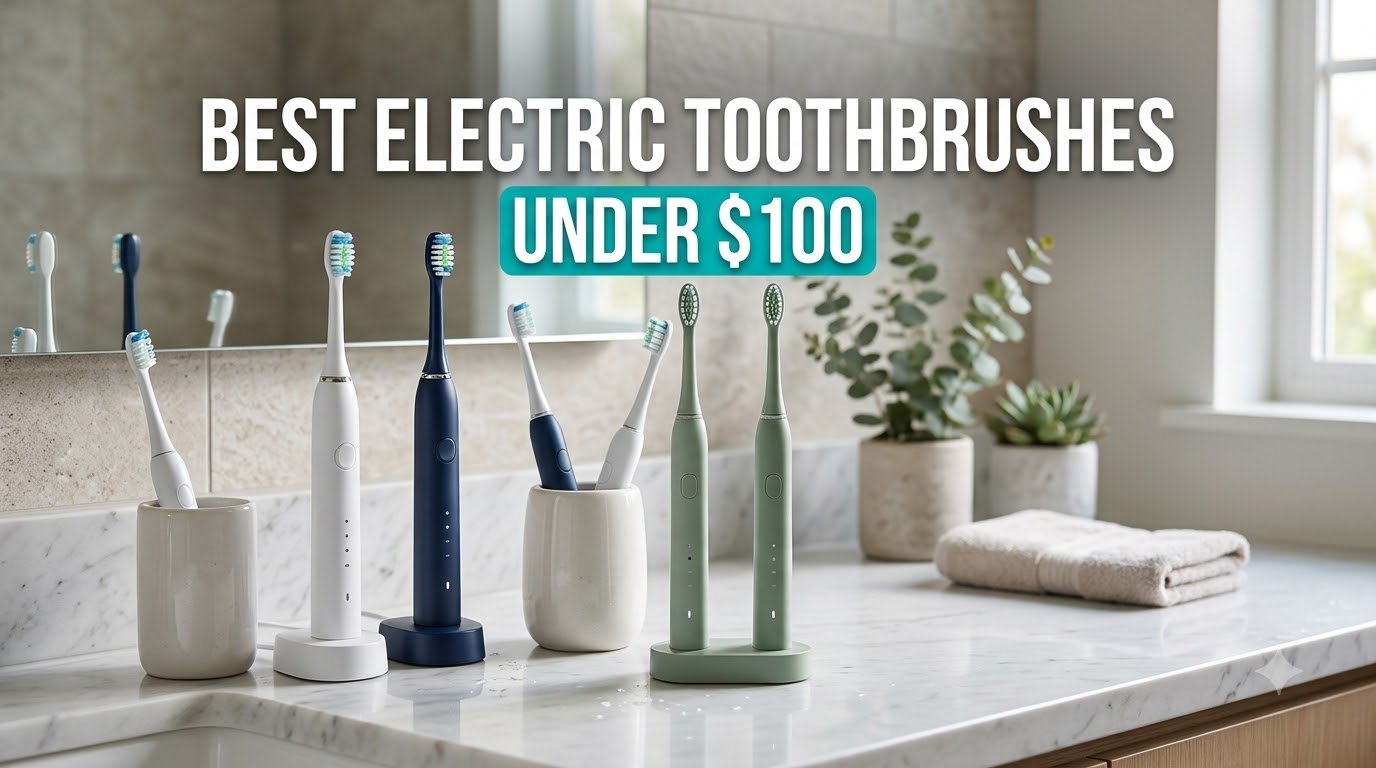
Choosing among the best electric toothbrushes under $100 can leave you stuck with a noisy handle or refills that do not fit. I understand why you want a brush that feels comfortable without complicating your daily routine. The decision turns on brushing motion, pressure feedback and the charging setup that fits your space.
Oral-B Pro 1000 is the brush I would buy for most people moving from manual brushing, unless a specific need points elsewhere. Its pressure control and zone timer give you guidance as you adjust to the round head. If live feedback matters more to your routine, look at Oral-B Smart 5000; frequent travelers can consider Bitvae ADA Accepted Toothbrush for its case and long run time.

Weight can change how a handle feels in your hand, especially when you brush with wet fingers. Among the best electric toothbrushes under $100, brushing motion also matters because vibration and round-head movement feel and sound different. A pressure alert gives you a prompt to ease off if you tend to press hard.
Included heads give you spares, but refill availability and fit matter once those run out. A charging dock or cable needs space near your outlet, and travel can make battery life more important. Simple controls can also make your routine easier to follow.
Oral-B Pro 1000 is the pick for you if you are moving from a manual brush. Its round head reaches around crowded teeth, and it removes up to 100% more plaque along the gumline than a manual toothbrush. I like the pressure control most because it stops pulsations when you brush too hard.
The transition takes a little adjustment. Charge the brush fully before first use, then give yourself time to get accustomed to the stronger oscillation. The handle has 3 cleaning modes, including a sensitive mode, and a charge indicator signals when you need to recharge.
Oral-B says its round head reaches spaces that rectangular manual brushes do not. Its timer alerts you every 30sec to change brushing zones, giving you a cue to move around your mouth. If you prefer an uninterrupted rhythm, those pauses can take some getting used to.
Upkeep matters once the first head needs replacing. Detach the head and rinse both pieces after each brushing session to keep them clean. Replacement brush heads must be purchased separately.
A wet handle can be slippery, which matters if you brush with wet hands or have trouble keeping a firm grip. Drying your hands before brushing can make the handle easier to hold. You will also need to purchase replacement heads separately, so allow for that ongoing upkeep. The timer pauses can disrupt your rhythm, though they also give you a cue to change zones.
This brush combines a round head, pressure control and a zone timer for shoppers moving from manual brushing. Its pressure control and zone timer give you two cues to pay attention to as you build your routine. The 3 modes also let you choose a sensitive setting when that feels more comfortable. Choose it if those prompts matter more to you than keeping a completely uninterrupted brushing rhythm.

Oral-B Smart 5000 gives you more ways to shape a brushing routine and see how it is going. Its 5 cleaning modes let you select a setting for your needs, and a visible pressure sensor lights up when you brush too hard. That alert gives you a cue to ease your pressure.
Replacement heads deserve attention before you settle on a routine. The brush works with several Oral-B head types, including options for sensitive gum care and deep cleaning. Look at the head type when buying refills so you can keep using the cleaning option you prefer.
Oral-B says the brush combines oscillation, rotation and pulsation to break up and remove plaque. The 3D action gives you all three movements in one brushing session. Its Bluetooth connection also gives you real-time feedback on your brushing habits, which can help you notice patterns in your routine.
The handle is rechargeable, so you do not have to replace its battery as part of your regular routine. Select a cleaning mode before brushing to match the session to your needs. If you tend to press hard, watch for the sensor light as you brush.
The Smart 5000 cannot use iO brush heads, so those refills will not work on its handle. That matters if you already have those heads or want to keep buying them. You can instead choose from its compatible Oral-B head types.
This is a strong pick when you want feedback during brushing, not just a powered brush. The pressure light gives you an immediate cue, and Bluetooth feedback adds information about your habits. You have 5 modes to choose from as your needs change. For a routine builder willing to pay attention to those prompts, the Smart 5000 puts useful guidance close at hand.

Bitvae ADA Accepted Toothbrush is a travel pick for you if charging stops are a nuisance. Its run time is 60 days, giving you a long stretch between charges. I would choose it for frequent trips because the package also includes a travel case and holder.
The charging setup needs a little planning. A USB cable comes in the package, but you need to add an adapter to charge the brush. Its holder also acts as a cover, so you can protect the brush from dust and water between uses.
Five modes give you options without changing the head. Bitvae says the controls cover whitening, cleaning, polishing, softness and gum care. Select the mode you want before brushing, then follow the timer pulses to move to another quadrant every 30 seconds.
The 2-minute timer gives you an endpoint for the session, and the brush is IPX7 waterproof. The package includes 8 toothbrush heads, so you have replacements on hand. Their bristles have a firm core and softer edges for gum care.
The firm bristle core may feel uncomfortable if your teeth are very sensitive, even with the softer bristles around the edges. That distinction matters more if you need a consistently soft feel across the head. The charging port also lacks a protective cap, and the brush has no universal USB-C charging port. If those details do not trouble you, its travel accessories can still be useful.
This brush makes sense for you if trips often take you away from convenient charging. Pack the included cable and add the required adapter when you expect to recharge away from home. The case and holder give you a way to cover the brush between uses, and the included heads reduce the need to buy refills immediately. Its long stated run time makes it an appealing companion when fewer charging stops are your priority.

Aquasonic Black Series Whitening Toothbrush is a strong pick if you want a supply of replacement heads with your brush. Its motor runs at 40,000 vibrations per minute, and you can select from 4 brushing modes. Those settings include options for whitening and gum care, giving you different ways to approach your routine.
A vibrating notification timer gives you a prompt during brushing. Aquasonic says the brush offers whitening and polishing as well as gum care, with separate modes for those tasks. You can choose a setting for the task you want to focus on rather than rely on one operation.
The package includes 8 brush heads and a hard-shell travel case with space for two heads. That gives you spares to put away and a protected place for heads when you travel. The case is made of BPA-free plastic.
Wireless charging keeps the charging setup straightforward on your counter. Charge the brush fully before your first session, then rinse the head and handle after brushing to keep your routine tidy. The included wireless charging base gives you a place to recharge it.
The hard rear of the brush head can feel uncomfortable if it knocks against your back teeth. That matters most if you find contact around your molars unpleasant; if it does not bother you, the included heads and modes remain the main considerations.
This brush makes sense if you want replacement heads ready at home rather than purchasing spares immediately. You also get a case for storing heads during a trip and a wireless charging base for your counter. Its varied modes give you room to adjust your routine, making the Black Series a useful package for a household planning ahead.

Aquasonic Vibe Series gives you a travel case and a generous supply of heads alongside adjustable brushing modes. Its motor runs at 40,000 vibrations per minute, and its 4 modes include whitening and gum-care options. You can change the setting without changing the brush head.
Aquasonic says the brush offers whitening and polishing as well as gum care, with dedicated modes for those tasks. Apply toothpaste before switching the brush on, especially as you get used to its vibrations.
The package includes 8 brush heads, so you have replacements on hand. Aquasonic says each head lasts 3 months; replace a head as needed rather than treating the supply as permanent. The brush also has wireless charging and an included lithium-ion battery.
Its BPA-free hard-shell case holds the brush and has space for two brush heads. You can pack the heads in that protected space instead of leaving them loose in your bag. Allow room for the case when arranging your luggage, since its hard shell adds bulk.
There is no low-battery warning, so you need to plan charging without an advance alert from the brush. That can be inconvenient when you are away from your usual charging setup. The hard case also adds bulk to luggage, though its extra space matters less if your bag has room for it.
Travel with protected storage is the stronger reason to choose this brush than a need for charging prompts. You get a hard case with room for two heads, plus spare heads for later use. The missing low-battery warning calls for attention to charging, making the Vibe Series a better match when you can plan around it.

Oral-B iO Series is a good pick if you want a round brush head and feedback when you press too hard. Its sensor slows the motor and signals red when it detects excessive pressure. That prompt gives you a cue to ease your touch around sensitive gums.
You can select Daily Clean, Sensitive or Whitening mode to change your brushing routine. The round head is designed to reach difficult areas, and its spinning motion includes micro-vibrations. Oral-B says the pressure sensor helps protect gums from over-brushing by slowing the brush when you press too hard.
A two-minute timer alerts you every 30 seconds to change zones. Use those alerts to move around your mouth rather than concentrating on one area. Rinse the head and handle after each session as part of your cleanup.
The brush comes with a travel case and an included nonstandard battery. It removes up to 100% more plaque along the gumline than a regular manual toothbrush. For a gentler introduction, start with the Sensitive setting as you adjust to the brush.
The nonstandard battery can make replacement less convenient if you need another one. That is more of a concern if you want an easily replaced battery than if you plan to use the included one. You also need space for the brush and its case when packing, so storage arrangements matter for travel.
Pressure feedback is helpful if you tend to press hard or want a reminder to be gentle near your gums. The red signal and slower motor give you a clear reason to ease off during brushing. With its round head and Sensitive mode, the iO Series fits a routine centered on a controlled touch.

Philips Sonicare HX3411/04 is a gentle introduction if you have never used a sonic brush. Its EasyStart program gradually increases brushing power, giving you time to get accustomed to the sensation.
Philips Sonicare says the 2 minute timer and QuadPacer help you brush consistently throughout your mouth. Follow the QuadPacer cues to move between sections rather than trying to judge the time yourself. With a 14 day battery life, you can plan for charging between stretches of regular brushing instead of after every session.
At 8.66 in tall, the brush needs enough vertical space wherever you plan to keep it. Look at the height of your storage area before choosing a spot; a shallow shelf or cabinet can make the brush awkward to put away. The charger needs a place as well, so think about both storage and access when planning your setup.
The brush’s height can be inconvenient in a small storage area. If you need to tuck it into a low cabinet, the available clearance matters; an open counter gives you more flexibility. This is mainly a concern when your bathroom storage is already tight.
For a first-time sonic brush user, Philips Sonicare HX3411/04 makes a gradual transition easier with its EasyStart program and sonic technology. The 2-minute timer and QuadPacer help you work through your mouth consistently, while the 14-day battery life gives you room between charging sessions. I would pick it when a lightweight, easy-to-adjust routine matters more than saving bathroom space, and the 3.53 oz weight keeps the handle easy to hold. Its 8.66 in height is the tradeoff, so this is a better fit for a countertop or taller storage area than for a tight cabinet.
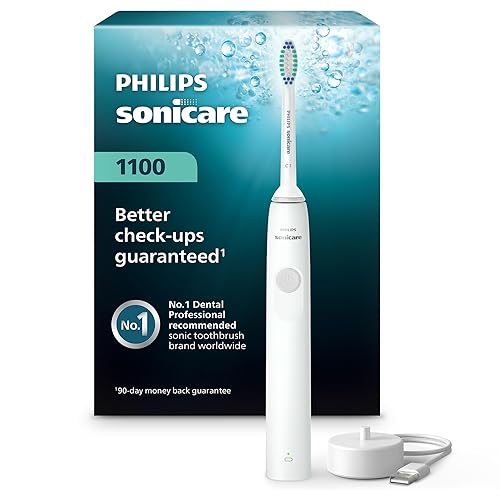
Philips Sonicare 1100 keeps your routine focused on straightforward sonic brushing. Its included C1 Simply Clean head has soft, flexible bristles, and the rechargeable brush comes with a USB charger. You get one brush head in the set, so replacement availability deserves attention when you plan ongoing upkeep.
SmarTimer tells you when you have reached 2 minutes, and QuadPacer guides you to spend 30 seconds on each section of your mouth. Move to the next section with each QuadPacer cue so your attention is spread across the session.
The USB charger needs a compatible power adaptor, which is not included. Allow room for the charging setup near an outlet, and consider where the 8.66 in-tall brush will go between uses. A full charge gives you up to 14 days of regular brushing, so the charger does not have to occupy your counter continuously.
There is no pressure sensor to alert you when you brush too hard. That matters if you depend on a direct prompt to ease your grip, especially around sensitive gums. You also need to add a compatible power adaptor for the included USB charger. Neither issue has to disrupt a simple routine if you already have an adaptor and can monitor your pressure yourself.
Philips Sonicare 1100 fits shoppers who want minimal daily controls and a focused sonic routine. Its single-button operation keeps daily control simple, while the rechargeable design supports up to 14 days of regular brushing on a full charge. If you depend on a direct warning when you brush too hard, Philips Sonicare 4100 offers pressure alerts for that need. I favor the 1100 when you monitor pressure yourself and want a straightforward brush for everyday use.

Aquasonic Duo Series gives two people separate handles with one shared charging dock. The black and white handles are easy to tell apart, and the dock brings charging into one place. Make room for the dual dock near an outlet so both brushes have a convenient place to recharge.
Aquasonic says the shared base recharges both handles, keeping separate brushes together in one setup. Charge both handles fully before first use, then use the dock for their wireless charging. The 30-day battery life gives you room between charges, which is useful when two people share the same counter.
Each handle has 3 unique modes, including options for whitening and gum health, plus a vibrating notification timer. You can choose the setting that matches the session you want rather than sharing one handle or one routine. The motors operate at 40,000 VPM.
Refills and Travel The set includes 10 brush heads and 2 hard-shell travel cases, with space in each case for two brush heads. That gives you spare heads at the outset and protected storage when you take a handle away from home. Replacement availability still matters once those included heads have been used.
The dual dock takes up bathroom counter space, so its footprint matters if you share a crowded surface. Make sure the available area can accommodate the dock before making it your charging spot. The trade-off is less troublesome when you have an open area near an outlet.
This set is a good pick when you share a bathroom and want separate handles with a common charging point. Its included heads give both people spares, and the individual cases help keep the brushes protected during travel. Leave time to fully charge both handles before their first use, and reserve counter space for the dock. Choose the Duo when a shared setup matters more than keeping the counter as clear as possible.

Philips Sonicare 4100 puts pressure feedback at the center of your brushing routine. Its sensor makes the handle pulse when you press too hard, giving you a prompt to ease off. The pressure sensor reminds you to ease off excessive pressure.
The brush also gives you structure without requiring you to watch a clock. SmarTimer signals when you reach 2 minutes, and QuadPacer divides brushing into 30-second sections. EasyStart gradually increases brushing power, which can make the transition to a sonic brush less abrupt.
Philips Sonicare says its sonic technology pulses fluid between teeth and along the gumline. The included C2 Optimal Plaque head has soft, flexible bristles, so you can choose this brush if a softer head matters to you. Its replacement reminder tracks how often and how hard you brush, then alerts you when the head needs changing.
To get started, connect the included USB charger to a compatible power adaptor. A full charge gives you up to 14 days of regular brushing. The required lithium ion battery is included.
A power adaptor is not included, so you need to purchase a compatible one separately before using a wall outlet. That extra step matters if you want a complete charging setup from the box; it is less troublesome if you already plan to buy an adaptor.
This brush is a strong match if you want a clear reminder to reduce pressure during daily brushing. Its pacing tools and gradual power increase also help you build a routine without concentrating on timing. You get a head replacement reminder as well, so upkeep has a prompt of its own. Choose it when pressure feedback is the feature you most want beside the sink.

7AM2M Sonic puts long battery life first for your travels. Its run time is 120 days (2 times per day), so you can plan around fewer charging stops.
Five brushing modes let you adjust the feel of your routine. They range from gentle Clean and soft Sensitive to stronger White and Polish settings; Milder uses a gentle inverted frequency. You can select the setting that feels comfortable or follow your dentist’s recommendation.
7AM2M says the W-shaped heads clean around the gums and harder-to-reach areas. You get 6 replacement brush heads, reducing the need to order replacements frequently. Their blue indicator bristles fade to signal when it is time to change the head.
Use the timer’s 30-second reminders to move to the next quadrant of your mouth. The full timer runs for 2 minutes, giving you a way to divide attention across all four sections. The brush is also IPX7 waterproof, and its required lithium ion battery is included.
Charging takes 8~10 hr, so a depleted battery is not a quick turnaround before you leave. Plan a charging window ahead of travel if you rely on the brush away from home. The supplied heads are soft/medium bristle, which matters if you specifically want a softer brush. Those trade-offs are less disruptive when you can charge in advance and find that bristle feel comfortable.
Long stretches away from a charger are the clearest reason to consider this brush. Its battery life assumes brushing 2 times per day, so keep that usage pattern in mind when planning your own trips. The included replacement heads also give you supplies to use over time. Pick it when fewer charging stops matter more to you than a quick recharge.

Colgate Floss Tip Soft Toothbrush offers a familiar approach if you want sonic brushing without a complicated control. A button starts the vibration, and its soft bristles clean your teeth, tongue, cheeks, and gums. The manual-style shape can also make the move from an ordinary toothbrush feel less unfamiliar.
Sonic vibration is worth considering when noise matters in a shared bathroom. Oscillating brushes can be noticeably louder, so the type of motion is part of the decision for an early-morning routine. The simple button keeps operation straightforward when you want to start brushing without selecting a mode.
Colgate says the brush combines a familiar manual toothbrush shape with battery-powered sonic action. It comes as a 2-pack, giving you a spare or a brush for a guest. One AAA battery is included, and battery operation means you do not need to manage a charging cord.
Press the button to start the sonic vibration, then use the brush for the areas of your mouth it is designed to clean. Its soft bristles are a useful detail if you prefer a gentler bristle feel. For storage, look at the product dimensions against the space you have available rather than assuming the package will fit.
The product’s dimensions matter if your storage space is tight or has a fixed opening. Compare them with the available space before buying, since an awkward fit could leave you looking for another place to keep it. This is less concerning if you have flexible storage.
This 2-pack is a sensible pick if you want soft bristles and straightforward battery-powered brushing. The spare gives you another brush to keep available, and the button avoids a menu of settings. For a household attentive to sound, sonic motion is also a useful type to consider. Choose this set when a familiar shape and uncomplicated daily control matter to you.
Cleaning motion changes both the brushing sensation and bathroom noise, so settle it before comparing extra modes. Sonic brushes use faster vibrations and often feel gentler. Oscillating-rotating brushes use a smaller round head with a more physical scrubbing motion. For more help, see this related guide.
Choose sonic motion if you prefer a gentler sensation or already use refills from that brush system. Philips Sonicare HX3411/04 adds an EasyStart program for adjustment, while Philips Sonicare 1100 keeps the routine focused on a soft-bristled head.
Choose oscillating movement if you prefer a compact round head and straightforward scrubbing. Oral-B Pro 1000 fits that starting point for manual brushers, while Oral-B Smart 5000 combines oscillation, rotation, and pulsation. People with braces should ask their dental professional about brush-head choice, and children need age-appropriate guidance before switching.
Pressure control matters most when you brush hard or your gums feel sensitive. Oral-B Smart 5000 has a visible pressure sensor, Oral-B iO Series signals and slows the motor, and Philips Sonicare 4100 pulses when you press too hard. These cues help you reduce force around vulnerable gum areas.
Brushing modes add value when different settings change how the brush feels or operates. Oral-B Smart 5000 and Bitvae ADA Accepted Toothbrush each have 5 modes, while 7AM2M Sonic offers five settings ranging from gentler to stronger. Two or three familiar modes often cover daily cleaning better than a crowded control panel.
Connected features should support your routine, not replace correct technique. Bluetooth communication and app-linked guidance add little if you still rush the brushing. Oral-B Smart 5000 combines 3D cleaning action for plaque removal with a visible alert, so you can use feedback during an ordinary session.
Battery life becomes a buying decision when charging stops interrupt travel or a two-person household. Long stated run times reduce charging stops, but the charger and power source still need to fit your bathroom. Check the outlet and counter space before choosing the handle.
For frequent trips, 7AM2M Sonic states 120 days (2 times per day), while Bitvae ADA Accepted Toothbrush states 60 days. For a shared home, Aquasonic Duo Series has a 30-day battery life and charges two handles on one base. Philips Sonicare 4100 offers up to 14 days on a full charge for a shorter routine between charges.
Charging method affects the setup more than people expect. Aquasonic Duo Series uses true wireless charging for both handles, and Aquasonic Black Series Whitening Toothbrush also uses wireless charging.
Bathroom space and noise belong in one decision because the handle must fit your shelf and shared routine. Among the best electric toothbrushes under $100, the useful differences are counter footprint, grip, and the sound made during brushing. Oscillating motion is noticeably louder, which can trouble early risers and quiet-sensitive households.
Colgate Floss Tip Soft Toothbrush fits the quiet-first preference with sonic vibration and a single-button start. Bitvae ADA Accepted Toothbrush takes less width, with a 0.79 in body width, and includes a holder that doubles as a cover.
Pick up a handle before buying and test whether your fingers can control it without squeezing. Heavier-looking bodies can feel different once wet, so personal grip matters more than a weight number. Leave room for the charger, cord, or dock and keep standing water away from the charging area.
Replacement heads need to fit the handle system, not merely look similar. Read the included head type before buying future refills, because a connector or replacement designation may differ. Philips Sonicare 4100 includes a C2 head, Philips Sonicare 1100 includes a C1 head, and Oral-B Smart 5000 works with several named Oral-B head types.
An illustration shows the ongoing cost: if a household replaces one brush head every three months, it needs four heads per year; one included head plus three replacements covers that year. Compare the refill bundle with that interval and price each later refill before buying the handle.
Bundled supplies can postpone the first order, but they do not remove the recurring expense. Bitvae ADA Accepted Toothbrush includes 8 replacement heads, and 7AM2M Sonic includes 6. Replacement heads and chargers must match the handle, since a loose fit can waste money or prevent proper operation.
The first charging session is the step most likely to go wrong, so give it attention before the first brush. Place the charger on a dry, level surface away from sink water. Inspect the charger base for standing water, and keep the plug accessible without stretching the cord.
Follow the handle’s first-charge instructions rather than assuming every charging cycle lasts the same. Aquasonic Black Series Whitening Toothbrush and Aquasonic Duo Series both call for a full charge before first use.
Attach a fresh head and set pressure alerts before your daily session. Apply toothpaste before activating Aquasonic Vibe Series during the first several brushes, then rinse the handle and let it air-dry after use. Each person needs a separate brush head, and a fallen head should be replaced rather than returned to the mouth. A cracked cord, charger, or plastic housing makes the brush unsafe and calls for replacement.
Replacement head models and chargers must match the handle.
Choose the charging method around outlet access
Match motion to comfort and bathroom noise
Set pressure alerts before daily brushing
Plan refills against a three-month replacement interval
Keep the charger dry and inspect it for standing water
Only a head made for that handle’s system will fit and work correctly. Match the model family and replacement-head designation shown with the brush, and avoid forcing a head that does not seat properly. Also confirm that the charger belongs to that handle, since a connector may look similar without providing the correct fit.
Choose the setup after checking outlet access, counter space, and how often you travel. A cordless design needs less space around the outlet, while a shared base keeps two handles together. Make sure the required adapter or cable is included, and keep the charging surface dry, level, and away from sink water.
A brush that stops working within its warranty should be handled under the maker’s warranty terms rather than kept in daily use. Keep the purchase receipt and model details available when contacting the seller or manufacturer. A damaged cord, charger, or housing needs separate attention before anyone tries the brush again.
Start with a three-month brush head replacement interval to estimate annual refill costs. Multiply that yearly number by the current price of a compatible head, then add shipping if it applies. A large bundle may postpone the first order, but the long-term expense depends on continued refill availability and your household’s brushing schedule.
Choosing sonic vibration over oscillating-rotating motion usually creates less noise during use. Colgate Floss Tip Soft Toothbrush offers a simple sonic option for quiet-first households. Sound also depends on how firmly the handle rests against a sink or counter, so store it clear of hard surfaces that can resonate.
They share the basics of a workable routine: a cleanable handle, timing support, and a charging method that fits the bathroom. Oral-B Pro 1000 is the overall pick for someone moving from manual brushing to a straightforward round-head routine. Among the options, compatible refills, comfortable pressure feedback, and manageable ongoing costs matter more than feature count alone.
First-time buyers should choose based on sensation and setup rather than the longest feature list. Philips Sonicare HX3411/04 fits a gradual introduction because its EasyStart program raises power gradually. Oral-B Pro 1000 offers a simpler transition from manual brushing, while pressure alerts and timing cues help you build an even routine.
If you are switching from manual brushing, choose Oral-B Pro 1000 for its pressure control and zone timer; it is the best pick for most buyers.
For frequent travel, get Bitvae ADA Accepted Toothbrush for its value, included case and 60 days run time.
Oral-B Smart 5000 gives you real-time Bluetooth feedback on your brushing habits, making it my recommendation for routine builders who want detailed guidance.
Most buyers need a brush that gives them useful guidance without making the move from manual brushing complicated, and I would pick Oral-B Pro 1000 for its pressure control. If frequent travel matters more, Bitvae ADA Accepted Toothbrush is the better buy; its included case needs room in your bag.